

Getting the size right matters more with football boots than almost anything else you’ll buy. Too small and you’re dealing with blisters, black toenails and lost touch on the ball; too big and your foot moves inside the boot every time you turn or sprint. This guide covers the standard size charts, how to measure your feet properly, how fit actually varies between the boots on the market today, and what to do if something isn’t sitting right.
Football boots should fit snug, not loose: about a thumb’s width at the toe, no dead space at the sides, and a heel that stays locked when you turn. True to size or a touch snug is usually right, since you’ll be wearing football socks and want the tighter, more responsive fit boots are built for.

How Football Boots Should Fit
Football boots should sit closer to your foot than a trainer does. You want your longest toe roughly a thumb’s width from the end of the boot, no more, with no dead space around the sides of your foot and a heel that stays locked when you push off or turn sharply. Trainers are built with room to spare because they’re designed to be worn all day. Boots are built to be tight enough that you can feel the ball through the upper and change direction without your foot shifting inside it first.
If you’re between a snug and a true-to-size fit, go snug. A boot that’s a touch loose will get looser as the upper gives, one that’s a touch tight rarely gets tighter. Your feet also swell during a match, so a boot that feels ideal standing in the shop can feel tight by half-time: snug should mean no dead space, not zero room to move.
Measure Your Feet
Stand up to measure, don’t sit. Your foot lengthens slightly under load, and a seated measurement will read short. Measure both feet: most people have a slightly larger foot on one side, and you should always size to the larger one. Wear the socks you’d actually play in, ideally grip socks if that’s what you use, since sock thickness genuinely changes the result.
For length, stand with your heel against a wall and measure to the tip of your longest toe (usually the big toe, but not always). For width, measure across the widest part of your foot, typically just behind the toes. Shave 3-5mm off both numbers to leave a little working room before checking them against the charts below. Do this again later in the day if you can: feet swell over the course of a day and after activity, and an evening measurement is closer to how your feet feel during a match.
Once you have both numbers, compare foot length against the chart below and cross-check your width against the width table further down. If your feet are between sizes, go up rather than down. If your two feet measure differently, buy to the larger foot and manage the smaller one with a thicker sock or an insole rather than sizing down and squeezing the bigger foot.
Football Boots Size Chart (UK to EU & US)
This football boots size chart converts UK sizes to European, US men's, US women's and centimetre sizing in one place. The sizes in the table below are for adults, both for men's football boot sizes and women's boots, just choose the correct column and adjust for your region, so you can see the difference between UK, European and USA sizing.
| CM | UK | EUROPE | US - MEN | US - WOMEN | INCH |
|---|---|---|---|---|---|
| 22.1 | 3.5 | 36 | 4 | 5 | 8.7 |
| 22.6 | 4 | 36 2/3 | 4.5 | 5.5 | 8.9 |
| 22.9 | 4.5 | 37 1/3 | 5 | 6 | 9 |
| 23.4 | 5 | 38 | 5.5 | 6.5 | 9.2 |
| 23.9 | 5.5 | 38 2/3 | 6 | 7 | 9.4 |
| 24.1 | 6 | 39 1/3 | 6.5 | 7.5 | 9.5 |
| 24.6 | 6.5 | 40 | 7 | 8 | 9.7 |
| 24.9 | 7 | 40 2/3 | 7.5 | 8.5 | 9.8 |
| 25.4 | 7.5 | 41 1/3 | 8 | 9 | 10 |
| 25.9 | 8 | 42 | 8.5 | 9.5 | 10.2 |
| 26.4 | 8.5 | 42 2/3 | 9 | 10 | 10.4 |
| 26.7 | 9 | 43 1/3 | 9.5 | 10.5 | 10.5 |
| 27.2 | 9.5 | 44 | 10 | 11 | 10.7 |
| 27.7 | 10 | 44 2/3 | 10.5 | 11.5 | 10.9 |
| 27.9 | 10.5 | 45 1/3 | 11 | 12 | 11 |
| 28.4 | 11 | 46 | 11.5 | 12.5 | 11.2 |
| 28.7 | 11.5 | 46 2/3 | 12 | 13 | 11.3 |
| 29.2 | 12 | 47 1/3 | 12.5 | 13.5 | 11.5 |
| 29.7 | 12.5 | 48 | 13 | 14 | 11.7 |
| 30.2 | 13 | 48 2/3 | 13.5 | 14.5 | 11.9 |
| 30.5 | 13.5 | 49 1/3 | 14 | 15 | 12 |
| 31.0 | 14 | 50 | 14.5 | 15.5 | 12.2 |
| 31.5 | 14.5 | 50 2/3 | 15 | 12.4 | |
| 32.3 | 15 | 51 1/3 | 16 | 12.7 |
Kids' Boots Size Chart
Junior boots run in their own numbering up to UK 13.5K, before moving into adult sizing from UK 1 onward. With children's feet always growing, if your child is between sizes go for the larger option: boots stretch slightly with wear, but they won't shrink to fit. See Kids Sizing below for the full growing-room guidance, or chat with us if you want help working out what's best for your child's feet.
| CM | UK | EUROPE | US | INCH |
|---|---|---|---|---|
| 16.0 | 9.5K | 10K | 27 | 6.3 |
| 16.5 | 10K | 10.5K | 27.5 | 6.5 |
| 17.0 | 10.5K | 11K | 28 | 6.7 |
| 17.5 | 11K | 11.5K | 29 | 6.9 |
| 17.8 | 11.5K | 12K | 30 | 7 |
| 18.3 | 12K | 12.5K | 30.5 | 7.2 |
| 18.5 | 12.5K | 13K | 31 | 7.3 |
| 19.0 | 13K | 13.5K | 31.5 | 7.5 |
| 19.6 | 13.5K | 1 | 32 | 7.7 |
| 19.8 | 1 | 1.5 | 33 | 7.8 |
| 20.3 | 1.5 | 2 | 33.5 | 8 |
| 20.6 | 2 | 2.5 | 34 | 8.1 |
| 21.1 | 2.5 | 3 | 35 | 8.3 |
| 21.6 | 3 | 3.5 | 35.5 | 8.5 |
| 22.1 | 3.5 | 4 | 36 | 8.7 |
| 22.4 | 4 | 4.5 | 36 2/3 | 8.8 |
| 22.9 | 4.5 | 5 | 37 1/3 | 9 |
| 23.4 | 5 | 5.5 | 38 | 9.2 |
| 23.6 | 5.5 | 6 | 38 2/3 | 9.3 |
| 24.1 | 6 | 6.5 | 39 1/3 | 9.5 |
| 24.4 | 6.5 | 7 | 40 | 9.6 |
Nike, adidas & Other Brand Sizes
Nike and adidas football boot sizes differ by roughly half a size in the UK-to-US conversion, not because either brand's last runs longer or shorter. It's one of the most common reasons players think a brand "runs small" when it's actually just a labelling difference between the two size charts.
Nike. Nike boots run close to their own size chart, but sit differently depending on the silo. The Mercurial family (Vapor, Superfly) is narrow and low-volume, true to size in length but tight through the midfoot for wider feet. Phantom is wider and roughly a quarter-size long. Tiempo runs wide overall, including through the heel, though the toe box itself is lower and more pointed than the rest of the boot suggests. See the Fit Index below for the detail on each.
adidas. adidas and Nike sizes differ by roughly half a size in the UK-to-US conversion, which is one of the more common reasons players think a brand "runs small" or "runs large" when it's actually just a labelling difference. Predator is one of the more generous fits on the market and true to size against adidas's own chart. F50 is narrower, particularly the laceless versions. Copa Pure is generous through the forefoot but can let narrow feet slip at the heel.
Puma. Future runs on a noticeably wider last than Ultra, which is built narrow and closer to the foot. King, Puma's leather boot, has one of the widest, roomiest fits of any current premium boot.
New Balance. New Balance is one of the few brands offering genuine wide-fit options rather than just a size-up recommendation: Furon and Tekela both have a 2E width available alongside the standard fit, on top of already running on the wider side for a speed boot.
Mizuno. Japanese brand sizing tends to run slightly narrower than UK sizing generally: going half a size up from your normal UK running shoe size is a common adjustment for Mizuno, though it's worth trying a pair in person where you can. Within the range, Morelia Alpha runs true to size with a little natural room in the toe box, while Morelia Neo runs narrow and slightly long, so stay true to size on the length rather than sizing down to compensate for the width. See our wide feet boots guide for the fuller UK sizing and wide-fit brand notes.
Please don't assume that your football boot size is the same as your normal shoe size. It can be, but remember that you'll have your football socks on when you play, and a fit that's just right in trainers may end up too small in boots. A snug fit is recommended for football boots for ultimate performance, and the majority of boots are made from materials which are soft and will in time mould around your feet.
| UK Size | Narrow | Medium | Wide | X Wide |
|---|---|---|---|---|
| 3 | 7.2 cm | 8.1 cm | 9 cm | 10 cm |
| 4 | 7.5 cm | 8.5 cm | 9.4 cm | 10.3 cm |
| 5 | 7.9 cm | 8.8 cm | 9.7 cm | 10.6 cm |
| 6 | 8.3 cm | 9 cm | 10 cm | 11 cm |
| 7 | 8.6 cm | 9.4 cm | 10.3 cm | 11.3 cm |
| 8 | 8.8 cm | 9.7 cm | 10.6 cm | 11.6 cm |
| 9 | 9.1 cm | 10 cm | 11 cm | 11.9 cm |
| 10 | 9.6 cm | 10.3 cm | 11.2 cm | 12.3 cm |
| 11 | 9.7 cm | 10.6 cm | 11.6 cm | 12.7 cm |
| 12 | 9.9 cm | 10.9 cm | 12 cm | 13.1 cm |
| 13 | 10.2 cm | 11.2 cm | 12.4 cm | 13.5 cm |
These show how each boot's fit compares on the pitch, not a quality score. A boot marked narrow isn't worse than one marked wide, it just suits a different foot. Only metrics with real testing evidence are shown.
adidas Predator26
Medium width; runs closer through the midfoot than earlier Predators
adidas F50Hyperfast Elite
Narrow to standard; wide or flat feet should look at the EVO
adidas Copa PureIV
Wide forefoot; narrow heels may slip
Nike Phantom6 Elite
Wide, high-volume
Nike Superfly10 / 11 Elite
Narrow, low-volume
Nike Mercurial Vapor16 / 17 Elite
Narrow, low-volume
Nike Tiempo Legend / MaestroLegend Elite
Wide overall, but a low/pointed toe box
Puma FutureUltimate / Pro
Wide, roomy toe box
Puma Ultra6 Carbon
Narrow
Puma King20 Ultimate
Wide, high-volume, leather comfort
New Balance FuronPro
Wide speed boot; 2E option available
New Balance TekelaPro
Accommodating forefoot, close heel; 2E option available
Mizuno Morelia AlphaMade in Japan
Tapered midfoot, slightly roomier toe box
Mizuno Morelia NeoBeta V, Made in Japan
Narrow to standard only
Mizuno MoreliaMade in Japan
Narrow at first, widens with wear
Find Boots For Your Foot Shape
Wide feet
Width, toe box or midfoot running roomy on the Fit Index? Our full guide ranks the eleven boots we rate highest for wide and high-volume feet.
See the wide feet guide →
Narrow feet
Consistently landing on the narrow end? Our guide covers the boots built closest to the foot, including which still work between narrow and standard.
See the narrow feet guide →
Kids
Growing feet need different judgement to an adult foot that's stopped changing shape.
Jump to Kids Sizing →
Women's
Women's-specific lasts are now genuinely different from a men's boot sized down, not just a recolour.
See the women's boots guide →
Leather vs Synthetic Stretch
Leather boots mould to your foot over time. Expect a snugger, sometimes slightly uncomfortable first few sessions, loosening gradually as the leather breaks in, particularly across the toe box and midfoot. Buy a leather boot true to size or even a touch snug, not room to grow into: it'll grow into your foot, not the other way round.
Synthetic uppers (knit, synthetic leather, engineered mesh) hold their shape far more than leather. What you buy is close to what you'll have in six months. There's less break-in discomfort, but also less forgiveness if you've sized slightly wrong. For the full breakdown by material and boot, see our leather boots guide.
Grip Socks And Sizing
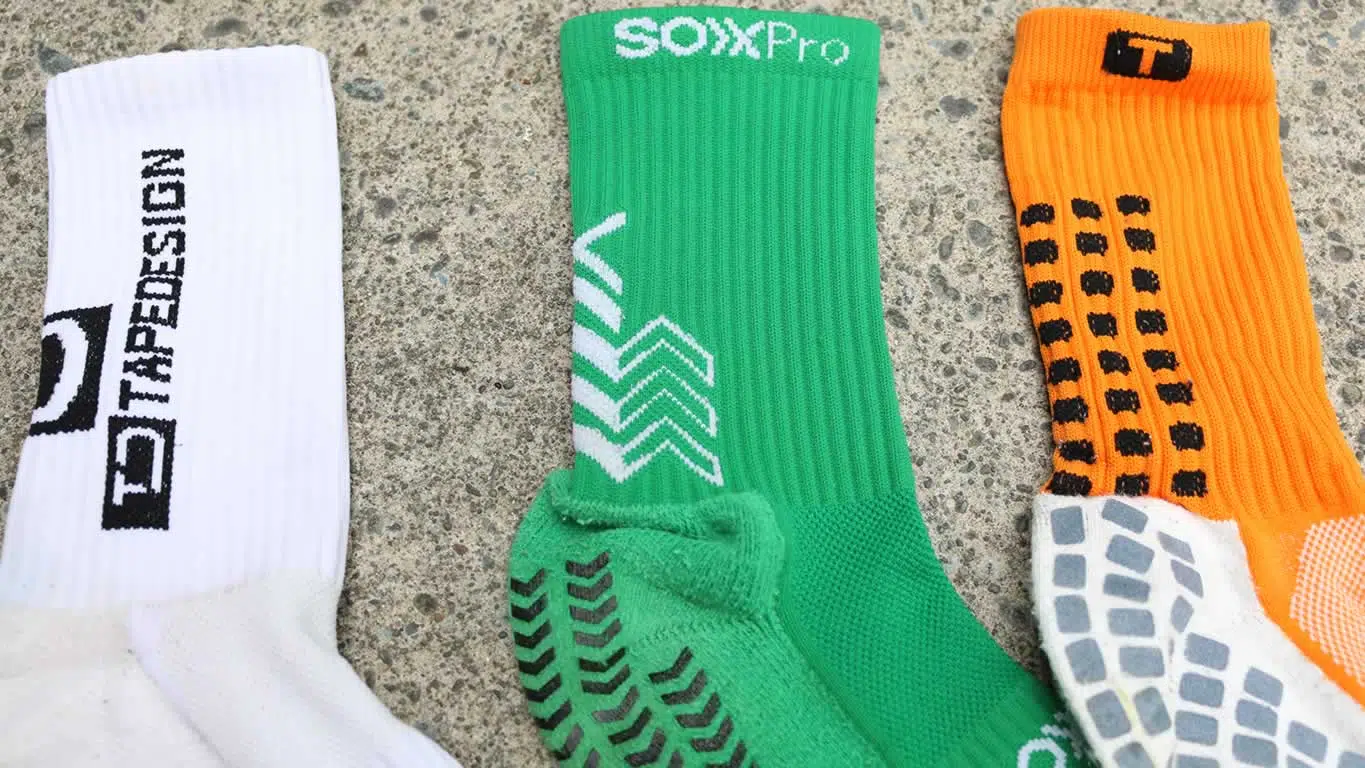
If you wear grip socks, measure and try boots in them, not in regular socks. Grip socks are thinner through the sole but can sit slightly differently around the ankle and midfoot, and the whole point of pairing them with a boot is a closer, more locked-in fit. A boot that feels borderline loose in a normal sock can feel right in a grip sock, and vice versa. See our grip socks guide for sizing notes by brand.
Kids Sizing
Growing feet need different judgement to a fully grown one. A few rules that hold up in practice:
Give some room to grow, but not a size and a half of it. Half a size of growing room is normally enough to get a good season out of a pair of boots without the boot being so loose it affects control or increases the risk of rolling an ankle in a turn.
Signs the boot is too small: toe pressure, red marks on the foot after playing, or your child saying their foot "hurts by the second half" rather than straight away. Signs it's too large: heel slipping, the boot visibly twisting on the foot during a turn, or blisters appearing where there wouldn't normally be friction.
Re-measure more often than feels necessary. Kids' feet don't grow at a steady rate, and a boot that fit perfectly four months ago may not fit now.
Sizing up excessively to save money doesn't help performance or comfort: a boot that's too loose costs a child touch and control, and increases the risk of blisters and rolled ankles rather than preventing them.
For the full junior-to-adult size chart, see the Kids' Boots Size Chart above, or the complete kids' boots guide.
Common Fit Problems
If your boots don't feel right, the cause is usually one of a small number of things, and it's rarely "the wrong size" in the way people assume.
| Symptom | Likely cause | What it points to |
|---|---|---|
| Toes hitting the end | Boot is too short, or true to size but you need more length | Sizing |
| Heel slipping | Heel lock too loose for your foot, or the boot runs wide through the heel | Heel Lock |
| Pressure across the forefoot, or a cramped little toe | Width or toe box too narrow for your foot | Width, Toe Box |
| Pressure over the instep | Instep volume too low for your foot shape | Instep Volume |
| Excess space around the toes | Toe box too high or wide for a narrower foot | Toe Box |
| Foot sliding inside the boot | Overall fit too loose, usually a mix of width, sizing and heel lock | Width, Sizing, Heel Lock |
| Blisters | Material hasn't broken in yet, or the overall fit is creating friction somewhere specific | Material Stretch |
| Feels good in the shop, painful during the game | Material hasn't broken in, or your foot swells during play more than the boot allows for | Material Stretch |
Frequently Asked Sizing Questions
How Should A Football Boot Fit?
Snug through the midfoot with no dead space at the sides, a locked heel, and roughly a thumb's width of room at your longest toe. Tighter than a trainer, but not so tight that it causes pressure before you've even started playing.
What Size Football Boot Should I Get?
Measure your feet standing up, in the socks you'll actually play in, then check your length against the size chart and your width against the width table. If you're between sizes, go up rather than down.
How Much Toe Room Should I Have?
Roughly a thumb's width between your longest toe and the end of the boot. More than that and you'll lose precision on the ball; less than that and your toes will be hitting the front on every sprint.
Should Football Boots Fit Tighter Than Trainers?
Yes. Trainers are built with room to spare for all-day wear. Boots are built to be close enough that you can feel the ball and change direction without your foot moving inside the boot first.
What If My Feet Are Different Sizes?
Buy to your larger foot. Manage the smaller foot with a slightly thicker sock or an insole rather than sizing down and squeezing the bigger foot into a boot that's too small for it.
What If I'm Between Sizes?
Size up. A boot that's a touch loose loosens further as the upper breaks in, one that's a touch tight rarely gets more comfortable.
Do Leather Boots Stretch?
Yes, noticeably. Leather moulds to your foot over the first few sessions, particularly through the toe box and midfoot. Buy true to size or snug, not room to grow into.
Do Synthetic Boots Stretch?
Much less than leather. What you buy is close to what you'll still have in six months, which means less break-in discomfort but also less forgiveness if you've sized slightly wrong.
How Do Nike, Adidas, Puma, New Balance And Mizuno Sizes Compare?
Adidas and Nike differ by roughly half a size in the UK-to-US conversion, which explains a lot of "this brand runs small" complaints. Beyond that, fit varies more by boot silo than by brand: see the Fit Index for how individual boots compare on width, toe box and sizing.
Related Guides
Football Boots Guide

Read Expert Boot Reviews
Find out everything you want to know about the latest boot releases.

How to Choose Boots
Become a boot expert with our helpful tips, or talk to one instead.

