

The New Balance Furon v9 is built for the first yard you win after a defender commits.
Plant, change direction and burst into the space they’ve left. That makes it a speed boot about more than running flat out.
See how it fits into the wider silo on our New Balance football boots page.
My quick verdict
Its lightweight mesh upper keeps touch close and direct, while the T-shaped studs are designed to give traction when you stop, cut and push off again. Compared with the v8, the shift is clear. The exceptionally soft knit has given way to a more structured mesh, and central laces offer more adjustment through the midfoot than the old off-centre closure.
The v9 looks better equipped to hold your foot through sharp movements, but it gives up some of the v8’s instantly plush feel to get there. That is the choice at the heart of this Furon: a sharper, more secure speed-boot experience, or the easy comfort that made its predecessor stand out.
Check the Furon v9 at New Balance
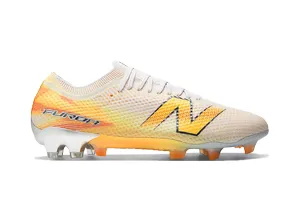
The thinnest, most precisely shaped upper and the build this review is based on.
Check the Elite at New Balance ↗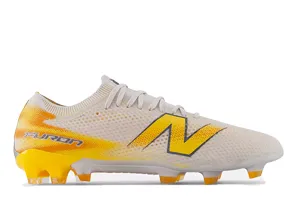
Most of the Elite’s character for considerably less, arguably the strongest value in the range.
Check the Pro at New Balance ↗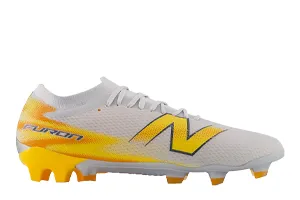
A capable recreational boot with genuine Furon traction and more protection.
Check the Team at New Balance ↗New Balance Furon v9: pros and cons
Pros
- More accommodating than most speed boots, with a genuine 2E option.
- Spacer-mesh upper delivers a clean, direct ball touch, sharper than a padded one.
- The curved, padded heel gives convincing hold without excessive bulk.
Cons
- Firmer and less immediately comfortable than the v8’s Hypoknit.
- Thin construction offers limited protection when challenged or stepped on.
- Minimal surface grip for players who prefer a tackier connection with the ball.
FootballBoots.co.uk is an independent, unaffiliated review site, and all opinions in this review are our own. This page contains affiliate links, which may earn us a commission if you choose to purchase, but this does not influence our reviews. This review is by Dean Ariola, FootballBoots.co.uk’s Chief Writer, who tested the Furon v9 on the pitch.
| Football identity | The first yard after a defender commits: plant, cut and burst into space |
|---|---|
| Best for | Explosive wingers, wide forwards, mobile strikers and attacking full-backs who repeatedly accelerate, press and change direction |
| Fit | Tapered midfoot opening to the forefoot, more accommodating than the Mercurials or F50s. A genuine 2E wide option exists |
| Sizing | Stay with your usual football-boot size. Go up only if length itself is too short; try 2E before adding length for width |
| Surface | Best on firm, well-maintained natural grass. Use New Balance’s MG, AG or turf tooling for synthetic pitches, not the FG |
| Range | Elite, Pro and Team, all sharing the same core mesh, central lacing and T-shaped stud concept |
| Worn by | Bukayo Saka, the natural face of the Furon, who has helped test and refine the v9 |
| Where it sits | New Balance’s speed silo, alongside the Tekela and the 442 |
Football identity: what the Furon v9 is for
The Furon v9 is built for the first yard you win after a defender commits: plant, change direction and burst into the space they’ve left. That makes it a speed boot about more than running flat out. Its lightweight mesh upper keeps touch close and direct, while the T-shaped studs are designed to give you traction when you stop, cut and push off again.
New Balance Furon v9: buy it or not
- You want a sharp, direct touch and secure lockdown
- Your game is stop-start, with diagonal bursts and changes of direction
- You have moderately wide feet and want a genuine 2E option
- You play mostly on firm natural grass
- You value a light, close boot over a padded, cushioned one
- You want the v8’s plush, instant Hypoknit comfort
- You have high-volume feet or a low toe box bothers you
- You want more protection when challenged
- You need a tacky, grippy upper surface
- You play mainly on artificial grass

Who the Furon v9 is for
Repeatedly attacking the space behind defenders, where the low weight and sharp platform matter most.
A stop-start runner who creates separation through diagonal bursts and sudden acceleration.
A match built on overlapping runs, aggressive pressing and quick recovery sprints.
This is for players who prefer a light, close and relatively structured speed boot with a sharp touch. It is less suitable if you want the plush softness of the Furon v8, substantial protection or a padded touch that cushions every ball contact. Medium and moderately wide feet have a realistic chance in it, while genuinely wide or flat feet should explore the 2E version before increasing the length. High-volume feet may still find the tapered midfoot and low toe box restrictive.
What it feels like on the pitch
Open transitions
The Furon v9 is at its best when the match opens up and there is space to attack. Its low weight disappears on foot, while the firm nylon plate and T-shaped studs give a sharp platform for accelerating onto through balls or carrying possession at speed.
Isolated 1v1s
This is not just a straight-line speed boot. The multidirectional studs work particularly well slowing a defender down, planting and cutting across them. The extra lateral Speed Ctrl Stud adds useful purchase pushing away sideways, more noticeable than any dramatic improvement when braking.
Pressing and repeated changes of direction
The structured mesh, central laces and secure heel make the Furon dependable during repeated sprints, sudden stops and recovery runs. The foot stays connected to the boot when the movement becomes untidy, which is where the v9 feels more performance-focused than the softer v8.
Quick actions after a sprint
The thin upper gives a clear sense of the ball controlling, passing or shooting at speed. There is enough depth to remove the harshest sting, but very little cushioning to delay the contact. Players who like to take one touch and release the ball quickly should appreciate that directness.
Fit and feel
| Length | Definitely spot on length-wise, probably a bit too spot on for some. New Balance suggests half a size above your everyday shoe size, but stay with your usual football-boot size regardless. |
|---|---|
| Width | More accommodating than mainstream speed boots like the Mercurials or F50s, with a genuine 2E option available. |
| Sizing up | Go half a size up only if length itself is too short. Unnecessary space at the front can undo the heel and midfoot security the v9 has gained. |
| Wide or flat feet | Try the genuine 2E width at the right length first before sizing up just to relieve side pressure. |
| Break-in | Roughly one session for the spacer-mesh to become more pliable. It will not stretch substantially, since the TPU film does not behave like leather. |
| Surface | The FG plate suits firm natural grass. Use New Balance’s MG, AG or turf tooling for synthetic pitches. |
Like any other speed boot, the Furon v9 has a tapered midfoot which opens up towards the forefoot. As far as speed boots go, though, it is far more accommodating than mainstream options like the Mercurials or F50s. Check the arch and toe-box height as well as forefoot width: the mesh will settle, but its TPU film will not stretch like leather.
The technology, translated
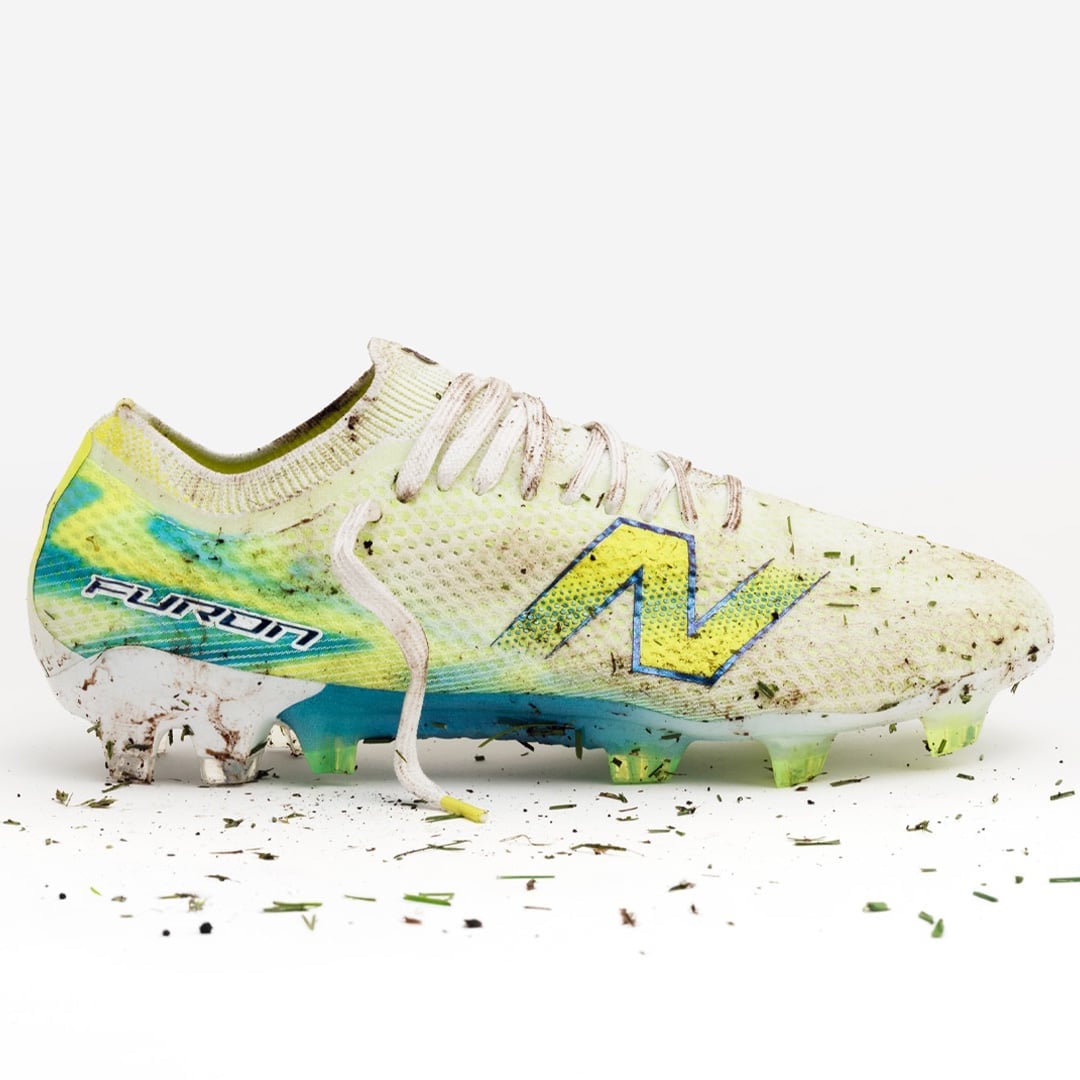
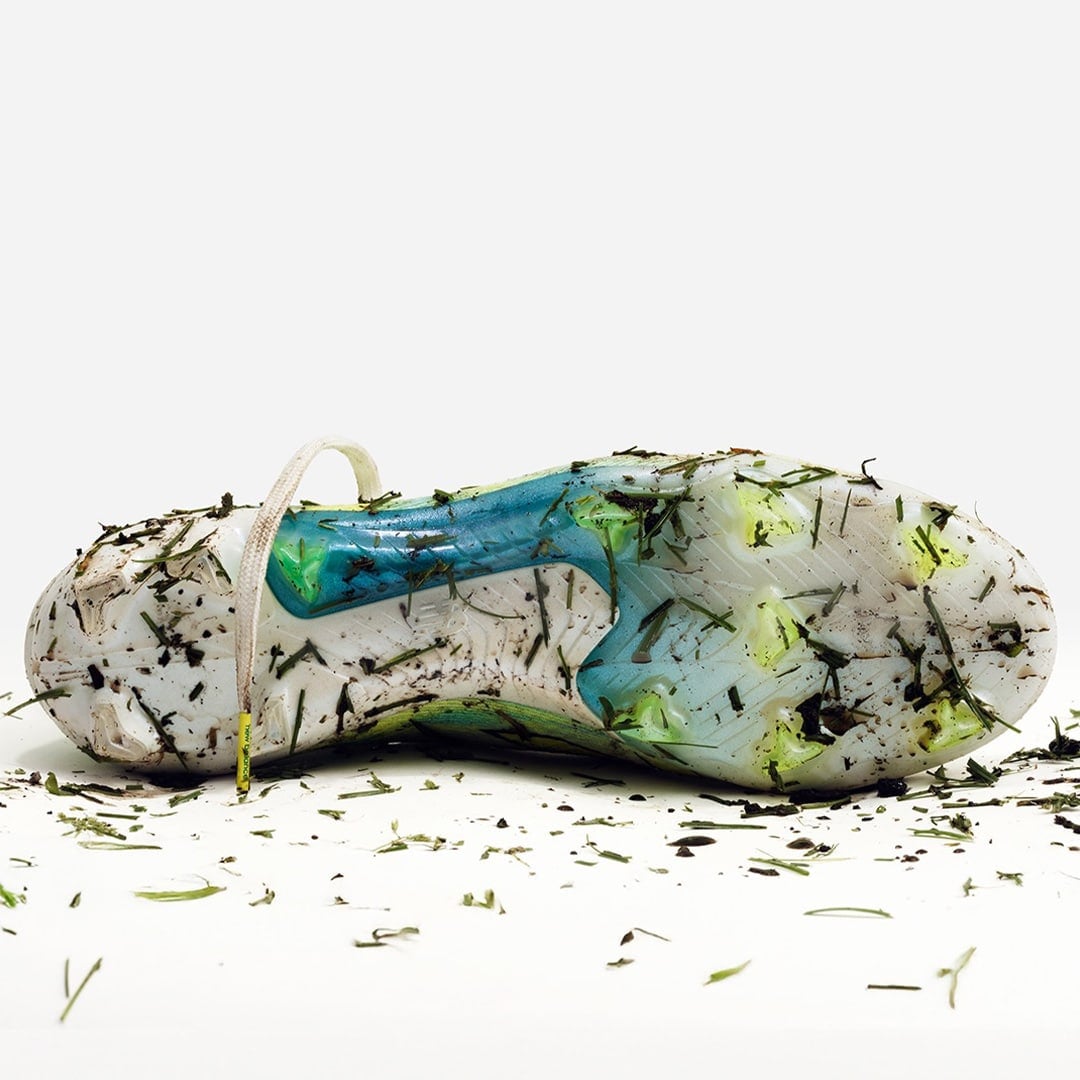
A one-piece spacer mesh with a thin TPU film replaces the v8’s exceptionally soft Hypoknit. It still feels close and almost sock-like, but the forefoot is a little firmer straight out of the box. Touch is sharper and more direct, though the slight depth of the mesh takes the worst sting out of a firm pass. The honeycomb structure carries a hint of an airy sensation, though not a clear cooling effect.
- Receiving or striking through the ball
- Carrying the ball at speed
- Wearing it for the first session, as the mesh settles
- Playing in dry conditions
The familiar nylon plate and T-shaped FG stud layout carry over from the v8. Underfoot, the plate feels light and fairly firm through the midfoot, with a decent snap on push-off rather than an exaggerated spring. The studs give plenty of bite on natural grass accelerating or planting for a diagonal cut.
- Accelerating from a standing start
- Planting for a diagonal cut
- Pushing off sideways
- Playing on firm natural grass
My relationship with the Furon
I’ve played through the knit era of the Furon, from the v6 through the v7 and v8, and the v9 is the first generation where New Balance has deliberately traded some of that plush comfort for security. It’s the right trade for the boot’s own identity. The Furon has always been about the first yard after a defender commits, and central lacing finally gives you the even adjustment through the midfoot that off-centre closures never quite managed.
What I miss from the v8 is the instant, barefoot-like softness. What I’ve gained is a boot that stays connected to my foot when the movement gets untidy, which matters more to me than the first-wear comfort once a match actually starts.
Weaknesses and tradeoffs
Furon v9 vs Furon v8: what changed
The v9 ends the Furon’s long Hypoknit run. The v8 used a soft Hypoknit upper with an offset closure, and it was one of the lightest, most instantly comfortable boots I have worn.
The v9 replaces it with a one-piece spacer mesh under a thin TPU film, brings back central lacing, and holds the foot with a curved heel and knitted collar. The nylon plate and T-shaped stud layout carry over from the v8. The result is a firmer, sharper boot with the most dependable lockdown of any Furon, at the cost of some of the v8’s plush, barefoot-like comfort.


My Furon v8 notes
The v8’s Hypoknit upper was comfortably soft and pliable, and it did not cramp my foot pressing against it. It was one of the lightest boots I’d worn, with a direct, raw sensation on ball contact because of how thin the knit was. Barefoot-like and comfortable straight out of the box, though I tried to avoid getting stepped on.
The upper had enough texture to avoid feeling slick against the ball, but I don’t think it did much for ball grip. The stiffer strobel board gave the soleplate a decent snapback, and the T-shaped stud configuration was aggressive on natural grass, with the extra Speed Control stud felt more when planting and pushing off side to side than as a braking aid. The boot fit true to size, and wide feet who still found it snug had the 2E option.
Lockdown wasn’t quite on par with other speed boots, given the give of a knit material and the off-centred laces, but the close fit and heel grab offset that to make it competitive. The Elite retained the Hypoknit upper with a nylon outsole. The Pro replicated it reasonably well, though the layering wasn’t quite as seamless and the fit ran wider and more generic. The Team used a textile base with a synthetic overlay and noticeably more bulk, better suited to younger players needing protection.
Furon v9 vs other speed boots
|
Furon v9
|
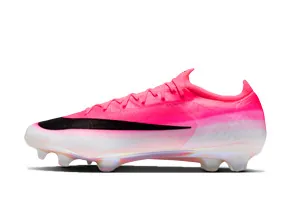 Vapor 17 |
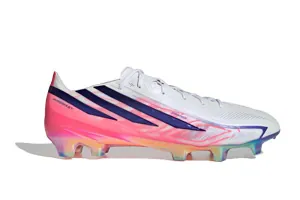 F50 Hyperfast |
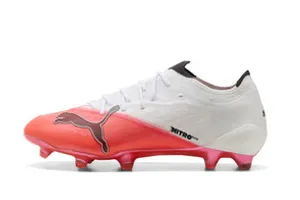 Ultra Nitro 7 |
|
|---|---|---|---|---|
| Job on the pitch | Structured lockdown, protection and a less restrictive shape | Lowest weight, rawest touch, most agile | Complete combination of softness, lockdown and response | Softer, livelier underfoot feedback |
| Upper | Spacer mesh with TPU film | Ultra-thin AtomKnit | Haloskin+, Halocage+, HaloBelt+ | Softer ULTRAWEAVE |
| Underfoot | Nylon plate, responsive without trying to propel every step | Lighter FlyLite plate | SpeedSystem+, more obvious snap and bite | NITROFOAM Elite and PEBA SpeedSystem 2.0, more bounce |
| Fit | 2E option, more accommodating shape | No wide option | No wide option | More give through the midfoot |
| Choose it for | A straightforward, secure, less aggressive experience | Lowest weight, rawest touch | Complete upper, lockdown and response | A softer forefoot and livelier feedback |
Furon v9 vs Nike Mercurial Vapor 17
The Vapor 17 takes minimalism further than the Furon. Its AtomKnit upper feels thinner and more barefoot on the ball, while the lighter FlyLite plate produces a particularly nimble sensation when turning. The Furon’s spacer mesh has slightly more depth and structure, giving a sharper touch than a padded one without feeling quite as exposed. Its central lacing and well-shaped heel also provide a more reassuring hold, while the availability of a 2E width makes it considerably more accommodating. Pick the Furon v9 for structured lockdown, a little more protection and a less restrictive shape. Take the Vapor 17 for the lowest weight, rawest touch and most agile underfoot experience. Read the full Mercurial Vapor review.
Furon v9 vs adidas F50 Hyperfast
The regular laced F50 Hyperfast Elite is the more sophisticated all-round speed boot. Its Haloskin+ upper package feels softer and more premium, the Halocage+ and HaloBelt+ provide stronger midfoot containment, and its SpeedSystem+ outsole delivers a more obvious snap and aggressive forefoot bite. The Furon is simpler: its uniformly constructed upper produces a consistent, direct touch from heel to toe, while its nylon plate feels responsive without trying to propel every step. Its heel lockdown is excellent, the ride is slightly less demanding and the 2E option gives wider-footed players an alternative the F50 lacks. Select the Furon v9 for a straightforward, secure and less aggressive speed-boot experience. Opt for the F50 Hyperfast if you want the more complete combination of upper softness, lockdown and soleplate response. See our F50 Hyperfast review.
Furon v9 vs Puma Ultra Nitro 7
These are both textile speed boots, but they feel very different in play. The ULTRAWEAVE upper of the Ultra Nitro 7 is softer and more forgiving, with slightly more cushioning over the ball and some noticeable give through the midfoot. Its NITROFOAM Elite and PEBA-based SpeedSystem 2.0 also provide more bounce and spring than the Furon’s conventional nylon plate, while FastTrax 2.0 delivers a more forceful planted sensation. The Furon feels firmer, sharper and more controlled. Its spacer mesh communicates the ball more directly, while the central laces and curved heel produce the more consistently locked-in fit. Choose the Furon v9 for clean touch, dependable containment and predictable movement. Choose the Ultra Nitro 7 Ultimate for a softer forefoot fit, livelier underfoot feedback and more aggressive stop-start traction. Read the full Ultra Nitro 7 review.
Elite, Pro or Team: which Furon v9 should you buy?
The Furon v9 has one of the more generous tier systems because New Balance does not remove its entire identity as you move down the range. All three versions retain a one-piece mesh upper with TPU film, central lacing, a knitted collar and a nylon plate featuring the T-shaped studs and additional Speed Ctrl stud. This review is based on the Elite.
The engineered mesh is the thinnest and most precisely shaped of the three, creating the closest fit and sharpest touch without feeling paper-thin. Central laces and the curved heel make lockdown more dependable than the previous offset-laced generation. At approximately 177g, it feels noticeably free of unnecessary bulk. You are paying for polish rather than an exclusive headline technology.
Retains the same basic upper construction, central closure and complete traction concept, with a listed weight of approximately 183g, only slightly above the Elite. The mesh feels slightly more substantial and does not conform quite as cleanly around the foot, so touch and lockdown are a little less precise, but the difference is considerably smaller than the price gap suggests.
Retains more of the Furon concept than most entry-level boots: a one-piece performance-mesh upper, adjustable central lacing and the same recognisable stud layout. The compromise becomes obvious through its approximately 223g weight and more substantial construction. The upper feels thicker and less naturally shaped, placing more material between you and the ball, though the added substance may prove useful for younger players or those prioritising durability.
The thinnest, most precisely shaped upper and the build this review is based on.
Check the Elite at New Balance ↗Most of the Elite’s character for considerably less, arguably the strongest value in the range.
Check the Pro at New Balance ↗A capable recreational boot with genuine Furon traction and more protection.
Check the Team at New Balance ↗Where to buy
Furon v9 Elite. The most secure Furon yet: central lacing, a curved heel and a genuine 2E option for wider feet. Sizes and current colourways are on the New Balance site.
Check availability at New BalanceAffiliate link via Skimlinks. Opens New Balance UK in a new tab. Full disclosure is at the top of this review.
New Balance Furon v9 questions answered
| Question | Short answer |
|---|---|
| Is the New Balance Furon v9 true to size? | Stay with your usual football-boot size. New Balance sometimes compares its sizing with everyday footwear, which can make the recommendation appear confusing, but do not automatically size up from an already well-fitting pair of boots. If width rather than length is the problem, try the 2E version before adding unnecessary space at the toes. |
| Is the Furon v9 suitable for wide feet? | Players with moderately wide feet may be comfortable once the mesh settles, while genuinely wide or flat feet should look for the purpose-built 2E fit where available. |
| Does the Furon v9 require breaking in? | Roughly one session for the spacer-mesh upper to become more pliable. It is firmer and more structured than the soft Hypoknit of the v8, but it should not require a long or painful break-in. Do not expect the TPU-coated material to stretch substantially over time. |
| Can the Furon v9 FG be used on artificial grass? | Avoid using the FG model regularly on AG. Its T-shaped studs bite firmly into the surface and are designed primarily for natural grass, which may create excessive resistance during turns on synthetic pitches. The MG version is the more sensible choice for artificial grass. |
| What changed from the Furon v8 to the v9? | The biggest change is the move from a soft Hypoknit upper to a one-piece spacer-mesh construction covered by a thin TPU film. New Balance has also replaced the offset lacing with a traditional central closure. The v9 feels firmer, sharper and more securely adjustable, although the v8 remains the softer and more immediately comfortable boot. |
| Is the Furon v9 good for strikers and wingers? | Yes, particularly for wingers, wide forwards, mobile strikers and attacking full-backs who repeatedly accelerate, press and change direction. Its strongest situations involve carrying into space, attacking a defender diagonally and reacting quickly after receiving the ball. Position alone should not determine the choice; the direct touch and close fit matter more. |
| Should I buy the Elite, Pro or Team? | The Elite delivers the thinnest execution, most precise shaping and most responsive version of the Furon concept. The Pro is the sensible value option if you can accept a slightly less refined fit and feel, while the Team prioritises affordability and durability. Competitive players wanting the experience described in this review should judge the silo by the Elite. |
Final verdict
New Balance Furon v9: FootballBoots Verdict
Buy it if
- You want a sharp, direct touch and secure lockdown
- Your game is stop-start, with diagonal bursts
- You have moderately wide feet
- You play mostly on firm natural grass
- You value light and close over padded and cushioned
Avoid it if
- You want the v8’s plush, instant comfort
- You have high-volume feet
- You want more protection when challenged
- You need a tacky, grippy upper
- You play mainly on artificial grass
Read the full final verdict
What is it trying to be? A speed boot about more than running flat out: the platform for the first yard you win after a defender commits.
Does it succeed? Yes. Central lacing and the spacer mesh give it the most dependable lockdown of any Furon, at the cost of some of the v8’s instant comfort.
Who benefits most? Explosive wingers, wide forwards, mobile strikers and attacking full-backs with moderately wide feet.
Who should avoid it? Players wanting the v8’s plush comfort, high-volume feet, or anyone wanting more protection or grip.
Where does it sit in the silo’s history? The v9 ends the long Hypoknit run that began with the v6, bringing the Furon back towards a simple principle: direct touch, dependable lockdown and multidirectional traction without excessive technology getting between the player and the game.
How the Furon has changed over time
The Furon arrived in 2015 as the speed half of New Balance’s newly relaunched football range, sitting opposite the control-focused Visaro. Its development has not followed one continuous material formula. Instead, New Balance gradually corrected the stiffness of its earliest boots, moved through increasingly refined mesh constructions, embraced knit and offset lacing, and then returned to a more structured mesh design for the v9.
Ends the long Hypoknit run by introducing a one-piece spacer-mesh upper covered by a thin TPU film. Traditional central lacing returns for more even adjustment, while the curved heel and knitted collar secure the foot without adding bulk. At approximately 177g, it is New Balance’s lightest current football boot.

Fine-tuned the Hypoknit construction and retained the offset closure. Its more important development was underneath: a new 12-stud layout used T-shaped studs for multidirectional traction, with an additional Speed Ctrl stud supporting lateral planting, sudden stops and pivots.

Introduced Hypoknit alongside offset lacing, creating a larger uninterrupted surface across the instep. It gave the Furon a recognisable identity while several competitors moved back towards firmer synthetics. The v7+ developed the concept with a re-engineered upper and a more form-fitting canopy.

The v6 began the Furon’s knit era, with an adaptive Fit Weave upper that felt considerably softer and more sock-like than earlier mesh and synthetic constructions. The v6+ refined it with a cleaner arrangement of support zones and a translucent nylon plate retaining aggressive chevron traction. Arguably the point the Furon became a genuinely credible alternative to the major speed boots.

Released ahead of the 2018 World Cup, the 4.0 introduced a cored-out FantomFit construction covered by a Hidraskin membrane for a cleaner, more weather-resistant striking surface, and became a significant visibility point for the silo when Sadio Mane joined New Balance. The 5.0 streamlined the construction with a bonded-mesh upper and a full-foot Fantom support skeleton.

Combined a mesh forefoot with a more structured synthetic midfoot and an external FantomFit cage. Its nylon-based tooling and directional studs established the silo’s speed identity, though the upper could feel stiff and unforgiving.
See what New Balance has in stock across the Elite, Pro and Team.
Check stock at New Balance