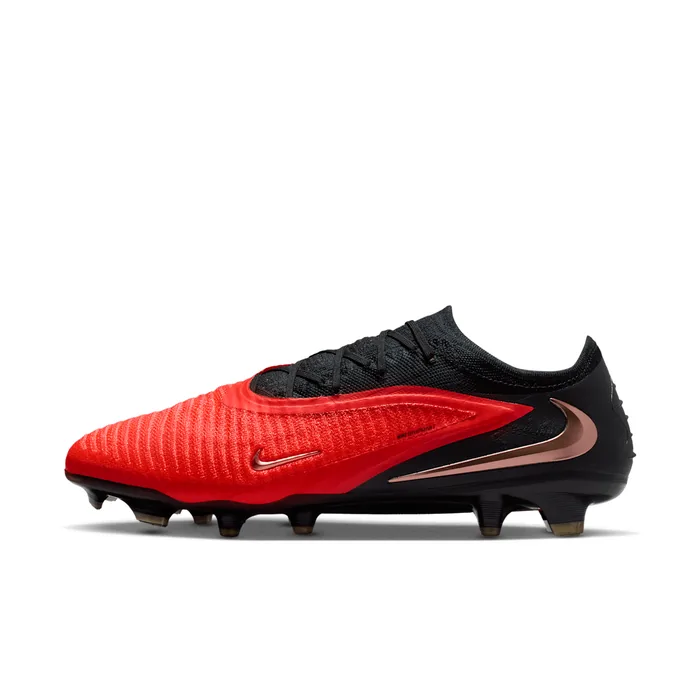
First recorded pair
Studs allowed
Screw-in studs
First colour
Modern speed boot
Grip socks take off
The first pair of football boots noted in history are those made for King Henry VIII of England, who ordered a pair from his Great Wardrobe in 1526. Pre 1891 nothing was allowed to project out of the shoes worn by a footballer, a rule change then led to the use of small studs or bars and football boots were born.
Watch: the evolution of football boots, from the first leather pairs to today.
Screw-in studs arrived in the 1950s: PUMA put them into serial production with the Super Atom in 1952, and adidas made them famous at the 1954 World Cup. Made of rubber or plastic, they meant that depending on the weather and pitch conditions, players could have different studs on the same pair of boots. Original boots were heavy and high-ankled, but a lighter boot with less protection became popular in South America and Southern Europe where pitches were less muddy and harder and this style eventually became used everywhere. Boots just came in one colour for many years, black. Recently with new production materials and techniques and the popularity of boots as a fashion and consumer item, any colour has been possible.


When did football boots start, and in what years were certain features such as studs, blades, leather boots introduced? The timeline below answers that decade by decade, then looks at the boots, the technology and the model lines that shaped the boot you wear today.
Football Boot History at a Glance
| Year | Moment | Why it mattered |
|---|---|---|
| 1526 | Henry VIII orders a pair of football boots from his Great Wardrobe | The first recorded football boots |
| 1891 | A rule change allows small studs or bars | Football boots as a separate shoe are born |
| 1952 | PUMA Super Atom | Screw-in studs in serial production |
| 1954 | adidas screw-in studs at the World Cup | Adjustable traction goes mainstream |
| 1958 | adidas Der Weltmeister | A polyamide sole that held its shape in the wet |
| 1970 | Alan Ball’s white Hummels; Pele in the PUMA King | Colour arrives, and soft leather becomes the benchmark |
| 1979 | adidas Copa Mundial | The leather formula every classic is measured against |
| 1994 | adidas Predator; Nike Tiempo at the World Cup | Rubber grip on the upper; the Tiempo’s World Cup debut |
| 1998 | Nike Mercurial | The modern synthetic speed boot |
| 2006 | Lotto Zhero Gravity | An early elite laceless boot |
| 2010 | adidas F50 adiZero | 165g in a UK 8.5, and the start of the weight race |
| 2012 | Nike ACC, Green Speed and TruSox | All-weather grip, recycled materials and the first grip socks |
| 2014 | Samba Primeknit, Magista Flyknit, grip socks at the World Cup | Knitted uppers and sock collars; grip socks go global |
| 2016 | adidas ACE 16+ Purecontrol | Laceless becomes a major-brand direction |
| 2023 | Mercurial XXV | 25 years of the Mercurial, in a 2,500-pair limited edition |
Football Boots by Decade

1800s football boots: work boots and the first leather pairs
Football grew fast in the 1800s, especially in England, but nobody made a boot for it. Most people played in their work boots: hard, heavy and often steel-capped, so a mistimed tackle really hurt. Later, metal tacks or studs were knocked into the soles for grip, and towards the end of the century the first proper football boots appeared. They were thick leather, laced up over the ankle, and weighed around half a kilogram, about double that once they got wet.

1900 to 1940: years of war
With two world wars dominating these decades, boot design barely moved on: football boots at the end of the 1930s looked much like the ones from the start of the century. The names players knew were makers such as Valsport and Gola, which began life as Bozeat.

1940s to 1960s football boots: lighter and lower
This is where the modern boot starts. As the Second World War ended, makers stopped designing boots purely for protection and started building them for speed, agility and a cleaner strike of the ball. Boots got lighter and more flexible, and by the end of the period the cut had dropped below the ankle, which gave players far more freedom to move.

1970s football boots: colour arrives
Colour arrived. Until then the choice was black or black, but in the Seventies boots got lighter still and finally came in other colours. The first white boots, and the first in anything other than black, were Hummel’s idea, from its marketing director Brian Hewitt. Everton’s Alan Ball wore them in the 1970 Charity Shield, and the commentator called him “twinkle toes”.

1980s football boots: the modern classics
The Eighties gave us the modern classics. The Copa Mundial and the PUMA King were on players’ feet everywhere, and leather was the material of choice, built for comfort and performance in equal measure.


1990s football boots: Predator and the boot deal
The Nineties turned boots into big business, with manufacturers paying professionals to wear them. In the middle of the decade adidas launched the Predator, which became the most famous boot in the world. Nike started to make its mark too: its Tiempo Premier was worn by a lot of players at the 1994 World Cup in the USA, including ten in the final.
Nike: Zlatan Ibrahimovic gets wired for speed.

2000s football boots: soleplates and speed
This period saw a difference not in colour, size, shape but in the studs that were used in the under side of the boot. The sole was designed to be more flexible and allow the footballer more movement, again the adidas Predators were the dominant player in this area and the Nike Mercurial continued to make its mark as a speed boot. The 2000s also brought online customisation, with NIKEiD, today’s Nike By You, letting players design their own boots for the first time.
Watch: Neymar unboxes the original Hypervenom Phantom.

2010s football boots: personalisation, packs and sustainability
Customisation and personalisation increased with it becoming standard for a player to have their name and number on their boots at all levels not only professional but in semi professional and even Sunday league. Moulded blades and conical studs became the norm on firm ground, and players learned to choose a soleplate by surface rather than habit. Professional footballers will continue to be paid to wear boots and this is shown as a successful method for brands to advertise new football boots to the masses, especially in big world tournaments where they will be on view to millions at a time. Latest innovations include chips and tracking in boots so players can monitor their performance online and via the phones. Sustainability arrived too, with Nike’s Green Speed boots in 2012 built from recycled and plant-based materials. Collared boots and pack releases started to crystallise, with special/limited editions spearheaded by GOATs Ronaldo and Lionel Messi.


Watch: the 2014 Mercurial Superfly 4, the first knitted Mercurial with a sock collar.

2020s football boots: thinner uppers and remakes
The 2020s pushed uppers thinner and made the soleplate work harder. Knit gave way to grippier, textured skins such as Nike’s Gripknit, and plates became performance parts in their own right, with responsive designs like Nike’s Aerotrak and adidas’s Carbitex Speedframe. Speed boots set the shape for everything else: even leather classics were reworked narrower and lighter, so wide-footed players now have to shop more carefully (our wide fit football boots guide picks the roomier options). Remakes of iconic boots became a release category of their own. Nike and adidas still lead, alongside Puma, New Balance and Mizuno, but the field widened. Skechers arrived with Harry Kane in 2023, Decathlon’s Kipsta signed Antoine Griezmann, Reebok returned in 2026, and On confirmed its move into football in September 2026 with Kylian Mbappe, who left Nike after about 20 years to join. On builds its upper with LightSpray: a robotic arm sprays one continuous filament around a last to make a seamless, one-piece upper, with no cut panels or stitching (On football boots).
adidas introduces the Predator Freak.
The Football Boots That Changed Boot Design
The biggest moments in football boot history are the ones you can still feel on your feet. Adjustable studs, rubber grip elements, lightweight synthetics and knitted uppers each changed how boots were built and what players expected from them. Behind those changes were specific models that introduced a lasting idea or helped establish it across the game. These are the football boots that gave later designs something to build on, leaving an influence that reaches well beyond their own generation.

1952Puma Super Atom
Brought screw-in studs into serial production, allowing players to change stud length for different conditions. It deserves credit as an important commercial milestone in adjustable traction. Screw-in studs today: our football studs guide.
-
1953adidas Argentine
Prominent in the 1954 World Cup. Combined a low cut, lightweight leather, flexibility and replaceable studs. Its significance extended beyond traction: it helped establish the lighter, more mobile shape associated with the modern football boot.
-
1958adidas Der Weltmeister
Used a polyamide sole that retained its shape in wet conditions. This was an important move towards engineered plastic soleplates, with a clear continuation in the adidas World Cup 62. How plates work now: the soleplate guide.
-
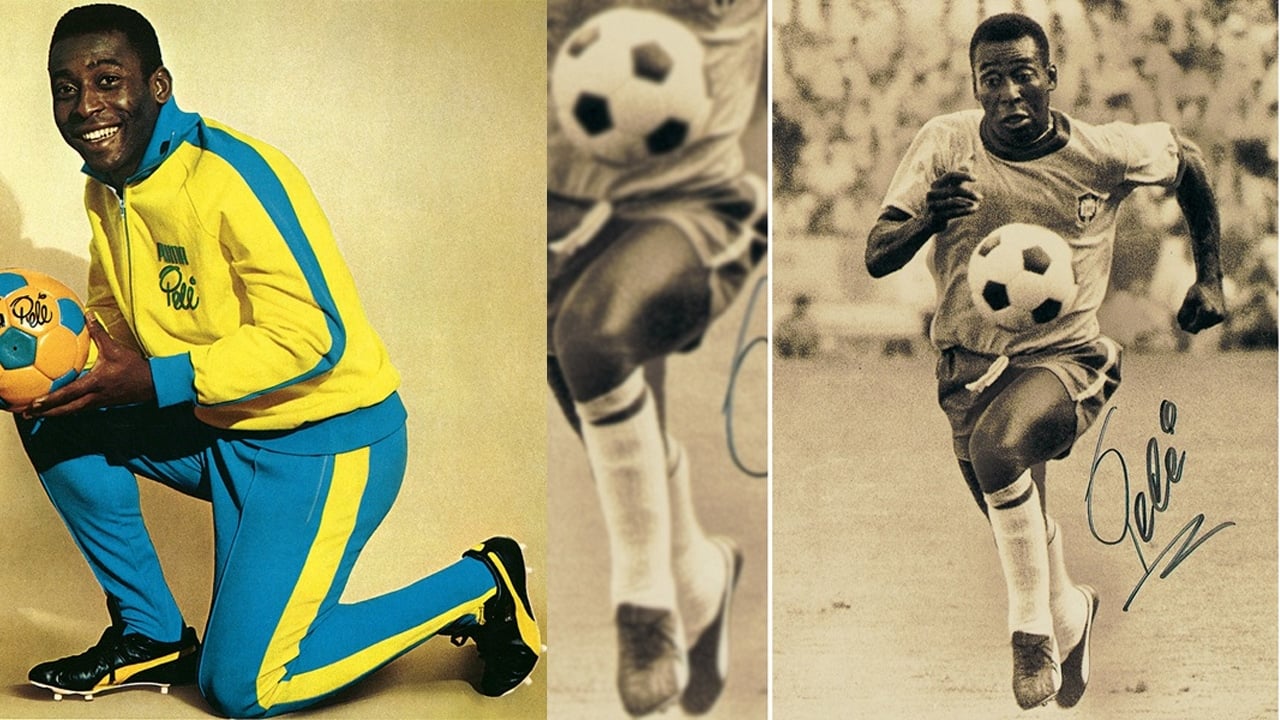
1970Puma King
A flatter, lighter construction and supple leather helped make softness, flexibility and close ball feel central to boot design. Worn by Pelé at the 1970 World Cup, the King became a lasting benchmark for classic leather boots. The King today: PUMA King review.
-
1979adidas Copa Mundial
The Copa Mundial combined soft leather, moulded firm-ground studs and durable construction. It established a widely adopted formula for comfort and reliability that generations of leather boots would be measured against. Still on sale: Copa Mundial review.
-
1994adidas Predator
Made rubber grip elements on the upper a major performance feature. Its lasting contribution was the idea that the upper could actively influence ball contact, a principle developed throughout subsequent Predators. The latest: Predator review.
-
-
2006Lotto Zhero Gravity
An essential early milestone in commercial laceless construction. Its immediate influence was narrower than later adidas releases, but it establishes that elite football boots without conventional laces existed a decade before Purecontrol. Laceless today: best laceless boots.
-
2010adidas F50 adiZero
Paired a thin synthetic upper with lightweight Sprintframe construction, at a manufacturer-recorded 165g in UK 8.5. Its influence extended beyond speed boots: Sprintframe subsequently appeared in Predator and adiPure models. The F50 now: F50 review.
-
2014adidas Samba Primeknit
Deserves the earlier commercial launch credit in the 2014 transition to knitted uppers. It belongs as a construction milestone, while the Magista has the stronger case for wider adoption.
-
2014Nike Magista Obra
Combined Flyknit with a knitted Dynamic Fit collar. Alongside the contemporary Mercurial Superfly, it helped establish knitted uppers and sock-style collars as prominent features of elite football boots. The Phantom took over from the Magista: Phantom 6 review.
-
2016adidas ACE 16+ Purecontrol
Used knit, an internal fit system and a TPU cage to secure the foot without laces. Its importance was making laceless construction a recurring major-brand direction, continued in models including the Predator 18+. Laceless today: best laceless boots.
-
2016adidas Glitch
A two-part boot: a laceless inner shoe that locked into a swappable outer skin through its stud tips, sold first through an app. It took the modular idea of the 2006 F50 Tunit further, and showed how far customisation could go inside the boot itself.
-
2022Nike Phantom GX
Brought Gripknit, a grippy texture built into the knit upper itself rather than added as separate grip elements or a coating. It carried on the idea Nike started with ACC in 2012, and grip in the upper is still the Phantom’s identity. The latest: Phantom 6 review.
-
2022Nike Mercurial Air Zoom Ultra SE
First shown as a concept boot at Nike’s Innovation Summit in New York in February 2020, then launched as a limited edition in 2022. It built a Zoom Air cushioning unit into the Mercurial’s soleplate, bringing running-shoe responsiveness to the speed boot without adding bulk. Zoom Air is still in today’s Mercurials: Superfly and Vapor.
-
2026On LightSpray football boot
On confirmed its entry into football in September 2026, with Kylian Mbappe as its partner and a first boot due in 2027. Its LightSpray upper is sprayed around a last by a robotic arm as one seamless piece. Whether it plays well is still unproven, but it is a genuinely different way of building an upper. The latest: On football boots.


Technology That Changed the Boot
Some of the biggest changes weren’t new boots at all, but a material, a coating or a sock that spread across every brand. These are the ones you still feel on your feet.
Grip socks: TruSox and the 2014 World Cup


TruSox launched in 2012, but it wasn’t until the 2014 World Cup in Brazil that grip socks exploded in popularity. Players started cutting the feet off their club socks and wearing grip socks underneath, so the sock matched the kit while the foot underneath stayed locked to the insole. What you notice is the foot not sliding forward when you stop and turn, and fewer blisters late in games. Today they are a common sight at every level of the game. Our best grip socks guide ranks the brands.
Nike All Conditions Control (ACC), 2012
Our 2012 video: Nike’s All Conditions Control coating explained.
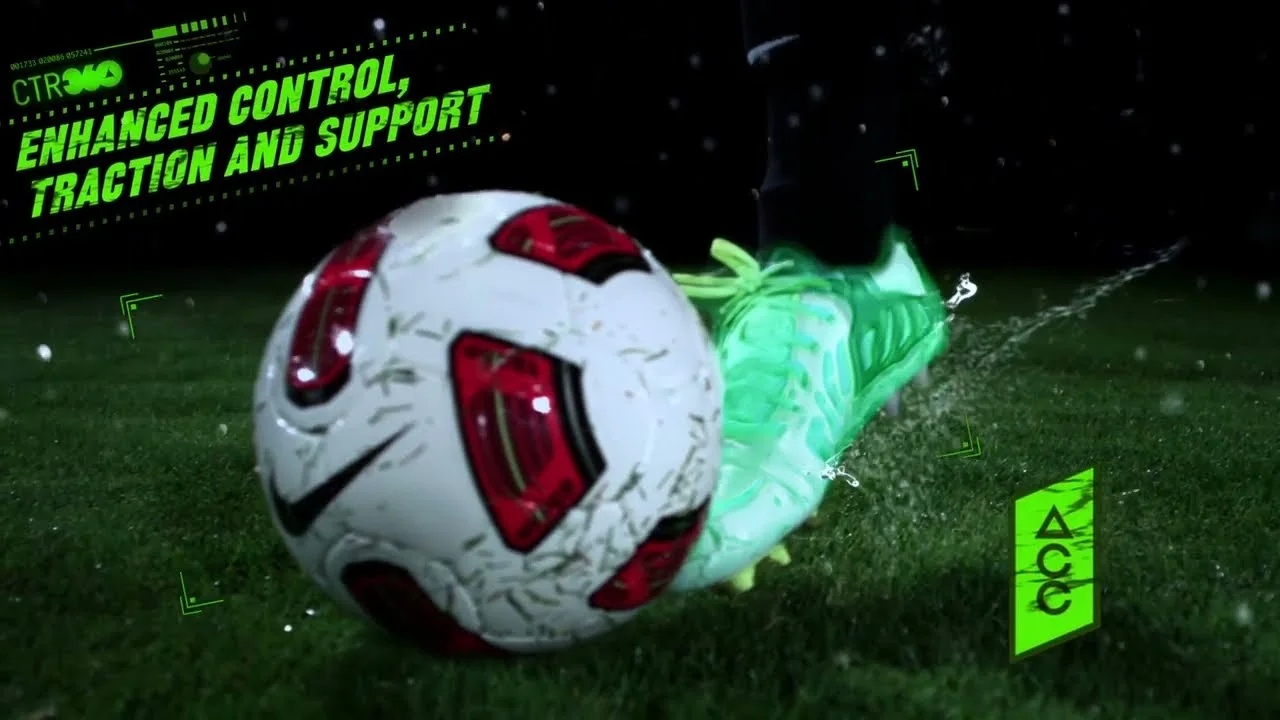

Nike launched All Conditions Control in 2012, on its Elite boots only, and it was seen across Euro 2012 that summer. ACC was a coating on the upper that Nike said gave the same grip on the ball in wet and dry weather. It went on the Mercurial, the Tiempo, the CTR360 and the T90. What players noticed was the ball not skidding off a wet upper when they received it in the rain. ACC set the idea that a boot’s surface should grip the ball whatever the weather, which Nike carries on today with Gripknit on the Phantom.
Knitted uppers: Flyknit, Primeknit and Gripknit
In 2014 knit replaced layered synthetics at the top end. adidas got the first commercial launch with the Samba Primeknit, and Nike’s Flyknit Magista and Superfly made knitted uppers and sock-style collars standard on elite boots. Knit gives a closer, more even wrap than stitched panels, so the boot moves with your foot. Nike later added grip to the knit itself with Gripknit, first on the Phantom GX. See Mercurial vs Phantom for how the two knits feel today.
Laceless boots
The Lotto Zhero Gravity showed in 2006 that an elite boot could do without conventional laces, and the adidas ACE 16+ Purecontrol made laceless a major-brand direction in 2016. The appeal is a clean, even striking surface; the trade-off is lockdown, which depends far more on getting the size right. Our laceless football boots guide covers the best current pairs.
Modular boots: the adidas Glitch


In 2016 adidas released the Glitch, a boot within a boot. You chose an inner shoe, a tight sock-like sleeve in a high or low cut, and pushed it into an outer skin, with small stud tips on the inner locking the two together. There were no laces at all: the inner shoe gave the hug and the outer skin gave the protection and the strike. It built on an old adidas idea, the F50 Tunit of 2006, which also let players mix and match parts. The Glitch was sold first only through an app, starting in London before going UK-wide, and demand came from around the world. It came in FG and SG, on a chrome soleplate that echoed the X 15’s. It never became the norm, but it showed customisation could be built into the boot itself rather than printed on the outside.
Kangaroo leather, K-leather and Kanga-Lite
Kangaroo leather gave classics like the Copa Mundial their soft, moulding touch. Nike’s Kanga-Lite, used on the CTR360 Maestri, set out to copy that padded feel with more durability and water resistance. The best leather football boots guide covers what’s left of genuine leather today.
Soleplates: from screw-ins to carbon plates
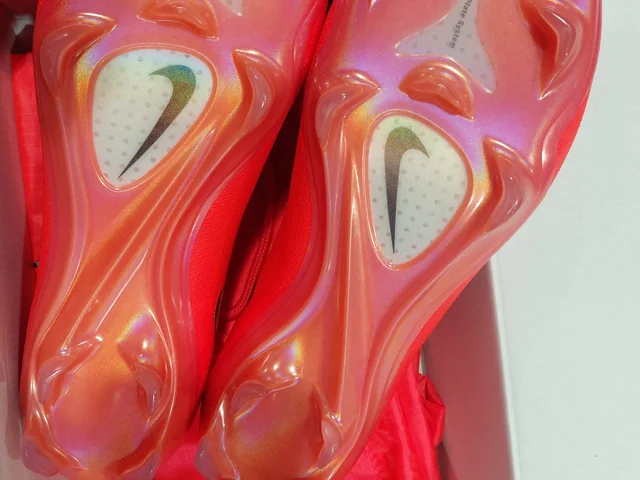
Screw-in studs, polyamide soles and moulded blades each changed what players could do on different ground. In the 2020s the plate became a performance part in its own right, with responsive designs such as Nike’s Aerotrak and adidas’s Carbitex Speedframe, and Anti-Clog coatings to shed mud. The soleplate guide explains every type, and football studs covers replacements.
Zoom Air and Flyprint

The Mercurial Air Zoom Ultra SE, first shown as a concept at Nike’s Innovation Summit in New York in February 2020 and launched as a limited edition in 2022, brought Nike’s Zoom Air cushioning into the soleplate. The concept paired it with Flyprint, a 3D-printed upper where the yarn crossings are fused rather than knitted. Zoom Air is still in today’s Mercurial Vapor.
Green Speed: the first recycled boots
Sustainability arrived in 2012 with Nike’s Green Speed, built from recycled and plant-based materials.
Model Lineages: How Today’s Boots Got Here
Most boot releases are colourway packs. The ones that matter for history are the remakes and anniversaries, because they show how each model line has carried its identity from one generation to the next. For every special edition, from Mercurial Dream Speed to the Tiempo Emerald, see Nike special editions and remakes.
Nike Mercurial: 1998 to today


The Mercurial began with the Brazilian Ronaldo’s matte silver, blue and yellow R9 at the 1998 World Cup. In 2018 Nike marked 20 years of the line with remakes of the World Cup Mercurials from 1998, 2002, 2006, 2010 and 2014, each as a Superfly and a Vapor. For its 25th anniversary in 2023 came the Mercurial XXV, a silver limited edition of 2,500 pairs with its own presentation box.
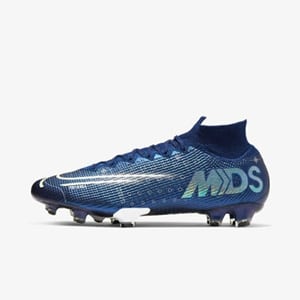

Mercurial Dream Speed began in 2019 as an exclusive series for Cristiano Ronaldo, Kylian Mbappe and Sam Kerr, designed to Ronaldo’s specification straight after his Chapter series ended, and has since run through numbered editions worn by more of Nike’s stars. Collaborations stretched the line too: the 2018 Jordan x PSG Mercurial and Phantom for Mbappe, Neymar and the PSG squad, and the Air Mercurial Tn, a Superfly dressed in the voltage purple and orange of the Air Max Plus trainer. Today’s line: the Mercurial Superfly and Mercurial Vapor, and the boots Ronaldo wears now.
From T90, CTR360, Hypervenom and Magista to the Phantom


Before the Phantom, Nike split its non-speed boots between power and control. The T90 was the striker’s boot built for shooting. The CTR360 Maestri was the passer’s boot, worn by midfielders such as Andres Iniesta and Sergio Busquets, with a Kanga-Lite upper; Nike remade the 2012 Maestri III in 2023 in its launch colourway of Tour Yellow, Black and White.


In 2013 the Hypervenom Phantom introduced Nikeskin, a micro-mesh upper under a thin polyurethane film, for agile forwards; its launch colourway came back in 2020 on a limited Phantom VSN 2 in black and bright citrus. In 2014 the Magista Obra brought Flyknit and a Dynamic Fit collar to the playmaker’s boot, with leather Opus versions in Nike’s Tech Craft pack. The Phantom line then took over from both: the Phantom Vision replaced the Magista and the Phantom Venom replaced the Hypervenom, before Nike merged the two into a single Phantom. Nike even mashed the two families together in 2022 with the Phantom Ultra Venom, a Hypervenom III and Flyknit Ultra hybrid. Today’s line: the Phantom 6.
Nike Tiempo: 1994 to today

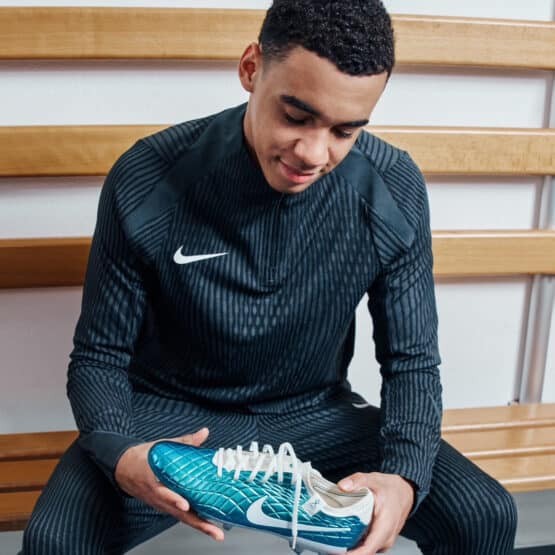
The Tiempo made its debut at the 1994 World Cup, and over ten generations in three decades it was worn by defenders and playmakers such as Paolo Maldini, Andrea Pirlo, Francesco Totti and Gerard Pique. Its 30th anniversary in 2024 brought the Tiempo Emerald, in a glossy Dark Atomic Teal with white details. Packs such as Rising Gem in 2023/24 ran one colourway across the Mercurial, Phantom and Tiempo together. Today’s line: the Tiempo Maestro.
From My Boot Collection
To mark our YouTube channel reaching 100,000 subscribers in 2016, I went through my own collection of worn and limited-edition boots on camera. Many of the boots on this page are in it.
Watch: my football boot collection, worn pairs and limited editions.
The Future of Football Boots

The future of football boots? Predator and Mercurial still reign strong as the choice of players more than twenty years since their creation. Will boots light up when you score, show you’ve got a yellow card, change stud positioning mid game to adapt to the conditions? Will future boots be 3D printed or sprayed on a last? Both have started: Nike’s Flyprint put a 3D-printed upper on the Mercurial, and On is spraying a boot on with LightSpray. The future of boots is uncertain, one thing you can know for sure, we’ll be here to tell you all about it, watch the Black & Orange halves on YouTube.
Football Boot History FAQs
| Who invented football boots? | No single person. The first recorded pair was made for King Henry VIII, who ordered football boots from his Great Wardrobe in 1526. Boots made specifically for football, with studs, followed a rule change in 1891. |
|---|---|
| When were football boots invented? | The first recorded pair dates from 1526. Before 1891 nothing was allowed to stick out from a footballer’s shoe; once small studs and bars were allowed, the football boot as a separate shoe was born. |
| What were the first football boots like? | Heavy, ankle-high leather work boots, often with steel toe caps. They weighed around half a kilogram and about double that when wet. |
| When did football boots get screw-in studs? | In the 1950s. PUMA put screw-in studs into serial production with the Super Atom in 1952, and adidas made them famous at the 1954 World Cup. |
| When did grip socks become popular? | TruSox launched in 2012, but grip socks exploded in popularity at the 2014 World Cup in Brazil, when players began cutting their club socks to wear grip socks underneath. |
| What is Nike ACC? | All Conditions Control, a coating Nike launched on its Elite boots in 2012 to give the same grip on the ball in wet and dry weather. It was used on the Mercurial, Tiempo, CTR360 and T90 and seen at Euro 2012. |
Choosing your next pair? Start with how to choose football boots, or browse every football boot review.