

The New Balance 442 v3 proves that a modern boot does not need to feel complicated.
While the Furon targets speed and the Tekela emphasises control, the 442 centres on comfort, natural touch and simplicity. It looks traditional but feels surprisingly light and pliable.
See how it fits into the wider silo on our New Balance football boots page.
My quick verdict
It looks traditional, but feels surprisingly light and pliable, with either the standard Elite’s floating tongue or the Elite Knit’s closer one-piece collar. The result is a dependable boot that feels far more modern than its classic appearance suggests.
TrueTouch Tech replaces the 442’s former leather construction with a lightweight PU microfibre featuring debossed quilting. It feels more substantial and padded than the thinner synthetic used on the v2 Elite, though there is some synthetic tension straight from the box. After a short break-in, the material becomes pleasantly soft and pliable, but it still cannot quite match the natural suppleness of leather or the premium synthetic-leather feel of the Tiempo Maestro.
Check the 442 v3 at New Balance
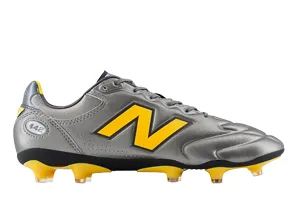
TrueTouch Tech at its best, the build this review is based on. Floating tongue or Elite Knit.
Check the Elite at New Balance ↗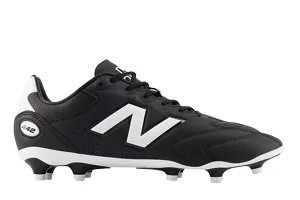
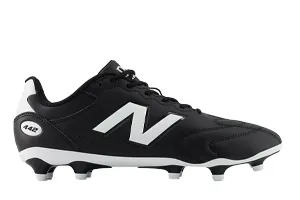
New Balance 442 v3: pros and cons
Pros
- Softens into a comfortable and highly pliable upper after a short break-in.
- Surprisingly lightweight for a traditional-looking boot.
- Stable conical traction with easy rotational movement.
Cons
- TrueTouch Tech still has some synthetic tension and cannot fully reproduce K-leather.
- Low, pointed toe box makes sizing more complicated than it should be.
- The move away from leather may disappoint players attracted to the 442’s original identity.
FootballBoots.co.uk is an independent, unaffiliated review site, and all opinions in this review are our own. This page contains affiliate links, which may earn us a commission if you choose to purchase, but this does not influence our reviews. This review is by Dean Ariola, FootballBoots.co.uk’s Chief Writer, who tested the 442 v3 on the pitch.
| Football identity | Comfort, natural touch and simplicity, without the weight or upkeep of leather |
|---|---|
| Best for | Central midfielders, full-backs and composed defenders who value comfort, stability and predictable ball contact |
| Fit | Low, tapered toe box. Floating-tongue Elite suits wide, flat or high-volume feet; Elite Knit suits medium-to-narrow, lower-volume feet |
| Sizing | Start half a size up. New Balance recommends a full size, which can create unnecessary length unless your foot is long or high-volume |
| Surface | An FG soleplate. A dedicated AG or MG option is the safer choice for synthetic pitches |
| Range | Elite (floating tongue or Elite Knit), Pro and Team |
| Worn by | A value-for-money alternative in New Balance’s own range, positioned against the Tiempo and King |
| Where it sits | New Balance’s heritage silo, alongside the Furon and the Tekela |
Football identity: what the 442 v3 is for
The New Balance 442 v3 proves that a modern boot does not need to feel complicated. While the Furon targets speed and the Tekela emphasises control, the 442 centres on comfort, natural touch and simplicity. It looks traditional but feels surprisingly light and pliable, with either the standard Elite’s floating tongue or the Elite Knit’s closer one-piece collar.
New Balance 442 v3: buy it or not
- You want a familiar, traditional-feeling boot without leather’s weight or upkeep
- Your game is receiving, circulating and covering ground, not explosive speed
- You want a choice between adjustable and closer-fitting constructions
- You value simplicity and value-for-money over headline technology
- You play mostly on firm natural grass
- You’re attracted specifically to the 442’s original leather identity
- You want the Tiempo Maestro’s more premium synthetic-leather feel
- You want an aggressive, spring-loaded soleplate
- You want strong ball grip from the upper
- You play mainly on artificial grass

Who the 442 v3 is for
Values comfort, stability and predictable ball contact across a full match rather than a specialised speed or grip feel.
Needs to pass, carry, tackle and cover ground without wanting boots heavily specialised towards speed or grip.
Wants the familiarity of a traditional boot without the weight, maintenance or stretching associated with natural leather.
This favours players who prefer smooth flexibility and balanced traction rather than an aggressively stiff plate, sharp studs or prominent ball-grip elements. It can also suit forwards who prefer a slightly cushioned touch over the thinner, sharper sensation of a speed boot.
What it feels like on the pitch
Receiving and circulating under pressure
The lightly padded TrueTouch Tech upper takes some sting out of firm passes while retaining a clear connection with the ball. This works particularly well receiving under pressure, protecting possession and moving the ball quickly with short passes.
Turning and repositioning
The conical studs provide a stable base while allowing the foot to rotate naturally. This makes the 442 comfortable during frequent turns, defensive adjustments and changes of direction, though the traction is not especially aggressive when exploding into a sprint.
Matches requiring an all-round boot
Its low weight, flexible upper and neutral soleplate make the 442 easy to wear across a full match. It suits players who need to pass, carry, tackle and cover ground without wanting their boots heavily specialised towards speed or grip.
Fit and feel
| Length | Start half a size up. The low, tapered toe box can leave toes feeling compressed even when forefoot width is otherwise comfortable. |
|---|---|
| Width | Not as naturally roomy as its traditional appearance suggests. The microfibre will soften with use but will not stretch lengthways like K-leather. |
| Floating-tongue Elite | More accommodating through the midfoot and instep, better suited to wide, flat or high-volume feet. |
| Elite Knit | A closer fixed opening, working better for medium-to-narrow, lower-volume shapes, with less room for adjustment. |
| New Balance’s recommendation | A full size up. That may create unnecessary length unless you have long toes or a particularly high-volume foot. |
| Width option | If width is the main issue, use New Balance’s 2E option where available instead of compensating by going excessively long. |
Sizing. The 442 v3 is not as naturally roomy as its traditional appearance suggests. Its toe box sits low and tapers towards a fairly pointed end, so true to size can leave toes feeling compressed even when the forefoot width is otherwise comfortable. I would start half a size up. New Balance recommends a full size, but that may create unnecessary length unless you have long toes or a particularly high-volume foot.
The technology, translated
A lightweight PU microfibre with debossed quilting, replacing the 442’s former leather construction. It feels more substantial and padded than the thinner synthetic on the v2 Elite, with some synthetic tension straight from the box that softens after a short break-in. On the ball, internal foam creates a balanced touch: direct enough for a clear connection, with cushioning to soften harder passes and strikes.
- Receiving a firm pass
- Protecting possession under contact
- Striking through the ball
- Wearing it for the first session
A re-engineered dual-injected nylon plate, lighter and more modern than the 442’s traditional appearance suggests. It provides enough midfoot rigidity to keep the boot stable while staying naturally flexible through the forefoot. There is some snap pushing off, but nowhere near as forceful as the Furon or other dedicated speed boots.
- Turning and changing direction
- Pushing off through a stride
- Standing your ground under contact
- Playing on firm natural grass
My relationship with the 442
The 442 has never been the boot I reach for when I want to be impressed by technology, and that’s precisely why I keep coming back to it. It does the ordinary things a match asks of you, receiving, passing, turning, tackling, without ever making you think about your feet. That’s a harder thing to build than it sounds.
The move away from leather is the honest tension in this generation. TrueTouch Tech is a genuinely good synthetic, better than Nike’s Flytouch Plus or Puma’s K-BETTER in my experience, but it still isn’t the material that made the original 442 special to the players who bought it for exactly that. What New Balance has built instead is a lighter, more modern boot that happens to look like the old one. Whether that trade is worth it depends entirely on what you valued about the original.
Weaknesses and tradeoffs
442 v3 vs other synthetic-leather and comfort boots
|
442 v3
|
 Tiempo Maestro |
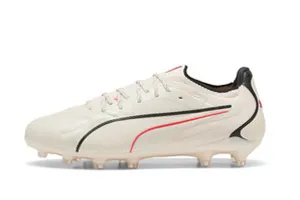 King 20 |
 Premier 3 |
|
|---|---|---|---|---|
| Job on the pitch | Value, simplicity, neutral traction | Premium synthetic-leather refinement | Maximum cushioning and comfort | Authentic real-leather feel |
| Upper | TrueTouch Tech PU microfibre | TechLeather, softer, more consistent | TOTALTOUCH+, thick and buttery | Natural leather forefoot |
| Weight and upkeep | Light, low maintenance | Light, low maintenance | Heavier, low maintenance | Heavier, needs real care |
| Choose it for | A cleaner, lower-maintenance interpretation of comfort | Superior synthetic-leather refinement | Maximum padding, width and comfort | Real leather and old-school comfort |
442 v3 vs Nike Tiempo Maestro
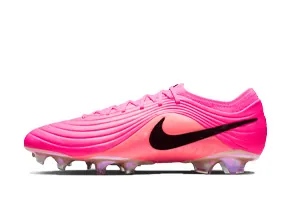
The Tiempo Maestro represents the more premium execution of synthetic leather. TechLeather feels softer straight from the box, maintains greater consistency from heel to toe and gives more surface tack, while its split soleplate feels more agile. The 442 cannot quite match that refinement, but it is lighter, less expensive and offers a more traditional floating-tongue option alongside dedicated wide sizing. The Maestro justifies itself through its superior synthetic-leather experience, while the 442 makes the stronger case for value, simplicity and neutral traction. Read the full Tiempo Maestro review.
442 v3 vs Puma King 20
The King 20 takes cushioning much further. Its thick, buttery-soft TOTALTOUCH+ upper creates a cosy, highly dampened sensation, though it can numb some of the detail from your touch. The 442 places less material between the foot and ball, giving it a clearer, more balanced contact while still providing some protection. It also feels lighter and less bulky. Lean towards the King if maximum padding, width and comfort are the priorities. The 442 is better suited to someone wanting a sharper touch and more streamlined all-round package. See our King 20 review.
442 v3 vs Nike Premier 3
The Premier 3 gives the more authentic traditional experience through its natural-leather forefoot, which becomes softer and more personalised with use. However, it is heavier, needs more maintenance and can lose some structure as the leather stretches. The 442 v3 feels lighter, holds its shape better and offers more modern lockdown without completely abandoning that cushioned touch. The Premier suits players seeking real leather and old-school comfort, whereas the 442 offers a cleaner, lower-maintenance interpretation of the same idea.
442 v3 vs New Balance Tekela v5
The Tekela v5 is the more technical New Balance option. Its softer Dynamic TouchTech upper adds noticeable surface grip, while the sculpted heel and angled rim studs give a more connected feel during lateral movements. The 442 is less grippy and dynamic but offers a slightly more cushioned touch, simpler fit and calmer conical traction. Players wanting close control and sharper multidirectional movement will get more from the Tekela, while the 442 better serves those prioritising value-for-money and simplicity. Read the full Tekela v5 review.
Where the other three take you
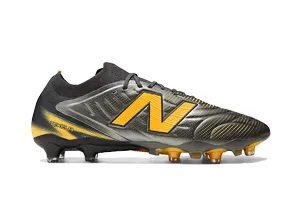
Elite, Pro or Team: which 442 v3 should you buy?
This review is based on the Elite. Even at that top tier, you have a real choice: the adjustable floating-tongue construction or the closer Elite Knit alternative.
TrueTouch Tech microfibre is softer and more pliable, while the lightweight dual-injected nylon plate delivers the best balance of flexibility, stability and snap. It is the only tier offering both the adjustable floating-tongue construction and the closer Elite Knit alternative. The upgrade is functional rather than merely cosmetic.
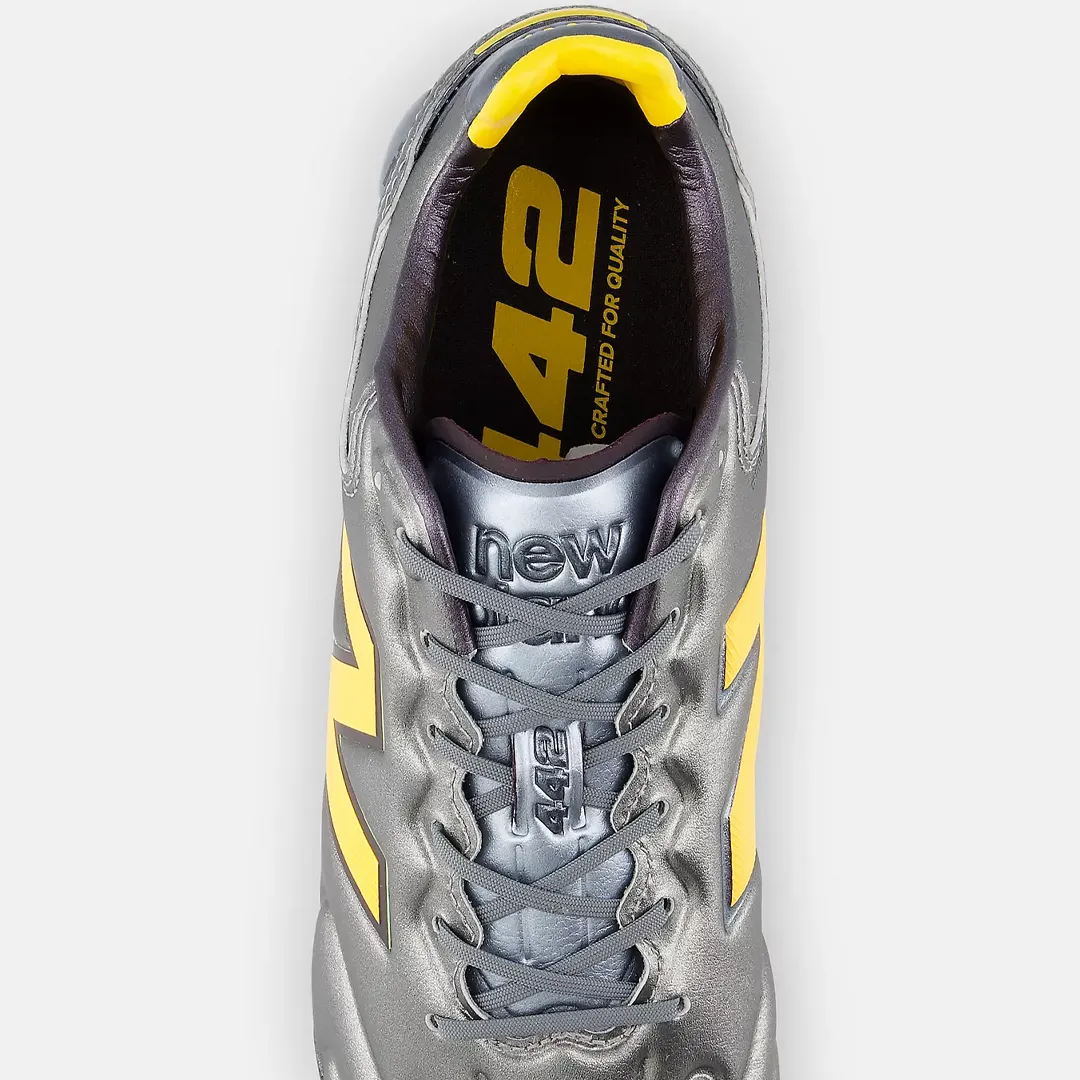
Retains a good-quality microfibre upper with stitched quilting, though the material feels denser and less refined against the ball. It only comes with the traditional U-throat and floating tongue. The biggest drop is underneath: the Elite’s lightweight nylon plate is replaced by a heavier TPU outsole, reducing flexibility and responsiveness.
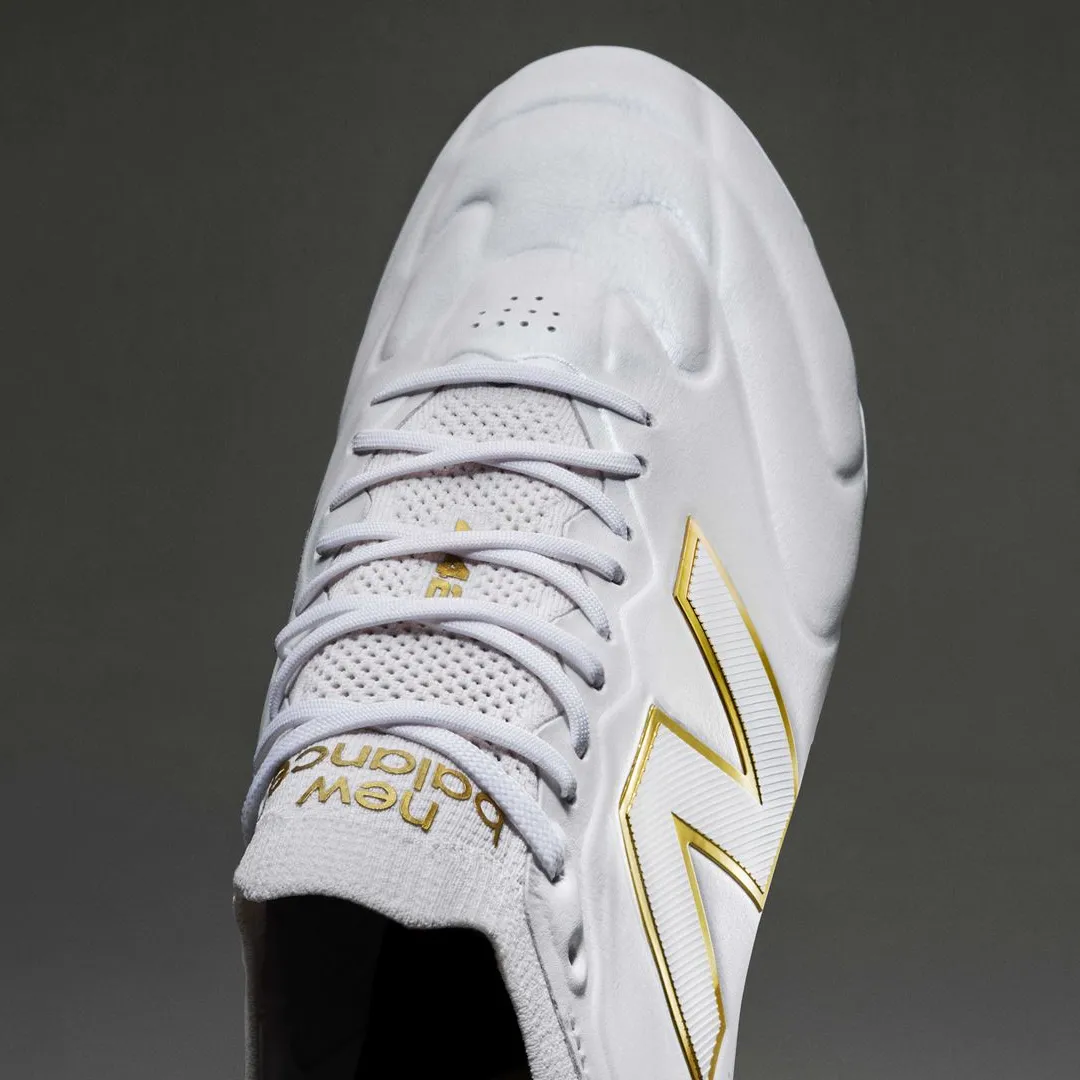
Changes to a more basic synthetic upper, a mesh heel lining and a die-cut EVA insole. The material is thicker and less pliable, producing a more muted touch, while the basic TPU tooling feels heavier underfoot with a less refined, more block-like stud shape.
TrueTouch Tech at its best, the build this review is based on. Floating tongue or Elite Knit.
Check the Elite at New Balance ↗Where to buy
442 v3 Elite. New Balance’s synthetic-leather boot, richer and more padded than the v2 it replaced, and priced under the Tiempo and King. Firmer out of the box, so expect a short break-in. Sizes and current colourways are on the New Balance site.
Check availability at New BalanceAffiliate link via Skimlinks. Opens New Balance UK in a new tab. Full disclosure is at the top of this review.
New Balance 442 v3 questions answered
| Question | Short answer |
|---|---|
| Is the New Balance 442 v3 made from real leather? | No. The Elite uses New Balance’s TrueTouch Tech PU microfibre, while the lower tiers use progressively more basic synthetic materials. It needs less maintenance and holds its shape better than leather, but traditionalists will still notice some synthetic tension. |
| Do the New Balance 442 v3 run true to size? | The low, pointed toe box makes them feel shorter than expected. I would start half a size up, though New Balance officially recommends going up a full size. A full-size increase may create excessive length, so trying them on first is advisable. |
| Are the 442 v3 suitable for wide feet? | Yes, provided you select the right construction. The floating-tongue Elite offers more adjustment through the midfoot and instep, while dedicated 2E versions provide genuine additional width. The Elite Knit sits closer and generally works better for medium-to-narrow feet. |
| What is the difference between the 442 Elite and Elite Knit? | Both use the same TrueTouch Tech upper and lightweight nylon soleplate. The standard Elite has an adjustable U-throat and floating tongue, while the Elite Knit uses a closer one-piece Hypoknit collar. The decision should be based primarily on which closure matches your foot volume. |
| Can the 442 v3 FG be worn on artificial grass? | The rounded conical studs allow easier rotation than aggressive blades or chevrons, but the boot is still officially designed for firm natural grass. A dedicated AG or MG version remains the safer option for regular use on synthetic pitches. |
Final verdict
New Balance 442 v3: FootballBoots Verdict
Buy it if
- You want a familiar, traditional feel without leather’s upkeep
- Your game is receiving, circulating and covering ground
- You want a choice between adjustable and closer-fitting constructions
- You value simplicity and value-for-money
- You play mostly on firm natural grass
Avoid it if
- You’re attracted specifically to the original leather 442
- You want the Tiempo Maestro’s more premium synthetic feel
- You want an aggressive, spring-loaded soleplate
- You want strong ball grip from the upper
- You play mainly on artificial grass
Read the full final verdict
What is it trying to be? A traditional-looking boot built around comfort, natural touch and simplicity, without the weight or upkeep of leather.
Does it succeed? Mostly. TrueTouch Tech is a genuinely good synthetic and the boot is lighter and more modern than its looks suggest, though it can’t fully replace what real leather offered.
Who benefits most? Central midfielders, full-backs and composed defenders who value comfort, stability and predictable ball contact over speed or grip.
Who should avoid it? Players attracted specifically to the 442’s original leather identity, and anyone wanting an aggressive plate or strong ball grip.
Where does it sit in the silo’s history? The 442 has gradually moved from New Balance’s affordable leather boot towards a lighter, more modern synthetic model. The v3 is the most modern version so far, further removed from the affordable leather identity with which the silo began.
How the 442 has changed over time
The 442 has gradually moved from being New Balance’s affordable leather boot towards a lighter, more modern synthetic model. Its materials and construction have changed significantly, but the silo has retained its quilted appearance, traditional character and stable traction.

Developed the synthetic direction through the richer, more padded TrueTouch Tech upper. New Balance also re-engineered the lightweight nylon plate and introduced two Elite constructions: a closer Elite Knit and a traditional floating-tongue version. Lighter and more performance-focused, though further removed from the affordable leather identity with which the silo began.

Marked the decisive move away from natural leather. New Balance introduced a thin microfibre synthetic upper with quilted debossing and a one-piece Hypoknit construction, reducing weight and creating a more structured fit. It established the synthetic-leather formula that would shape the v3.

Expanded the leather construction and greatly improved overall softness and comfort. Its top Pro model became particularly popular for delivering a largely K-leather upper at a relatively modest price. A lightweight nylon plate with rounded conical studs gave a more modern, flexible underfoot experience.

Entered the market as a straightforward, value-focused leather boot. It combined a leather forefoot with a synthetic rear section, a traditional fold-over tongue and a stable stud configuration, giving players an accessible alternative to increasingly expensive heritage boots.
See what New Balance has in stock across the Elite, Pro and Team.
Check stock at New Balance