

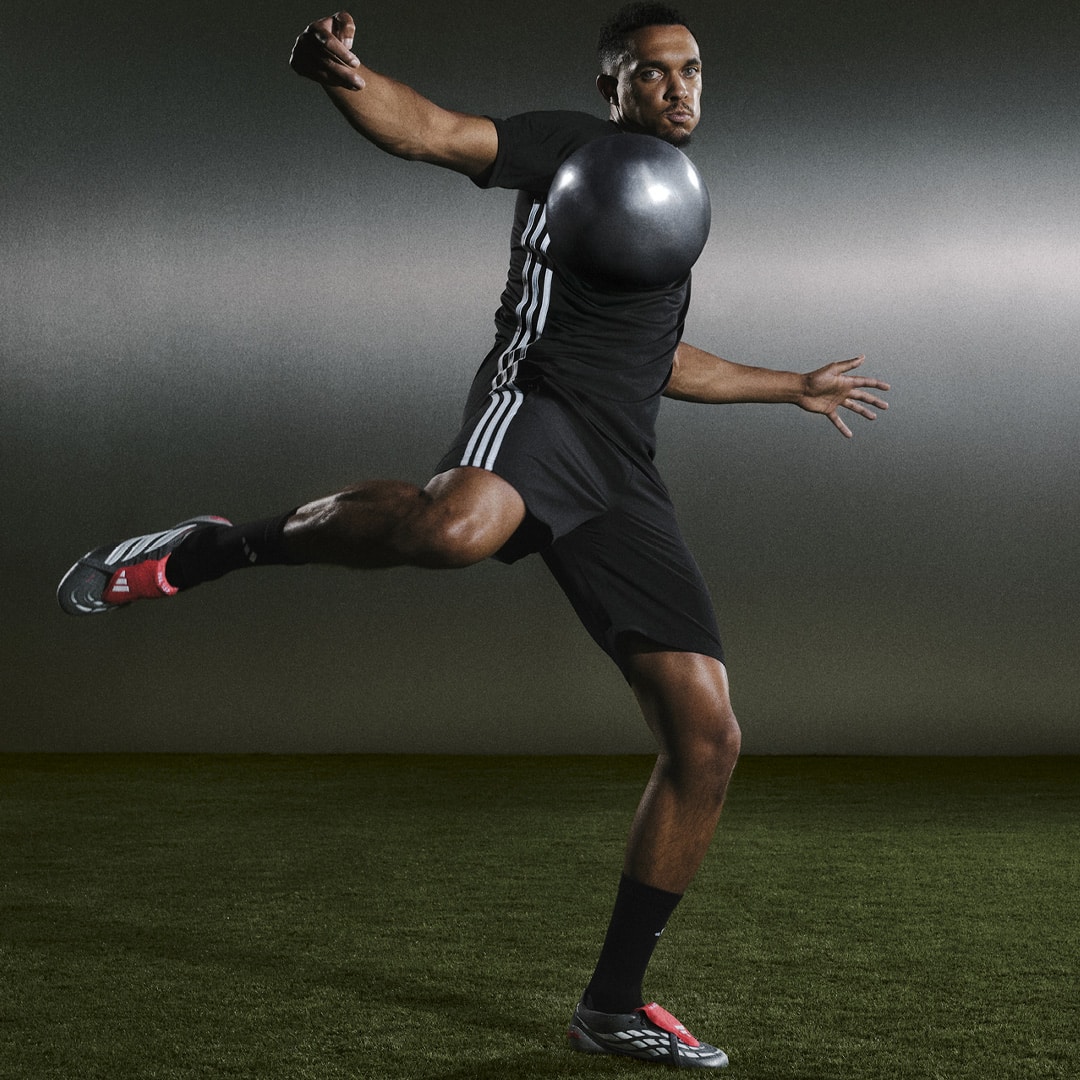
The adidas Predator 26 is built for players who decide what happens next.
The F50 helps you arrive first. The Phantom helps you use the ball once you have it. The Predator is about controlling tempo, distributing from deep and striking through the ball.
It is adidas’ second most-worn silo, behind the F50, in our most popular football boots ranking.
Quick verdict
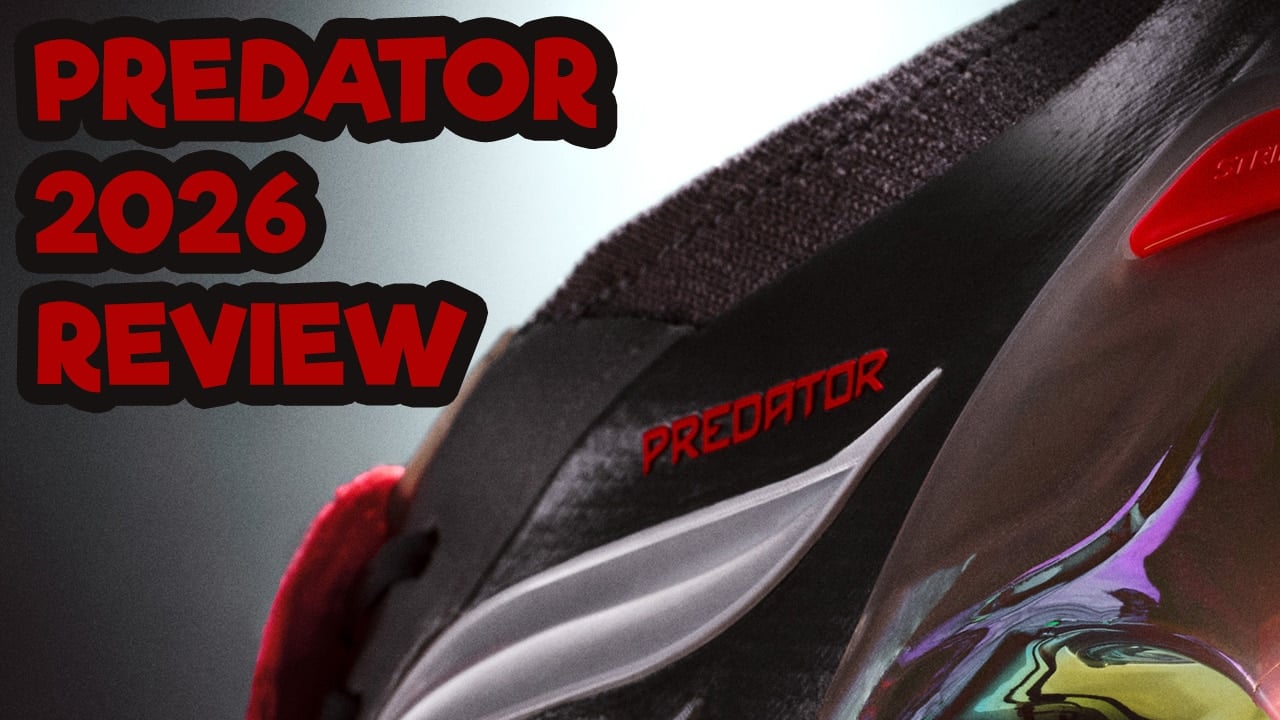
The Predator 26 is a control boot. It is about what happens after you get the ball: controlling tempo, distributing from deep, striking through it and making the next action feel deliberate when the pressure arrives.
The 26 generation is a deliberate step back towards what made the Predator matter. The textile mesh upper is considerably thinner and more direct than the padded HybridTouch it replaces, so there is less material between your foot and the ball. You notice it most when receiving and striking. NanoStrike+ is a more restrained take on grip: it is worked into the surface of the upper rather than sitting on it as raised spikes, so you feel the friction on contact without constantly feeling the technology. Strikeframe, with the returning PowerSpine through the midfoot, gives the boot a firm, planted platform when you drive a pass or a shot.
I have worn every Predator generation since 1998, and the best ones share one trait: they make technically good footballers feel slightly calmer when the game speeds up. Not dramatically, not magically, just enough that receiving under pressure, switching play and striking through the ball feel more repeatable. The 26 gets closer to that than the softer, more padded recent generations, because you get a clearer read on where the ball meets the boot without losing the stability that has always defined the silo.
It has never been a speed boot and it does not try to be one now. It asks for a genuine break-in, and the fit is less universally forgiving than older Predators. But if your game is about control, distribution and decision-making, this is one of the strongest modern Predators adidas has made.
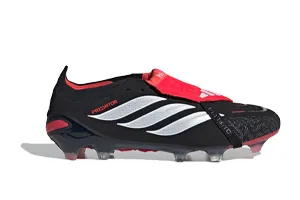
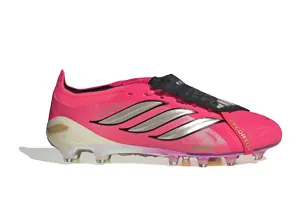
Current Predator 26 Elite colourways, newest first.
The adidas Predator is designed and produced by adidas. FootballBoots.co.uk is an independent, unaffiliated review site and every opinion here is our own. This page contains affiliate links that may earn us a commission if you buy through them; that never influences the review. Written and tested by Ian Ebbs, who bought this pair with his own money.
| Football identity | Decide what happens next: control, distribution, striking |
|---|---|
| Best for | Midfielders, ball-playing defenders and set-piece takers, players who influence tempo rather than run in behind |
| Fit | Medium to wide forefoot, roomy toe box, noticeable midfoot taper. Not a narrow-foot boot |
| Break-in | Real. Softens after 30 to 45 minutes, settled after about a session and a half. Train in them first |
| Stud options | FG for natural grass, AG for artificial. Not interchangeable for regular use |
| Range | Elite, Pro, League, Club. Elite comes laced, laceless and in the FT fold-over tongue version |
| Where it sits | adidas’ second most-worn silo, behind the F50 (see our best selling football boots ranking) |
Football identity: what the Predator is for
The F50 is about getting to the ball first. The Phantom is about using it in tight space. The Predator is about what you decide to do with it once it is yours.
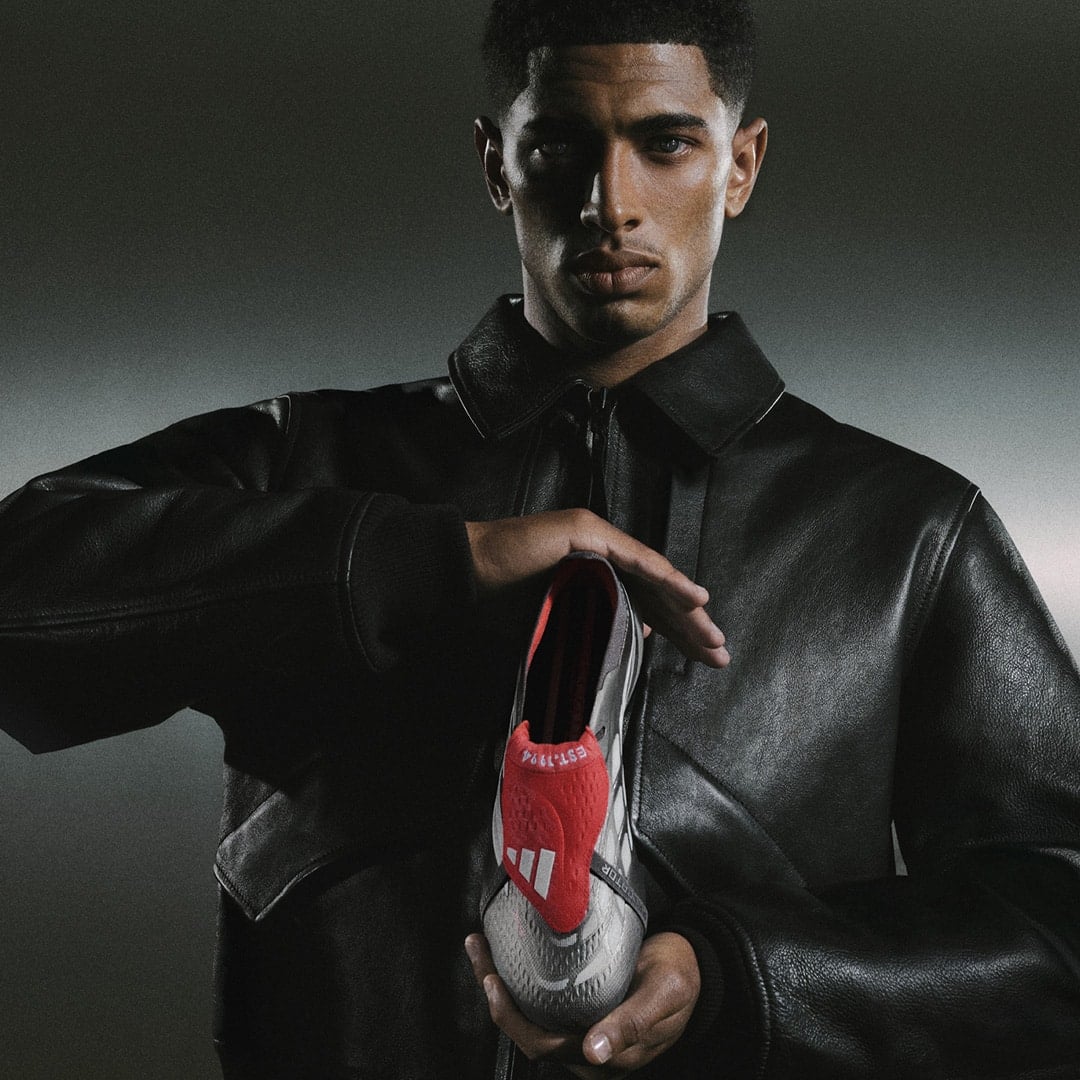
That distinction is why the Predator has stayed relevant for more than three decades. It rewards players who control tempo, distribute possession, strike through the ball, dictate play and organise attacks. The best Predator players are rarely the quickest on the pitch. They are usually the ones making the most important decisions. It is why Zidane, Beckham, Gerrard, Alonso and Bellingham all make sense as Predator footballers despite completely different physical profiles, positions and eras. The common thread is influence.
Among adidas boots only the F50 is worn by more players (see the best selling football boots ranking).
Identity
For the players who decide what happens next: controlling tempo, distributing from deep and striking through the ball rather than running past it.
Football problem it solves
How do I control tempo, distribute from deep and strike through the ball so the next action feels deliberate when the pressure arrives?
Best match moments
- Receiving a firm pass with a defender on your back
- Switching play with a driven diagonal
- Striking from distance and dead balls
- First-time passing into tight areas
- Dictating tempo through the middle third
adidas Predator 26: buy it or not
- You are a midfielder who controls possession and sets the tempo
- You build from the back and hit driven passes under pressure
- You take set pieces, or your game leans on striking quality over running
- You have medium to wide feet and found the Mercurial or Phantom restrictive
- You play mostly on dry or slightly damp pitches and will train a boot in first
- Your game revolves around acceleration and running in behind (buy the F50)
- You have genuinely narrow feet, particularly through the heel
- You want a boot that is comfortable straight out of the box
- You play most weeks in persistent heavy rain and are buying for the grip
- You want the lightest possible boot on the shelf
Who this boot is for
The Predator suits players whose game revolves around ball contact, distribution and deliberate decision-making. It also suits wider feet: it runs roomy through the toe box and forefoot, so players who found the Mercurial or Phantom tight often land here. The one caveat is the midfoot, which is covered in the fit section.
A defender presses from behind as the pass arrives. The grip helps you feel the ball a fraction longer and redirect it with more confidence.
Switching play and hitting driven passes under pressure. The PowerSpine platform is what makes those feel planted rather than loose.
The instep grip genuinely changes how a clean strike or cross comes off the boot.
Receiving on the half-turn in congested areas, where a reliable first touch decides whether the move continues.
Roomy through the toe box and forefoot, so players the Mercurial or Phantom pinched often land here. Mind the midfoot taper on first wear.
Fit, shape and lockdown
| Length | Runs true to adidas length for most foot shapes. Do not size up just because the upper feels stiff out of the box. |
|---|---|
| Width | Midfoot tapers. Roomy toe box and forefoot, but narrower through the centre of the foot than older Predators. |
| Best foot shape | Medium to wide. Wide feet get useful toe room but need to trust the break-in through the midfoot. |
| Narrow feet | Possible excess space around the heel or forefoot. The external heel counter helps once the boot is properly done up; grip socks help early movement. |
| Break-in | Softens after 30 to 45 minutes of play, settled after about a session and a half, longer if the initial fit is tight. Train in them before a match. |
| Heel lockdown | Strong once the boot is settled, thanks to the external heel counter. Early sessions can feel loose at the rear on a narrow heel. |
| Laced vs laceless (Elite) | Laceless gives a cleaner striking surface and a uniform feel. Laced lets you adjust midfoot tension: the better call for an unusual foot shape. See the tier selector below. |
The 26 asks for more patience than the previous generation. The textile mesh feels stiff and quite snug on first wear, but after roughly 30 to 45 minutes of play it starts to soften, and the upper becomes noticeably more pliable over the following sessions. Give it a training session before a match.

The shape is less straightforward than the older, naturally accommodating Predator fit. There is good height and volume around the toe box, but the midfoot has a noticeable taper that makes the 26 feel narrower through the centre of the foot. Medium-width feet get a secure fit easily. Genuinely wide feet will feel the squeeze more on first wear and need to trust the break-in. Narrow feet can find the opposite problem, with a little excess space around the heel, although the external heel counter keeps the rear of the foot locked once the boot is properly done up. Grip socks help if you still feel movement in the first few sessions.
Sizing. True to adidas length for most foot shapes. The snugger midfoot means width is the thing to think about, not length. Do not size up just because the boot feels stiff out of the box; give the upper time to soften first. If your toes are genuinely cramped rather than simply feeling pressure from a new upper, reconsider the size or shape. Wider-footed players already between sizes should judge on the midfoot fit rather than adding length.
If foot shape is your main question, our wide football boots and narrow football boots guides go deeper.


My relationship with the Predator
I have tested every Predator generation since 1998, which gives me a slightly unusual view because I have watched the boot move through several identities. The early Predators were revolutionary because they genuinely felt different from everything else on the shelf. The Mania was iconic. The Absolute refined the formula. The Powerswerve pushed the striking idea further.
Then came a stretch where adidas seemed less sure what the Predator was for. Some generations chased technology, others chased trends, and the results were mixed. The Edge in particular moved the boot away from the things that made it popular. The modern Predator has gradually found its way back.
What I like about the 26 is that it is clear about its purpose. It is not trying to be a speed boot, a leather boot or a boot for everybody. It knows exactly which footballer it is for, and the best Predator generations have always shared that. If I were building a team around controlling possession, distributing from deep and creating chances through quality on the ball, the Predator would still be one of the first boots I would reach for.
How the Predator has changed
The Predator’s evolution makes more sense through football outcomes than through technology names. The Mania was about confidence. The Powerswerve was about striking. The LZ was about manipulating the ball. The Demonskin era pushed grip to its extreme. The Edge lost some of the Predator identity. Accuracy brought it back.
The 26 is refinement rather than reinvention. The grip is more mature and less intrusive. The soleplate is more purposeful. The package feels less like a technology showcase and more like a football boot. That matters, because the best Predators have always helped footballers play rather than constantly reminding them what they are wearing. The 26 gets closer to that than several recent generations.
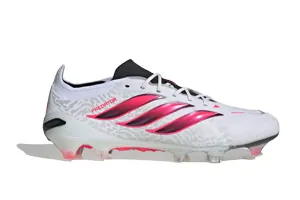
The full NanoStrike+ and PowerSpine build this review is based on. Laced, laceless and FT.
Check the Elite at adidas ↗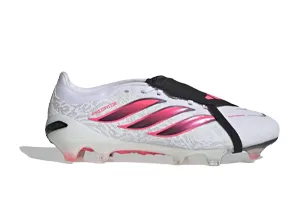
Most of the Elite’s character and shape for considerably less. Where the range makes financial sense.
Check the Pro at adidas ↗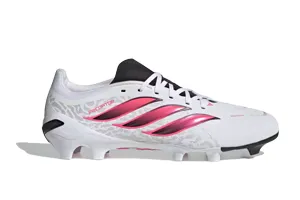
Functional for recreational and developing players who want the Predator look at a sensible price.
Check the League at adidas ↗On the pitch
| Situation | Rating | What you notice |
|---|---|---|
| Receiving under pressure | 8/10 | The grip helps good technique repeat. It will not rescue a mistimed touch. |
| Striking from distance and switches | 9/10 | The PowerSpine platform does not flex away from you. This is the standout. |
| First-time and driven passing | 8/10 | Firm, predictable contact into tight areas. |
| Turning in tight spaces | 7/10 | Fine once broken in. The roomy fit helps, the midfoot taper does not. |
| Sprinting and recovery runs | 6/10 | Competent, but not its job. The F50 is the honest choice there. |
| Defending and tackling | 7/10 | Stable and planted. Good for a ball-playing defender. |
| Wet-weather grip | 5/10 | Once ball and upper are saturated the NanoStrike+ advantage shrinks a lot. |
| Comfort out of the box | 4/10 | Stiff textile mesh. Needs a genuine break-in. |


Receiving under pressure
This is where the Predator earns its reputation. Receiving a firm pass with a defender arriving, the situation where one heavy touch costs you the ball, is where the grip gives you a fraction more control over the ball’s path off your foot. It is subtle. It will not rescue a mistimed touch. But when you receive cleanly, the ball sits marginally longer and you feel more in control of what comes next.
The boot rewards players who already have good technique. It does not manufacture control from nothing. What it does is give technically good players a more reliable surface when the pace of the game picks up, and the benefit becomes more obvious as the level rises. At lower levels players often have more time than they realise. At higher levels, where passes arrive faster and pressure arrives sooner, the Predator starts to make more sense. In a recent match I received several passes while being closed down from behind, and those are exactly the moments the grip becomes noticeable, not because it creates control from nowhere but because it makes good technique feel a little more repeatable.
Striking, driven passes and long diagonals
The Strikeframe is what separates the 26 from its immediate predecessors. The PowerSpine running from heel through midfoot creates a flatter, stiffer platform underfoot. When you strike through the ball, particularly on long diagonal switches or driven passes into tight areas, the soleplate does not flex away from you. You feel properly grounded. Compared with the Predator 24 or 25, which had a more flexible outsole, the 26 feels more confident to play off, and players who regularly hit balls with pace will feel that within a session.
This is where the Predator separates itself most clearly from the Phantom. The Phantom feels designed to help you organise the ball. The Predator feels designed to help you deliver it.
Tight areas in midfield
When the game becomes compact, in the press, turning quickly to change direction, the Predator does not punish you the way an aggressive speed boot can. The roomy fit and the now-softened upper give you enough space that your foot is not fighting the boot when you plant and pivot. That matters over ninety minutes, and it becomes more noticeable late in games when feet swell. Boots that felt fine at kick-off can create forefoot pressure by the 70th minute. The Predator rarely does.
In the wet
An honest limitation. NanoStrike+ is most convincing in dry conditions, where the extra friction is easy to feel. In heavy rain, once the ball and upper are saturated, the advantage over a plain synthetic upper narrows a lot. The Predator remains perfectly usable in the wet; it just leans more on surface tackiness than something like Nike’s Gripknit, so its edge shrinks when everything is soaked. If you play most of your football on wet winter grass, know that before you buy.
Technology translation
Three technologies define the 26. Here is what each one actually changes when you play, rather than what the marketing says.
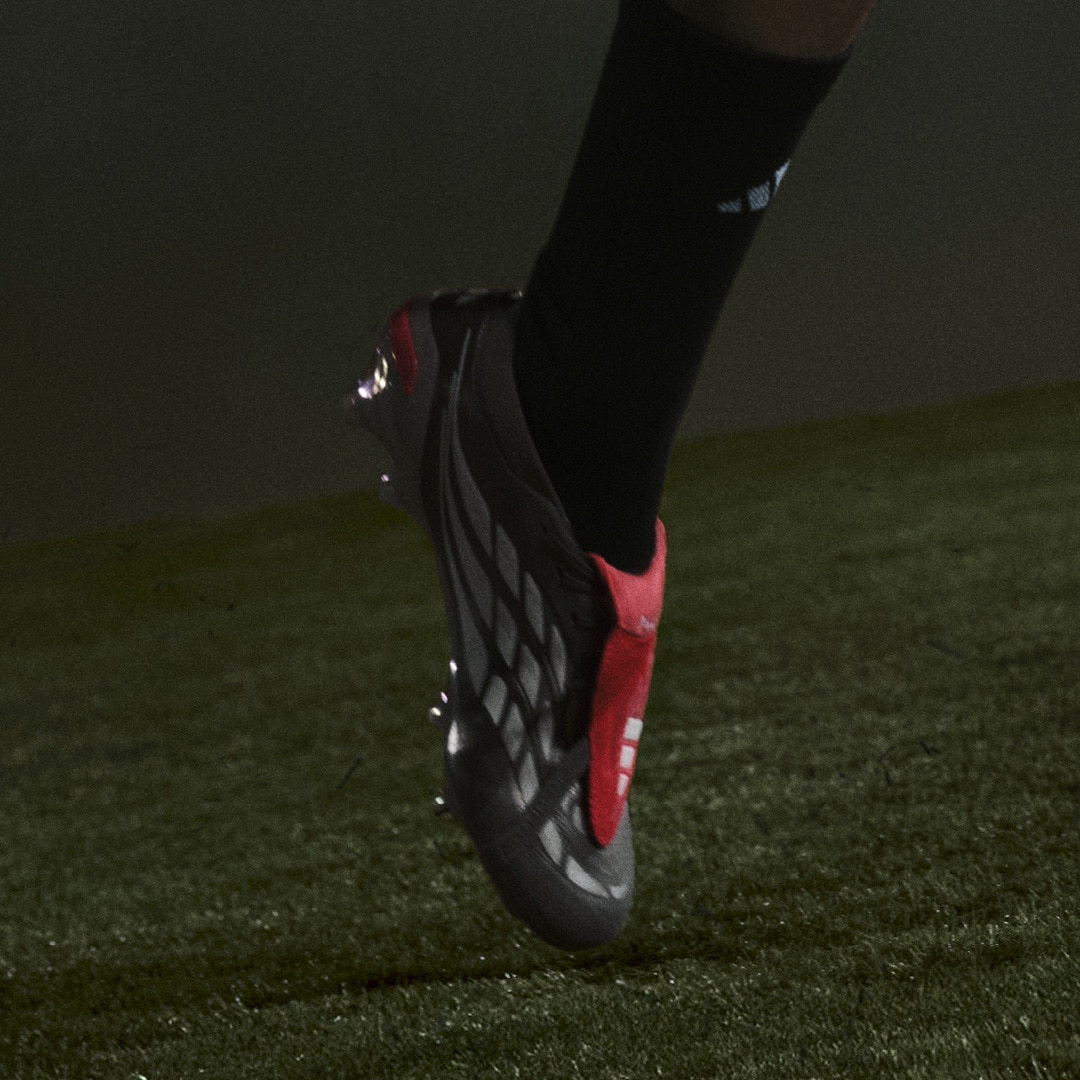
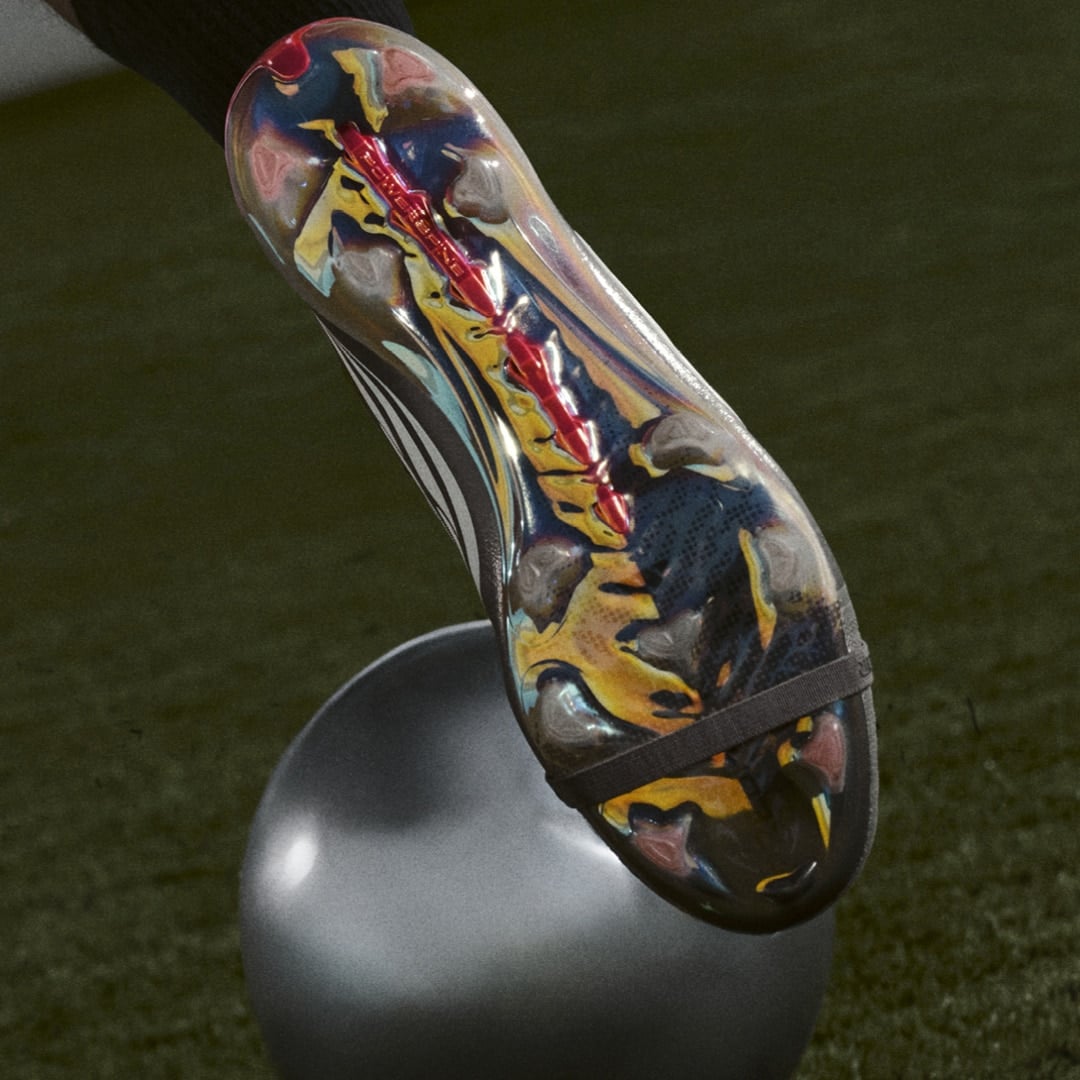
adidas calls these grip elements. On the pitch it is a little more friction where the ball meets the instep and toe box, without you constantly feeling the technology. Worked into the surface, not sitting on it as spikes like the Demonskin era.
- Striking through the ball
- Playing firm instep passes
- Receiving a driven pass cleanly
- Whipping a cross or dead ball
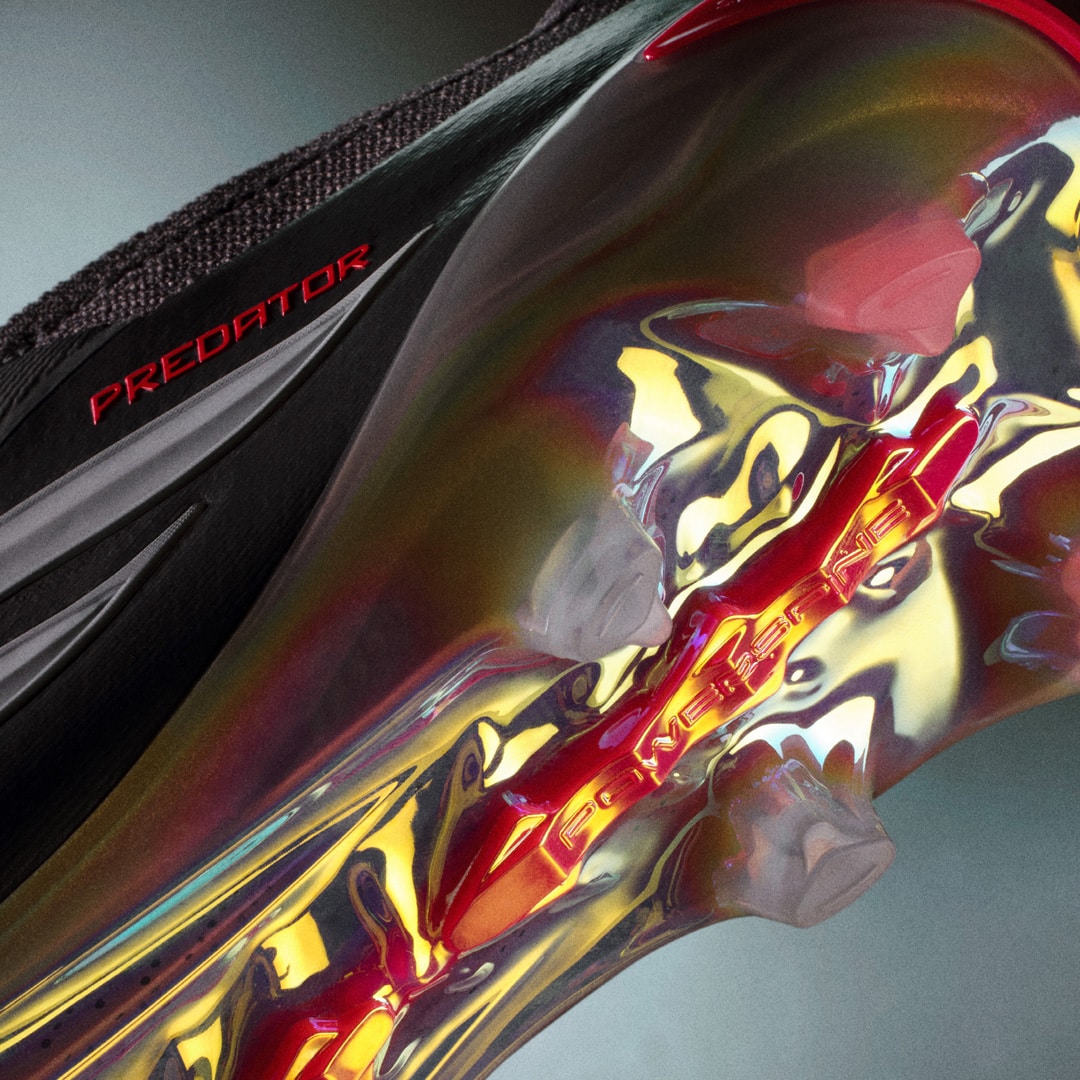
A firm, planted platform when you put force through the ground. The plate does not want to bend through the midfoot, so powerful passes and shots feel controlled rather than springy. Larger, rounder stud corners let the boot rotate more smoothly than the previous generation.
- Long-range efforts
- Switching play
- Firm passes into tight areas
- Planting to turn
Thinner and less padded than the HybridTouch 2.0 it replaces. Less material between foot and ball, so a closer, more immediate sensation and a clearer read on the ball once broken in. Not a straight material swap: it changes the character of the boot.
- First wear (noticeably firmer than the 25)
- Receiving and cushioning
- Any close-control touch
On the studs and surfaces: the 26’s tooling has slightly larger, more rounded corners that let the boot rotate more smoothly when turning rather than feeling locked into the surface. For regular play on modern 4G, choose the AG version with its conical tooling rather than using FG studs on the surface. Our artificial grass boots guide covers why FG and AG are not interchangeable.
Weaknesses and tradeoffs
No boot excels everywhere, and the 26 has made some obvious compromises for its more direct character.
Think twice if: you have narrow feet and dislike grip socks; you play mostly in heavy rain; your game revolves around acceleration; you want instant out-of-box comfort; you want the lightest boot available.
How it compares
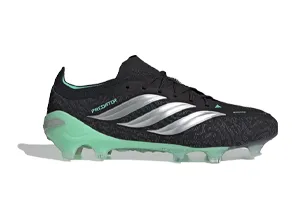 Predator 26
|
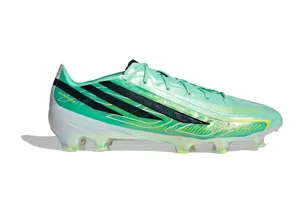 F50
F50
|
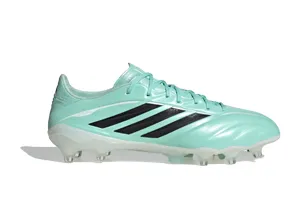 Copa Pure
|
|
|---|---|---|---|
| Job on the pitch | Decide what happens next: control, distribution, striking | Arrive first: acceleration and attacking space | Disappear on the foot: natural, cushioned touch |
| Upper | Textile mesh with NanoStrike+ grip zones | Thin, streamlined synthetic built for speed | Soft coated leather-feel, comfort first |
| Fit width | Wide forefoot, taper midfoot | Narrow to medium | Roomy and accommodating |
| Striking platform | Firm, planted (PowerSpine) | Light and reactive, less grounded | Comfortable, not a striking tool |
| Break-in | Genuine, ~1.5 sessions | Short | Minimal |
Where the other three take you
Choose if your value comes before you get the ball: acceleration, running in behind, attacking space.
Read the F50 review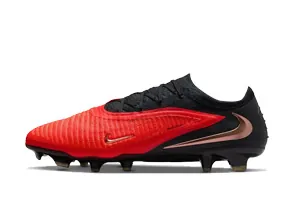
Choose if your value comes after you receive it in congestion: turning, combining, solving tight areas.
Read the Phantom 6 reviewChoose if you want the boot to disappear: a natural, cushioned touch over an active performance surface.
Read the Copa reviewRead the full comparison breakdowns
Predator vs Phantom
The most direct comparison in the modern market. Both target technical players and both appeal to midfielders. The difference is where the grip is applied: the Phantom spreads Gripknit across the whole upper, the Predator concentrates NanoStrike+ around the striking zones. If your game is receiving, turning, dribbling and combination play, the Phantom has the edge. If it is long passing, set pieces, driven strikes and controlling tempo, the Predator becomes more attractive.
Both are wider than the Mercurial. The Predator is slightly wider and more planted, the Phantom slightly more agile. Neither is better, they solve different problems. Full detail in our Nike Phantom 6 review.
Predator vs F50
Fundamentally different boots. The F50 rewards players who attack space; the Predator rewards players who use possession. The F50 is about acceleration and arriving first, the Predator about influence and deciding what happens next. For most players, playing style decides this immediately. See the adidas F50 review.
Predator vs Copa Pure
Both adidas boots for technical players. The Copa prioritises comfort and a natural touch and disappears on the foot. The Predator prioritises control and striking and actively contributes to what you are doing. Players who want a modern performance surface lean Predator; players who want comfort and simplicity lean Copa. See the adidas Copa review.
Which Predator: Elite, Pro, League or Club
The important question moving down the range is not how much technology you get, it is how much of the Predator’s character survives. The Elite is the version this review is based on. For most players the Pro is where the range makes financial sense. Laced, laceless and the FT fold-over tongue are three ways to buy the Elite: laceless gives a cleaner striking surface and a uniform feel, laced lets you adjust midfoot tension, and the FT keeps laces under the heritage tongue.

The full experience and the version this review is based on. The thinnest, most pliable textile mesh once broken in, the complete NanoStrike+ treatment and the most sophisticated Strikeframe soleplate with PowerSpine. The laced upper lets you adjust lockdown across the midfoot, which matters if your foot shape is unusual or you want different tension front to back.


Same Elite materials and soleplate, with a cleaner, uninterrupted striking surface and a uniform feel across the top of the foot. No lace tension to manage, so lockdown is fixed by the shape rather than adjustable. The better call if you already fit laceless boots well and prefer the sensation of nothing between your foot and the ball.


The Elite build with the classic Predator fold-over tongue over the laces. It covers the lacing for a more continuous surface while keeping the adjustability of a laced boot underneath. A nod to the 24’s return-to-heritage look, for players who want the traditional Predator silhouette without giving up lace tension.
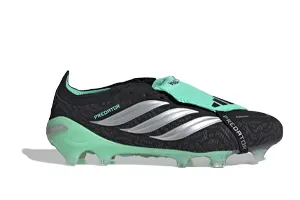


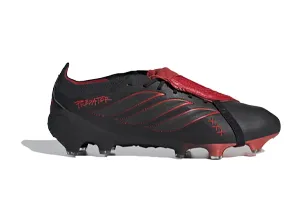
Most players should buy the Pro. Buy the Elite (in whichever closure suits your foot) if you play competitive football multiple times a week and want the thinnest upper and the fullest NanoStrike+ and PowerSpine experience. Choose League for recreational or developing play, and Club only for casual or school football.
Closer to the Elite than the price gap suggests. Same shape and Predator character, a slightly more substantial upper, and compromises to the grip and soleplate so it feels a little less immediate with a touch more material around the foot. The fundamental experience is intact: a responsive control boot with useful grip and a stable striking platform. For most players this is where the range makes financial sense.


Where the performance differences become easy to notice. A thicker, more structured upper that feels less supple and less connected to the ball. There is still texturing for the grip identity, but not the friction or refinement of NanoStrike+, and the soleplate does not give the same firm response through a strike. Functional for recreational and developing players; regular competitive players will notice what is missing.


Built around price and durability rather than reproducing the higher tiers. It keeps the name, the styling and the basic control concept, but the construction is much simpler. A sensible choice for casual football, school football or a fast-growing young player. You are buying into the Predator identity rather than a scaled-down version of the professional boot.


Predator 26 FAQs
| Question | Short answer |
|---|---|
| Which is better: F50, Predator or Copa? | There is no universal winner. The F50 is for lightweight speed and attacking space, the Predator for a controlled, stable feel receiving, passing and striking, the Copa for a softer, comfort-first natural touch. Choose on the sensation you want, not just your position. |
| Is the Predator 26 good for wide feet? | It can be, but it is not an automatic wide-foot pick. The toe box has useful volume and the upper softens with wear, but the 26 has a more noticeable midfoot taper than older Predators, so wide feet may find the first fit tight and need to trust the break-in. adidas recommends your usual size, so try before sizing up. |
| Is the Predator 26 good for narrow feet? | It can work, but the fit is not tailored to narrow feet. The heel counter is good, but you may have spare volume around the heel or forefoot. Grip socks help fine-tune lockdown but cannot fix the wrong shape. |
| Does the Predator 26 run true to size? | In length, generally yes. Start at your usual size. The complication is width, which can feel tight through the midfoot when new. Do not mistake that stiffness for the boot being too short. |
| How long does the Predator 26 take to break in? | The upper softens after roughly 30 to 45 minutes of play, but that is not the end of it. Expect around a session and a half before it feels properly settled, sometimes longer if the initial fit is tight. Train in them before a match. |
| Does NanoStrike+ actually make a difference? | Yes, though it is subtler than older Predator grip systems. The grip is integrated into the upper rather than sitting on top of it. In dry conditions it gives the ball a little more friction on instep passes, receiving and striking. It will not improve your technique, but you can feel it when you put force through the ball. |
| Does the Predator grip work in the rain? | It still works, but the advantage shrinks. NanoStrike+ is most convincing when the ball and upper are dry. In heavy rain the difference between the Predator and a plain synthetic upper becomes small. Do not choose the Predator specifically for grip if you regularly play in persistent rain. |
| Is the Predator 26 good for artificial grass? | Yes, if you choose the AG soleplate. The NanoStrike+ upper is fine on artificial surfaces, but FG and AG are not interchangeable for regular use. If most of your football is on modern 4G, buy the AG version. Our artificial grass boots guide explains why. |
| Is the Predator 26 better than the Predator 25? | It depends what you liked about the 25. Its HybridTouch 2.0 upper was softer and more cushioned; the 26’s textile mesh is thinner, more direct and initially stiffer, with a firmer soleplate through Strikeframe and PowerSpine. Prefer a soft, forgiving Predator and the 25 may suit you better. Want a clearer touch and firmer striking platform and the 26 is the more interesting boot. |
| What is the difference between the Elite and Pro? | The Pro keeps the Elite’s shape, control feel and grip concept, but with less refined materials and construction, a little more weight and a slightly less immediate touch. For regular competitive players the Elite is the complete experience; for most others the Pro is the better value. |
| Is the Predator 26 good for midfielders, defenders or strikers? | Midfield is where it makes most sense: a direct upper, useful grip and a stable soleplate suit players who receive, pass, switch play and strike from distance. It also works for ball-playing defenders who value distribution, and for strikers who prioritise striking over outright pace. See our best boots for midfielders guide. |
| Should I buy the laced or laceless Elite? | Laceless gives a cleaner striking surface and a uniform feel; laced lets you adjust midfoot tension. Choose laced for an unusual foot shape, laceless if you already fit laceless boots well. The FT version keeps laces but adds the heritage fold-over tongue. |
Every recent Predator generation
The Predator has run continuously since 1994. Recent history is the interesting part, because adidas spent several generations experimenting with grip, fit and construction before bringing the silo back towards its core identity.
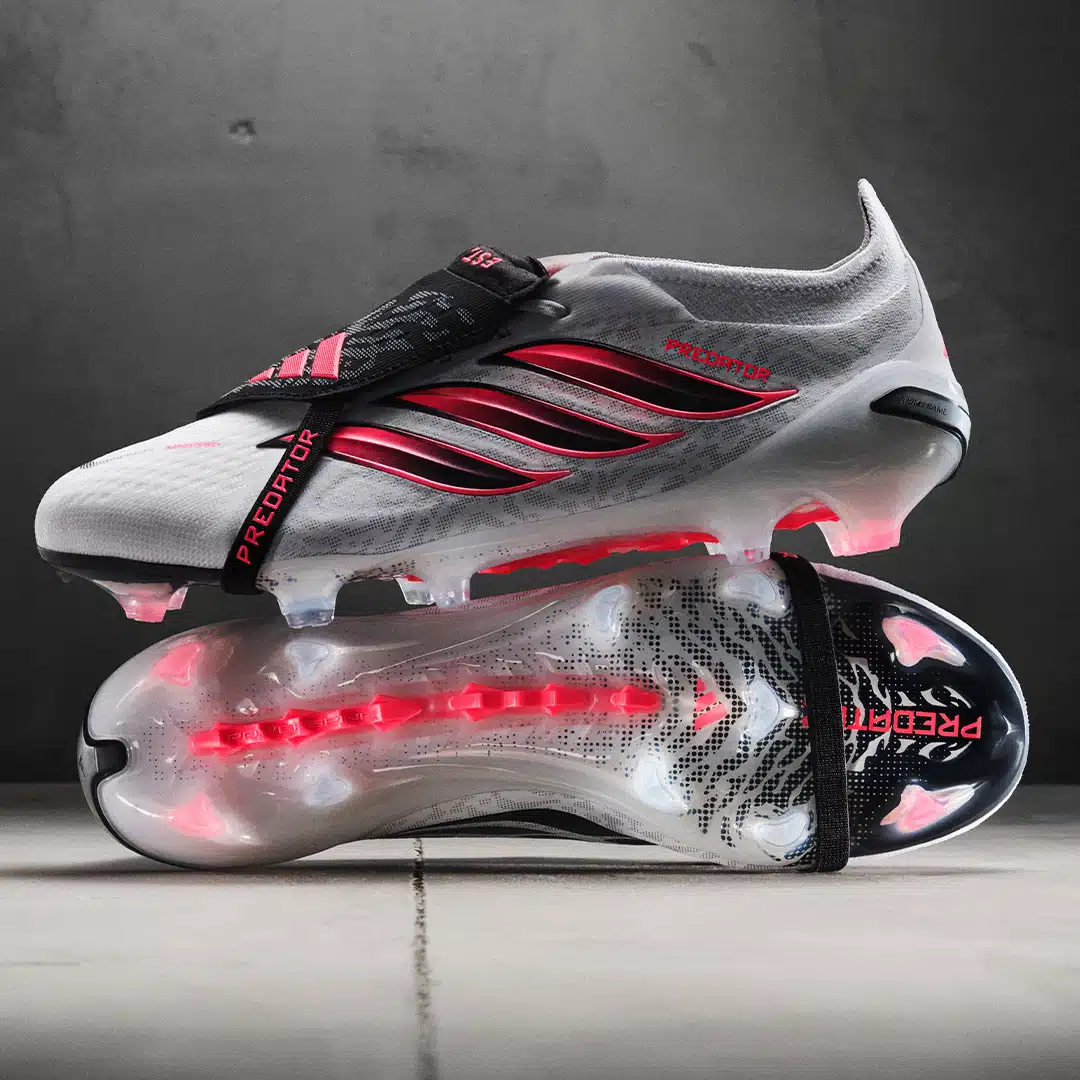
Thinner textile mesh, a more restrained NanoStrike+, and PowerSpine returning to the Strikeframe soleplate. Refining, not reinventing.

A refinement of the 24 rather than a redesign. HybridTouch 2.0 stayed, Strikeskin was reduced to six narrower rows, the result softer and more cushioned.

A real return to the classic look, especially the fold-over tongue on the FT model. HybridTouch 2.0 made the upper thinner and more anatomical, moving the silo away from the aggressive Demonskin identity.

adidas restoring a clearer Predator identity after the Edge. A softer HybridTouch upper and a more controlled take on the rubber grip. The foundation for the coherent generations that followed.

Grip taken in a new direction with ridged Zoneskin and the Facetframe soleplate. Ambitious and very grippy, but a stiff Primeknit upper and predetermined shape made it divisive. The end of the most experimental grip-heavy period.

The Mutator’s Demonskin toned down, spikes spaced out and reduced. A refinement rather than a new direction.

Demonskin: hundreds of rubber spikes designed to increase friction with the ball. One of the most distinctive Predators ever made.

Refined the 18’s formula, more prominent Controlskin and an improved heel, laced and laceless both offered. The 25 Years of Predator and Mania packs landed here.

The controversial return after the ACE. A Primeknit, laceless construction with a high collar and Controlskin texturing, closer to the sock-boot era than the classic Predator formula.
For the full heritage story, including the Mania and Precision Made in Germany remakes, see our adidas Predator heritage and Mania remakes.
Final verdict
adidas Predator 26: FootballBoots Verdict
Buy it if
- You are a midfielder who controls possession
- You are a ball-playing defender who builds from the back
- You take set pieces or your game leans on striking quality
- You have medium to wide feet
- You play on dry to damp pitches and will train a boot in
Avoid it if
- Your game is acceleration and running in behind
- You have genuinely narrow feet
- You want out-of-box comfort with no break-in
- You play most weeks in persistent heavy rain
- You want the lightest boot on the shelf
Read the full final verdict
What is it trying to be? A control boot that makes receiving, distributing and striking feel more deliberate when the game speeds up. That has been the Predator’s job since 1998.
Does it succeed? Yes, more clearly than the softer 24 and 25. The thinner upper gives a cleaner read on the ball, and PowerSpine gives the striking platform back.
Who benefits most? Technically good midfielders and ball-playing defenders, medium to wide feet, dry to damp pitches, players who stay on the ball rather than run past it.
Who should avoid it? Narrow feet, speed-first attackers, anyone wanting instant comfort, and heavy-rain regulars buying it for the grip.
Where does it sit in the silo’s history? Not a return to an old Predator, a modern reading of the same idea. After the Edge low point and the experimental grip era, the 26 is adidas refining rather than reinventing, and it is one of the strongest modern Predators. If your game is about influencing what happens next, there are very few boots I would put ahead of it.
