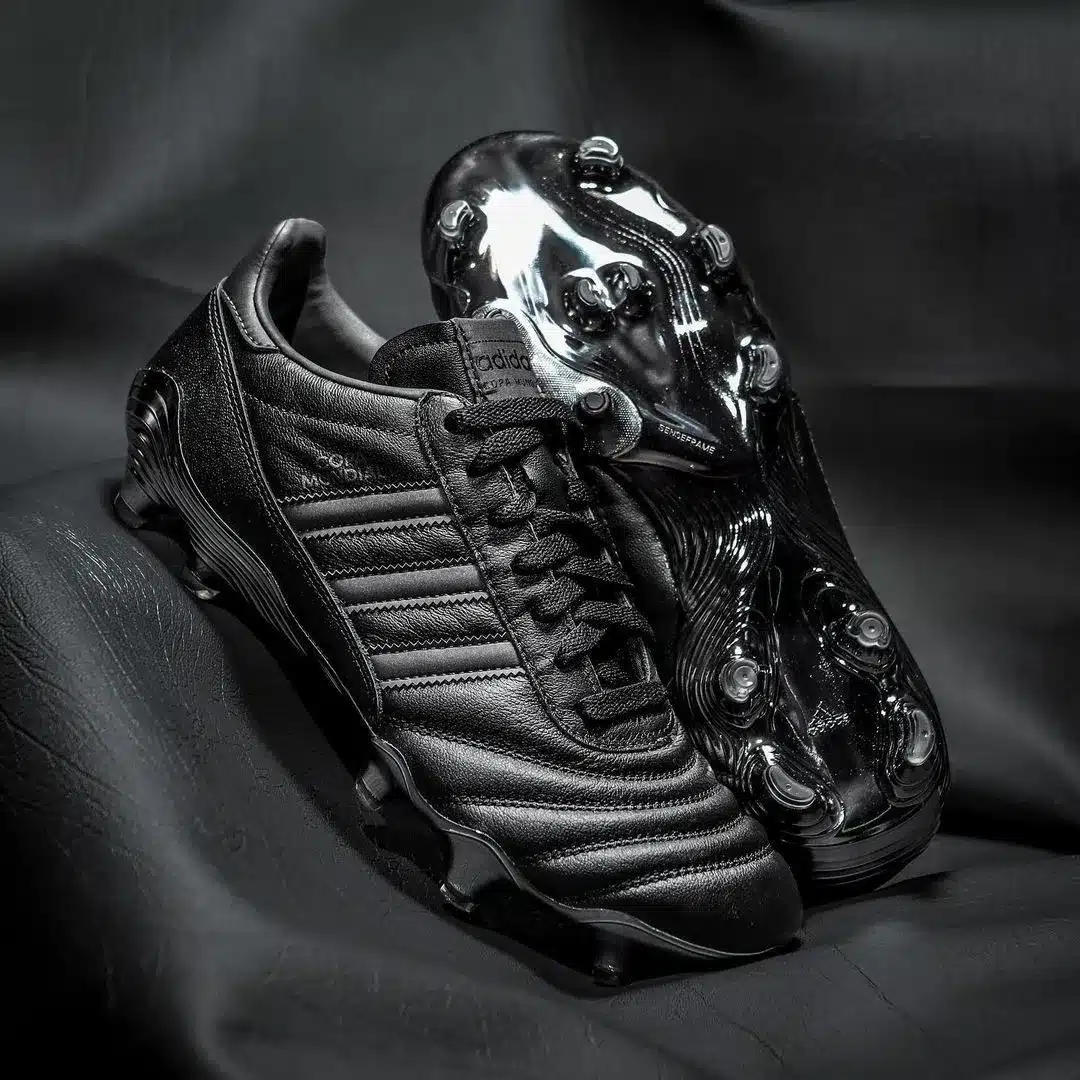
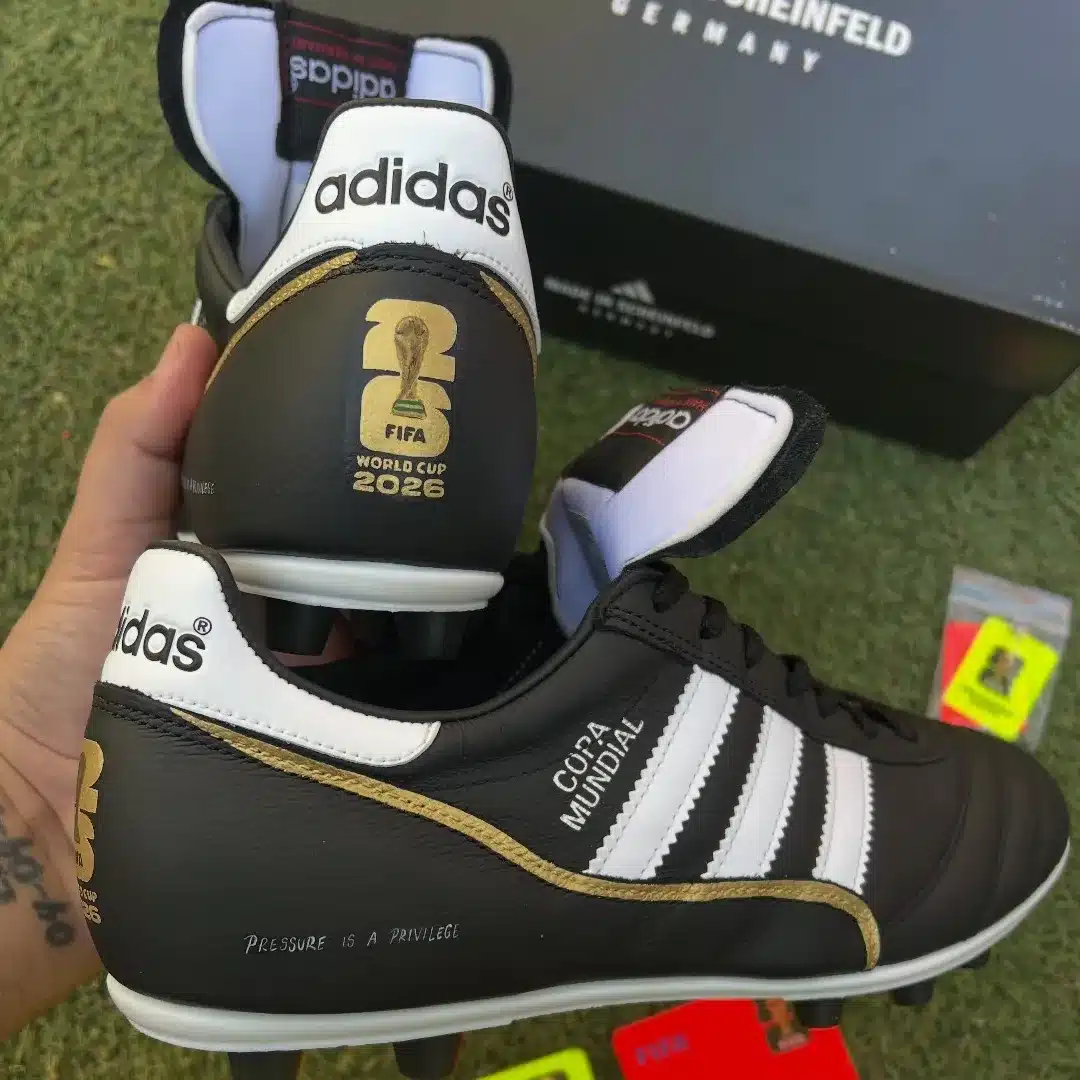
The adidas Copa Mundial is essentially the same 1979 leather classic, largely unchanged while modern boots moved to synthetics, knits and performance chassis. Today you will mostly see it on grassroots pitches, with referees and traditionalists who still want that soft leather touch. Here is whether that still makes sense for your game.
Copa Mundial Options
Current adidas Copa Mundial Colourways and Soleplates.
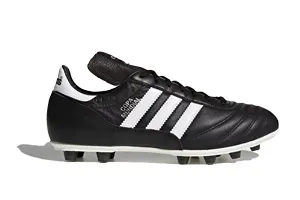
Black with White FG
Check stock↗OG classic Mundial.
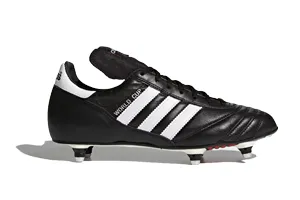
Black with White SG
Check stock↗Mundial for the wet and muddy pitches.
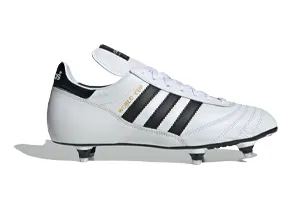
White with Black SG
Check stock↗Bright alternative for Mundial SG.
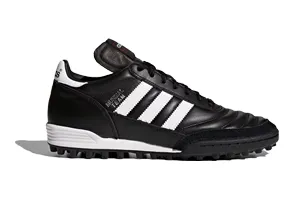
Black with White TF
Check stock↗Mundial for the shallow turf.
Quick Verdict: Should You Buy the adidas Copa Mundial?
Judged purely against modern Elite boots, the Copa Mundial is no longer the most complete performance option. It is heavier, less secure and less responsive, while newer boots can provide similar comfort with better lockdown and traction. Its appeal is therefore specific rather than universal. For players who genuinely prefer a spacious, adaptive fit, a naturally cushioned leather touch and a stable ride, it remains highly enjoyable. For everyone else, its legendary reputation alone is not enough reason to choose it.
| Football identity | Traditionalist comfort: soft leather touch and dependable stability over minimum weight |
|---|---|
| Best for | Composed midfielders, central defenders, goalkeepers and referees who receive, dictate tempo and favour controlled turns |
| Fit | Wide and flat feet accommodating; leather stretches over time, size half to one full size down |
| Main strength | Soft, consistent K-leather touch and dependable underfoot cushioning from the EVA midsole |
| Main weakness | Heavier and less locked-in than a modern boot; leather absorbs water and stretches further when wet |
| Closest alternative | Nike Premier for a similar classic leather feel; Mizuno Morelia for a lower-profile leather touch; modern adidas Copa Pure for the same silo brought up to date |
Should you buy the adidas Copa Mundial?
- You value a soft leather touch, a forgiving fit and dependable stability more than minimum weight or explosive responsiveness
- You receive and release the ball cleanly, dictate play at a measured tempo and favour controlled turns over sudden changes of direction
- You have wide or flat feet and want a boot that moulds and adapts around your foot over time
- You are an explosive winger or direct forward who depends on rapid acceleration, hard cuts and tightly locked movement
- You play regularly in wet conditions, where the leather’s water uptake makes the boot feel heavier and less secure
- You have narrow feet and need the precise lockdown of a modern fitted upper


If that is not quite your game

Choose if you want the same classic leather-boot idea from the other major boot brand.
Read the Premier review
Choose if you want a lower-profile, more minimal leather touch than the Mundial’s fuller build.
Read the Morelia review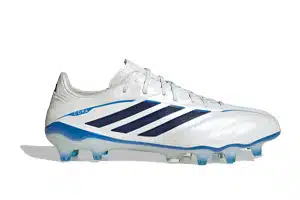
Choose if you want the Copa silo’s comfort brought up to date with modern lockdown and construction.
Read the Copa Pure reviewWho Is the adidas Copa Mundial For?
The Copa Mundial suits the comfort-first traditionalist who values a soft leather touch, a forgiving fit and dependable stability more than minimum weight or explosive responsiveness. It can also feel relatively protective simply because of how substantial it feels on-feet. Composed midfielders, central defenders, goalkeepers and referees are natural profiles, although the boot is defined more by personal preference than playing position.
It complements players who receive and release the ball cleanly, dictate play at a measured tempo and favour controlled turns over sudden, aggressive changes of direction. Its cushioned touch works particularly well for controlling firm passes, circulating possession and striking through the ball without any artificial grip or added texture.
Tactically, the Mundial makes the most sense in structured or possession-focused systems where comfort, balance and consistency matter more than repeated sprints and sharp separation movements. It is also well suited to grassroots football, where durability and comfort across a full match can be more valuable than marginal reductions in weight. Medium, wide and flat-footed players are likely to appreciate the accommodating shape and the way the leather adapts around the foot, though the generous sizing means it must begin relatively snug, as excess room can become sloppy once the leather stretches.
Who Should Avoid the adidas Copa Mundial?
The Copa Mundial is not suited to explosive wingers, direct forwards and players whose game depends on rapid acceleration, hard cuts and tightly locked movement — lighter, more responsive and locked-in boots will serve them better elsewhere. It is also unlikely to satisfy anyone seeking a thin, barefoot touch, added grip on the ball or a stiff soleplate that produces noticeable energy return. Narrow-footed players may struggle to achieve the precise lockdown available from modern fitted uppers, and the boot suffers under wet conditions due to the significant water uptake of the leather. At 320 grams, it is already heavy by today’s standards, and that weight can be worsened further when playing in the rain.
Things to Know about the Copa Mundial


- Retailing at £150
- Comprised fully of K-leather, including the tongue
- Has a central lacing system
- Single soleplate with conical stud layout


Real Testing and Match Experience
The Copa Mundial is technically simple, but that simplicity creates an experience few modern boots replicate. Its premium kangaroo leather forefoot is supported by traditional stitching, a soft internal lining, central lacing and a padded fold-over tongue, while a die-cut EVA midsole sits above a thick dual-density soleplate with twelve rounded studs. On feet, the boot feels soft, spacious and substantial rather than thin or compressive. The leather is comfortable almost immediately and gradually moulds around the foot. The biggest downside, especially in today’s boot context, is that overall lockdown is already less precise than a modern boot. This is further emphasised by the fact that the material can absorb moisture and stretch further in wet conditions, making the boot feel heavier and less secure as a match goes on and over time in general. That looser lockdown can also show up as light internal slippage during quick changes of direction, a direct trade-off of the softer, more spacious fit.
On the ball, the leather produces a soft and lightly cushioned touch that takes some of the sting out of receiving firm passes without completely dulling feedback. The sensation stays consistent across different areas of the foot, making control, short passing and striking feel natural and predictable. There are no grip textures or engineered striking elements manipulating contact with the ball, so the boot relies entirely on the quality and softness of its leather.
Underfoot, the EVA midsole distributes stud pressure extremely well, while the short conical studs provide stable and forgiving traction on dry, firm natural grass. They offer enough grip for pushing off while allowing the foot to rotate freely when turning, although they lack the aggressive bite of modern bladed or chevron studs. The soleplate is thick but naturally flexible, creating a smooth, comfortable ride rather than a stiff or explosive one, though it stays flat rather than adopting the raised toe or angled profile built into modern soleplates for explosive acceleration. Rivets at the tip of the outsole help stop the upper pulling away from the sole, a big part of why the boot holds up over so many seasons of grassroots use. At roughly 320 grams, the Mundial also feels noticeably more substantial than contemporary Elite boots, particularly during sharp changes of direction. It remains perfectly capable on the pitch, but its performance is built around comfort, cushioned touch and stability rather than minimum weight, tight lockdown or explosive responsiveness.
Fit and Sizing
Because the leather moulds and stretches, it makes the Mundial particularly accommodating for wide and flat feet, and it is one of our Best Boots For Wide Feet. Its generous length and natural stretching mean the fit should begin snug, however, with most players likely to need between half and one full size below their usual adidas size to account for that material stretching over time. That same stretch is a long-term trade-off: without sizing down enough to compensate, the leather can loosen and start to feel flimsy after a full season of wear.
Mundial vs Nike Premier and Mizuno Morelia
The Mundial’s closest rivals are the other classic leather boots still in production. Nike Premier is the same idea from the other major boot brand: a soft leather touch and a forgiving fit built the traditional way. Mizuno Morelia takes the same leather-first approach but in a lower-profile, more minimal build than the Mundial’s fuller construction. Anyone wanting the Copa silo’s comfort with modern lockdown and construction should look at the adidas Copa Pure instead.
Final Verdict
That verdict holds up once you get onto the pitch with it. The leather touch, the forgiving fit and the underfoot stability are genuine strengths, not marketing claims, and they show up match after match for the player they suit. What also shows up consistently is the trade-off: looser lockdown, added weight in the wet and a break-in period the leather never fully stops going through. None of that makes the Mundial a bad boot, it just makes it a specific one.
Buy it if you value a soft leather touch, a forgiving fit and dependable stability more than minimum weight or explosive responsiveness, and if you receive and release the ball cleanly, dictate tempo and favour controlled turns. Think twice if you are an explosive winger or direct forward who depends on rapid acceleration and hard cuts, if you play regularly in wet conditions, or if you have narrow feet and need the precise lockdown of a modern fitted upper.
Boot Rankings, Best For…
Additional Mundial Boot Reviews
We have included a few boot review videos here from other boot experts. They can give you a sense of what the consensus is regarding this adidas classic.
History of the adidas Copa Mundial
As football grew internationally during the 1920s and 1930s, Adi Dassler was among the earliest footwear specialists to treat football boots as performance equipment. After founding adidas in 1949, he introduced the Samba for icy pitches in 1950, followed by the lightweight boots worn by West Germany at the 1954 World Cup. Their lower cut, flexible construction and adjustable screw-in studs improved movement and allowed traction to be adapted to changing conditions, establishing principles that would eventually lead to the Copa Mundial.
Created in 1979 with the 1982 World Cup in Spain in mind, the Mundial arrived when boots had already become lighter and lower, but remained relatively simple in their construction. It distinguished itself by bringing fit, touch, cushioning and traction together in one refined design. Its soft kangaroo leather upper, handcrafted in Germany, moulded around the foot, while additional leather around the heel improved structure and durability. Underneath, a stable soleplate and twelve moulded studs provided dependable traction on dry grass, while a cushioned rubber midsole offered greater protection from stud pressure than the conventional foam constructions of the period. A padded fold-over tongue covered the laces to create a smoother, more consistent striking area.
This combination helped the Mundial become one of football’s most popular boots, with Franz Beckenbauer, Diego Maradona and Zinedine Zidane among its notable wearers. However, the arrival of specialised boots such as the Predator, followed by increasingly lightweight synthetic designs, gradually made the Mundial feel conservative rather than revolutionary. As lighter and more specialised boots gradually took over elite football, the Mundial moved from cutting-edge performance boot to enduring heritage favourite.
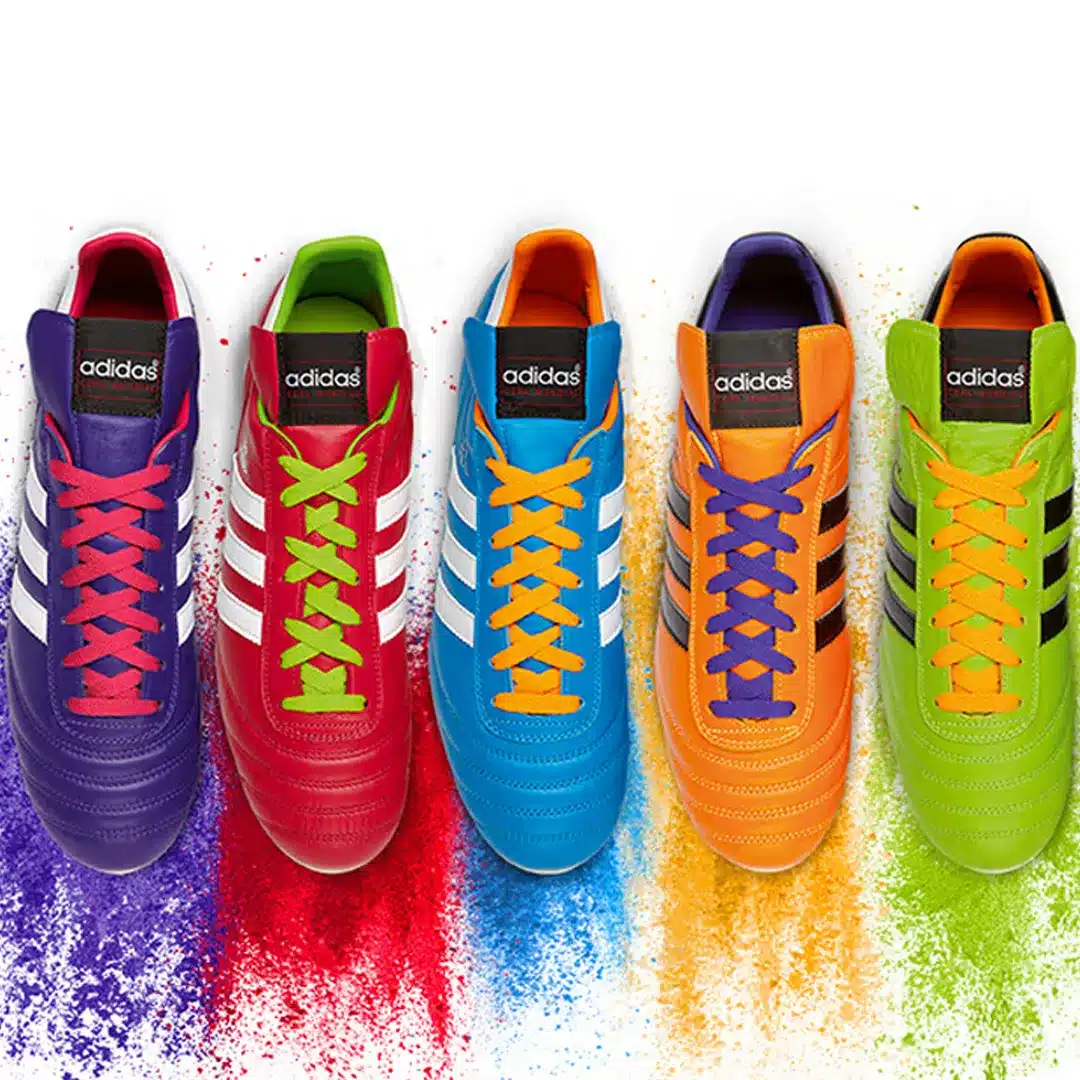
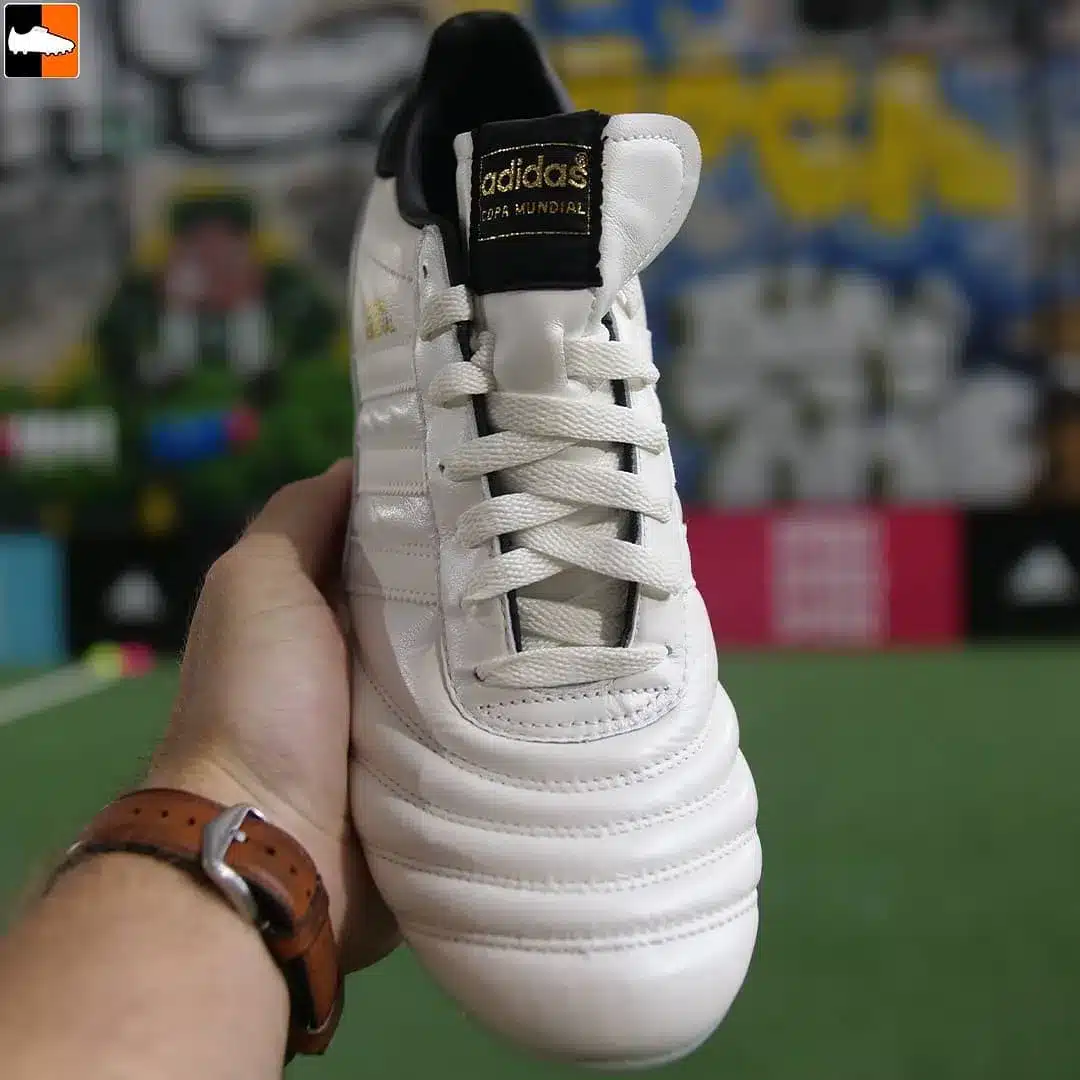
The original design remained largely unchanged, although adidas periodically revisited it through the gold-detailed 2007 anniversary release, the first white edition in 2013 and the five vibrant colourways of the 2014 Samba Pack. These were followed by the lightweight synthetic Copa SL in 2016, a referee model celebrating the Mundial’s tenth World Cup appearance in 2018 and the Primeknit COPA70 created for adidas’s seventieth anniversary in 2019. The white and gold 2020 and black and chrome 2021 Eternal Class editions then combined archival Mundial styling with contemporary Copa tooling, while the 2024 Mundial Federations Pack dressed the classic boot in the national colours of Germany, Italy, Spain, Argentina and Mexico. Today the Mundial is more commonly worn by amateur and grassroots players, Sunday league regulars, coaches, referees and long-time traditionalists — even at the highest level, its rare appearances now tend to come from officials rather than players, with referee Cristian Garay wearing a customised pair during the 2026 World Cup.