

Many elite boots from Nike, adidas and Puma make their concept deliberately obvious as soon as you put them on: a compressive wrap, aggressive grip, cushioned touch or spring-loaded soleplate. Mizuno boots tend to introduce themselves more quietly. The fit still feels close, but the pressure is more naturally distributed, with the last, lacing and upper working together rather than forcing the foot into an exaggerated shape. You notice the fit and materials before the technology, which is a genuinely different sensation from wearing Nike or adidas. Founded in 1906 in Osaka, Japan by brothers Rihachi and Rizo Mizuno, the brand also makes rugby boots, golf clubs and general sportswear. You can click the images below to jump straight to the latest colourways for their football boots.


While Mizuno is behind other brands like Nike and adidas in terms of overall market, the Japanese boot maker is slowly gaining name-recognition as their quality-first approach is being well-received by football boots enthusiasts. Mizuno also did have iconic players under its wing, starting with the left-footed Brazilian great Rivaldo, the tall yet agile Kluivert, and Liverpool legend ‘El Nino’ Fernando Torres who ended his career in Japan wearing a signature F9T Morelia Neo II.
What You’ll Find On This Page:
- Frequently Asked Questions About Mizuno Boots
- Mizuno Boots Made
- Latest Mizuno Packs and Launches
- Our Mizuno Reviews

Frequently Asked Questions About Mizuno Boots

Is Mizuno a soccer brand?
Yes, and interestingly the brand is kind of an open secret in the football boot industry. Mizuno boots are beloved by football boot enthusiasts but remain well-behind Nike and adidas in terms of getting mainstream adoption.
Which footballers wear Mizuno?
Sergio Ramos remains the highest-profile name wearing Mizuno, bringing authority and heritage to the roster through the SR4 collection, which spans both the Alpha and Morelia lines. Joao Felix headlines the Alpha III, his acceleration and creative movement suiting the boot’s speed identity, while Mason Mount represents a more understated, team-first take on the same silo.
Are Mizuno boots comfortable?
What’s for sure is that Mizuno arguably has the finest execution of K-leather into football boots. Whether that makes the boot comfortable for you also depends on the nuances of the silos and your particular foot shape. Stick around to learn more about the Mizuno models so we can get to know the most comfortable pair for you.
Are Mizuno boots suitable for wide feet?
The Morelia II is the safest choice, since its traditional lacing and leather upper provide greater adjustability and gradually adapt around the forefoot. The Neo V Beta and Alpha III can accommodate some width, but their structured midfoot shaping feels noticeably closer. Mizuno also produces dedicated wide-fit Monarcida models.
Are all Mizuno football boots made in Japan?
No. Only models carrying the “Japan” or “Made in Japan” designation are manufactured there. Elite, Pro, Select and Club versions are produced elsewhere, though many keep the same overall design and playing concept at lower prices. Made in Japan boots use the range’s highest-grade materials and most precise finishing; Elite versions usually preserve the main identity at a considerably lower price. Elite is often the better value, Japan the premium experience.
Do Mizuno boots require breaking in?
Most feel comfortable relatively quickly, but every model still benefits from one or two shorter sessions. The leather models need time to shape around the foot, while the Alpha’s knitted upper settles sooner. Persistent pinching or toe pressure should not be dismissed as normal break-in.
Are Mizuno boots durable?
Mizuno’s construction quality is generally excellent, particularly at Made in Japan level, but they are not indestructible. Abrasive artificial pitches, repeated soaking and improper drying can still damage leather or encourage sole separation. Using the correct soleplate and cleaning the boots after play will have a greater effect on lifespan than the tier name alone.
Mizuno Boot Silos
That quiet character takes three distinct forms. The Morelia II is Mizuno at its most traditional, with supple leather that moulds around the foot and a flexible, settled ride. The Alpha III translates the same fit-first philosophy into a lighter, more propulsive speed boot without feeling excessively rigid or restrictive. Sitting between them, the Morelia Neo V Beta combines a soft natural-leather touch with a streamlined, second-skin fit and a more stable, responsive chassis. Together they show that Mizuno’s identity is not simply heritage or Japanese craftsmanship, but the belief that comfort, touch and speed should all begin with a boot shaped around the foot.
Alpha III


The Alpha III is Mizuno’s direct alternative to mainstream synthetic speed boots. After testing synthetics with the Alpha 1 and 2, Mizuno has moved to a knitted upper for the Alpha 3, its first attempt at that sock-like construction, with Joao Felix headlining the generation. It feels thinner, lighter and more propulsive than the Morelia models, but its anatomical shaping keeps the fit from becoming excessively compressive or harsh. The touch feels more synthetic and the traction more assertive than either leather boot, and this is the clear choice for players who prioritise acceleration and responsiveness over a leather feel.
Morelia Neo V Beta
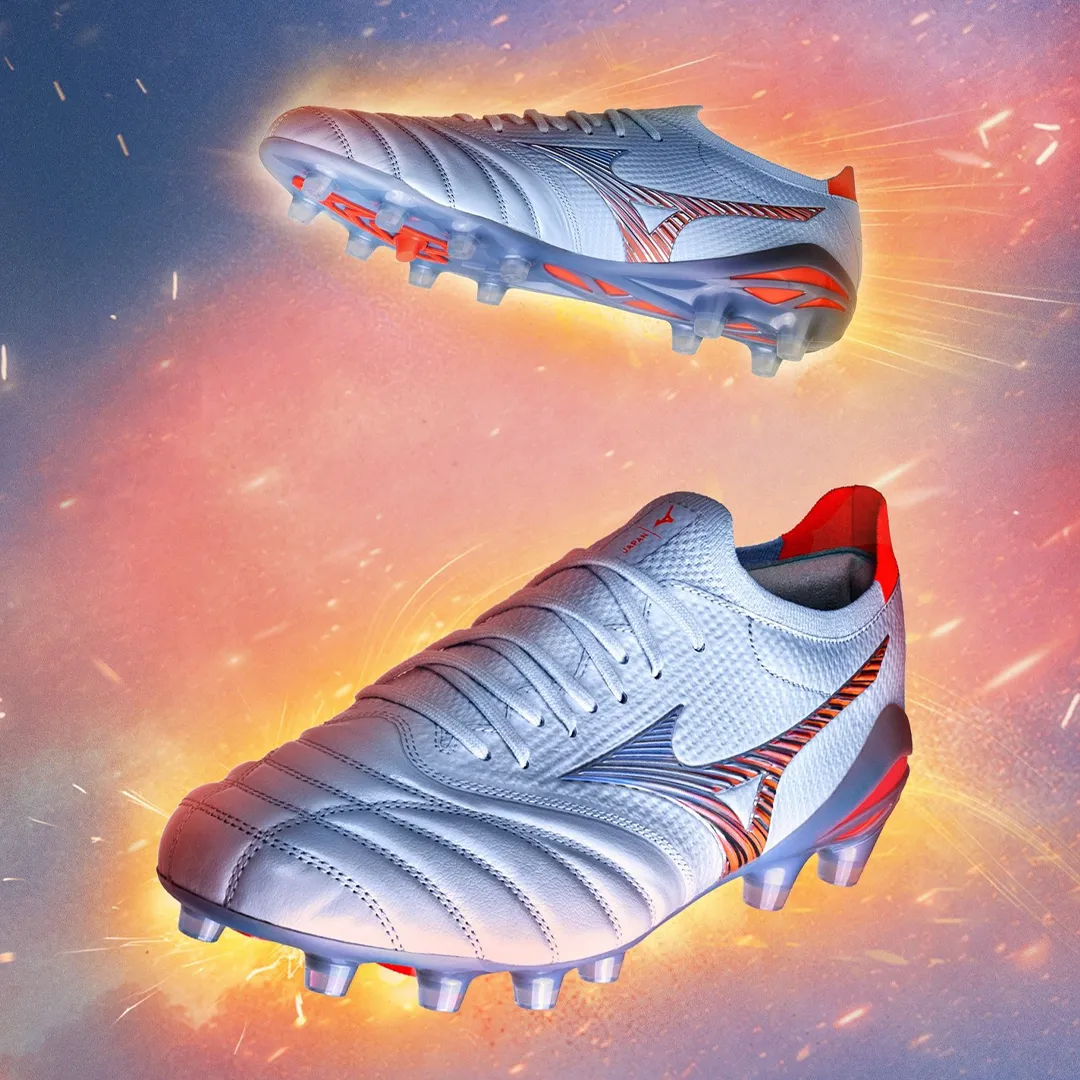
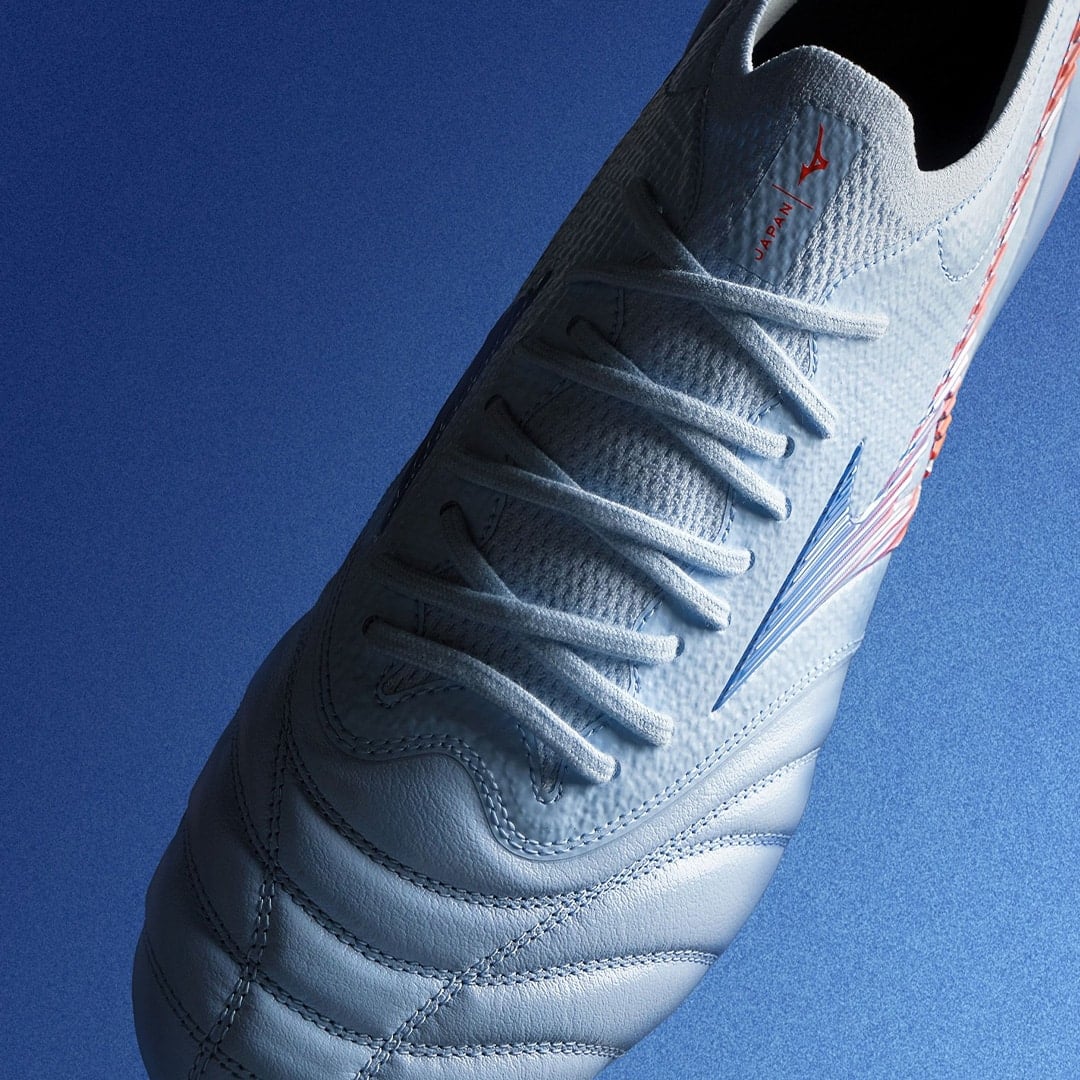
The Morelia Neo V Beta bridges the gap between the other two. It combines a soft leather forefoot with a closer knitted midfoot and a lightweight, more structured outsole, producing stronger lockdown and responsiveness than the Morelia II without losing its natural touch. Choose it if you like the natural touch of the Morelia II but want a closer midfoot wrap, firmer heel security and a more responsive platform. It is the best middle ground between tradition and modern performance.
Morelia II


The Morelia II is Mizuno’s philosophy in its purest form. Its leather upper gradually moulds around the foot, while traditional lacing and a flexible outsole create a natural, settled sensation without relying on aggressive grip or excessive stiffness. It provides the most forgiving fit and becomes increasingly personal as the upper moulds, but it also feels the least structured and propulsive of the three. This is the purist’s choice for comfort, touch and simplicity, and the clearest example of what makes Mizuno an open secret among boot enthusiasts.
Which Mizuno Silo Should You Choose
Choose the Morelia II for pure leather comfort
Pick the Morelia II if you want supple leather, traditional lacing and an outsole that flexes naturally with the foot. It gives the most forgiving fit and becomes increasingly personal as the upper moulds, but it also feels the least structured and propulsive of the three.
Move to the Morelia Neo V Beta for leather with lockdown
Choose the Neo V Beta if you like the natural touch of the Morelia II but want a closer midfoot wrap, firmer heel security and a more responsive platform underneath. Its leather forefoot preserves that familiar softness, while the knitted midfoot and reinforced outsole make it feel more streamlined during accelerations and changes of direction.
Choose the Alpha III for fit-led speed
Move into the Alpha III if leather is no longer a priority and you want the lightest, quickest and most aggressive experience. Its fully knitted upper creates a soft but close adaptive wrap, while the energetic soleplate and triangular studs produce more forward drive than either Morelia.
Latest Mizuno Packs and Launches
Serene Spark Pack
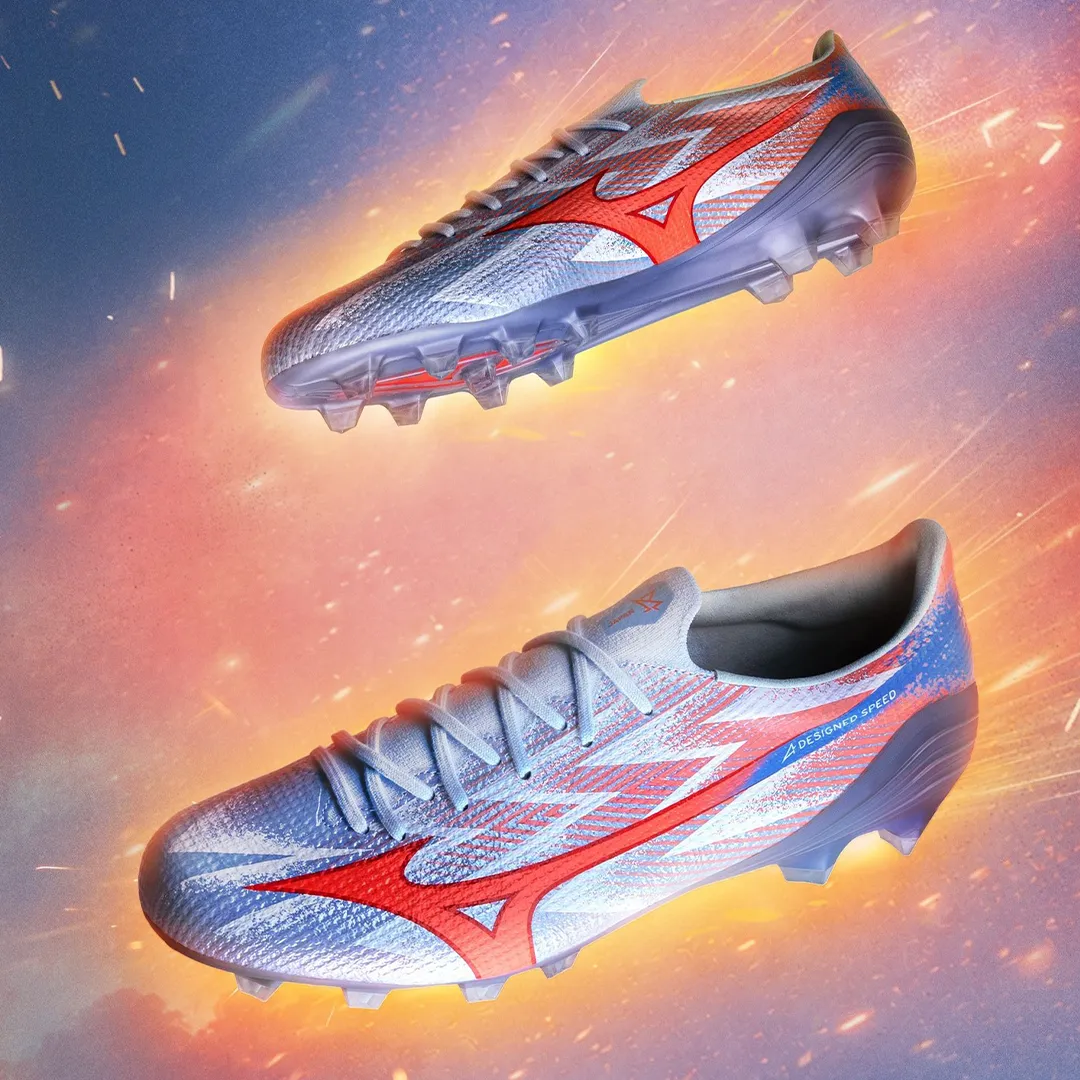
The Mizuno Serene Spark Pack centres its look on contrast, placing a cool Blue Finch and Cornflower Blue base against sharp Lava Orange detailing that resembles energy breaking through a calm surface. On the Morelia Neo V Beta, the orange is applied with restraint, tracing the Runbird and heel while preserving the boot’s clean, crafted character. The Alpha III releases that same colour across its knitted upper in fast, jagged lines, creating a stronger sense of acceleration and movement. Taken together, the Morelia represents composure before the action, while the Alpha captures the sudden burst that follows.
Joao Felix 1st Signature

As Joao Felix prepares for his World Cup pursuit in 2026, Mizuno dropped his first signature from the brand ahead of time. The boot spoke of elegant simplicity with its predominantly white colourway, which was then adorned with golden logos (including the player logo on the heel). His first signature did not lack expression though, as the edges of the lacing and all around the opening bore azulejo tiling-inspired pattern to represent his Portuguese roots in Viseu (specifically Praça da República, the cultural landmark).
Blazing Flair


Mizuno usually recycled colourways and preferred blocked, solid-fill designs. But with Blazing Flair, the brand decided to add more depth and activity to their visuals. While still limited to the Runbird logo, the design of the Morelia carried varying shades of red and yellow to produce a flame aesthetic on a clean white base. The same shading graphically covered the heel and quarter of the Alpha, and also tailed toward the midfoot. A pink highlight on the Runbird complemented the said Alpha Blazing Flair graphic.
Motivated by More

The new Mizuno Alpha 3 officially launched under the release of the Motivated by More pack. The colourway flashed a moody blend of deep blues and blacks, broken up by vibrant red accents that rippled through the knit like sparks of energy. Mizuno’s bold white Runbird logo sliced cleanly across the upper, giving the design a sharp, almost electric contrast that really stood out. The whole thing sat on a sleek, dark soleplate with subtle metallic studs, adding a touch of premium polish without shouting about it.
The biggest change from the Alpha 2 to Alpha 3 was the upper, as Mizuno switched it up to a knit-based material. It was the first-ever knitted boot to come from the brand, so expectation was high that it’ll be as premium as both the leather options as well as the preceding synthetic Alpha generations.
Urban Electric


Urban Electric got that crisp, almost pearly white leather upper that screamed premium Mizuno quality, paired with electric blue details on the Runbird logo, soleplate, and lace area, the kind of blue that just looked fast. Then we got the hot pink accents on the heel collar, stud tips, and soleplate cutouts, giving it a fun, modern pop of colour. The mix felt fresh without losing that traditional Morelia vibe we all love. It was like Mizuno took their classic craftsmanship and said, “Let’s add a little neon energy to the party.”
Morelia UL 40th


Mizuno continued the celebration of the Morelia’s 40th anniversary by dropping an Ultra Light, limited edition model. Hidden within its pristine whiteout colourway were subtle but meaningful innovations to its upper and sole that allowed the boot to go under 200 grams. Matching the thin Kangaroo leather was the septon-based outsole and the 4mm laces. Matching up to the premium clean look were the elegant brandings in gold.
Shadow Gem


The Mizuno Shadow Gem Pack drew inspiration from volcanic gravel and radiant ruby stones, symbolising a perfect balance of strength and elegance. The boots featured a matte black finish that radiated intensity, complemented by stone-like accents on the Runbird logo and outsole that added a regal touch. This striking combination captured attention while embodying the dual essence of power and grace, showcasing Mizuno’s dedication to innovation without compromising on sophistication.
Ruby Red


Ruby Red celebrated the 40th anniversary of the Morelia by covering the Alpha II, Morelia II and Neo Beta IV with the said colour. The Alpha II had the busiest look, adding diamond-cut graphics to the base and adding white borders to its black Runbird. The Neo Beta IV though opted for a cleaner base and switched up the dynamic on the logo (mostly white with black detailing for a speedy effect). The Morelia was at the simplest, clearing both base and Runbird of any detailing other than a red with white combo.


Platinum Silver


Making it clear immediately through the pack name, Mizuno opted for a platinum silver theme for this collection of football boots. This included the Alpha 2, Morelia Neo Beta IV and the Morelia DNA. The DNA was simply the combination of the Morelia II K-leather upper and the modern outsole of the Morelia Neo Beta IV. The rest came with their expected technologies and build, so no surprises with regard to the Alpha and the Neo Beta.


While platinum silver dominated in the Alpha, zig-zag silhouettes in gold and navy alternated across the upper to give the boot a more active look. The same accents informed the outline and fill of the Runbird on the lateral side of the forefoot. All of these were in contrast to the Morelia DNA, which had a cleaner application of the thematic colourway (interrupted only by the gold Runbird and the navy heel trim). Morelia Neo Beta also had a clean application of platinum silver but broke away from the pack in accent, choosing black instead for its streaking Mizuno logo (it still had some gold detail in the form of the support stud and the internal honeycomb structure in the soleplate’s cavity).
Main 2025 Colourway


The main look for the second-generation Alpha in 2025 was a white base with shining Runbird logos. The base was them designed with streaking lines in multicolours, aligning the Alpha with the concept of the speed of light. Volt green accented through the outsole and the studs. The launch of this boot also kicked off with Mizuno having another big-name signing in Joao Felix.
Frontier Pack


Mizuno’s Frontier Pack dressed its premier leather boot silos with a pristine white colourway adorned with a lime green accent emanating from the Runbird logo. This followed the blue-heavy Mugen pack, and as always chose to limit the detailing colour in favour of cleaner look for the Beta and the Morelia. The former though adopted the secondary colour for its outsole while the latter limited it to just the support stud.
Mugen Pack


Mizuno Mugen is now out and it hopes to build on the brand’s relentless pursuit of perfection. As ‘Mugen’ itself implies, this release is all about being limitless, not just in skill and potential but also in character and commitment. Sky’s the limit, we should say, as long as you put your mind into it. And so in order to drill down the mugen concept into the boot, Mizuno has dressed their boots with a colourway that is meant to showcase possibilities. When you put them on, Mizuno hopes to extract from you your endless desire to be on top of the game.


One might think that he has already seen the Mugen Morelia Neo Beta before. And that is because the speed boot has gone on with a white with blue accent, a theme that has already been used many times before. This time though, the Runbird has opted for a streaking application of the accent colour. The heel tab on the low-cut collar also joins in on the secondary colour, while the internal honeycomb structure and forefoot supporting stud provide a touch of gold onto the boots. The branding on the heel showcases the two accents as the Morelia reads in gold and Neo goes with blue, completing the Mugen Beta look.


When it comes to the Mugen Alpha colourway itself, it uses a rich tone of blue from heel to toe, not leaving any space at all for another base colour. This gives way for the Runbird outline to flow right in seamlessly. I personally think that the colour combination is harmonious, and increases the elegance factor of the look. There’s a sense that the soleplate does carry the same dominant colour, only that the nature of the material itself changes the reflection somewhat. Speaking of the tooling, the midfoot trim and the insert display a matte-like shade of gold.


Depending on how light strikes the Mugen Alpha, you’ll either see a royal blue hue or a tealish aura. I think it jives well with the intended concept of the boot being limitless. I would have preferred though for the Mugen colourway to at least have a bit more colour and/or visual activity to carry out the intended idea behind the colourway drop. I guess a bit more iridescence would have made wonders for the Mugen launch. So far, it looks like Mizuno is sticking with creating clear-cut options for the Alpha, as previous launches have also shown relative simplicity in terms of colour dominance.


Our Mizuno Reviews


Regarding Mizuno Football Boots
Mizuno remains something of football boots’ secret menu: less visible than the major silos and often harder to find, but rewarding once you know what you want. The obvious barrier is price, particularly at Made in Japan level. That premium does not buy a magical performance advantage; it pays for an accumulation of smaller qualities, including careful lasting, premium leather or knit, precise stitching, clean finishing and lightweight construction that rarely feels flimsy.
Elite models generally provide better outright value and retain most of the same playing identity, while no leather boot is indestructible. If you appreciate consistent shaping, materials that settle naturally around the foot and construction designed to age well with proper care, Mizuno gives you something tangible for each extra pound spent. The Morelia’s longevity is the clearest example: its appeal has been sustained through careful refinement rather than constant reinvention.
Morelia is to Mizuno what Mercurial and Predator are to Nike and adidas: the silo that defines the brand’s reputation. And like those two, the Mizuno Morelia has continuously evolved to accommodate the prevailing football boot trends and preferences. Much of that longevity is thanks to the great Brazilian Rivaldo, whose memorable performances wearing earlier generations of the Morelia helped introduce the brand to the wider football boot public.
