

Mizuno Alpha 3 is the Japanese brand’s attempt to enter the mainstream speed boot market, a deviation from the usual K-leather offerings of the boot maker. As such, the silo utilises a knit upper with a Zeroglide mesh liner backing, all seating on an outsole with Karvo RS insert to give you an overall package that meets the demands of today’s speed boot construction.
Going through a couple of training sessions and match days, the Alpha 3 stands out in the realm of lockdown, primarily because of that Zeroglide upper backing and the heel construction. It might not be the most technologically advance, but sometimes simplicity is the best take as long as you get the most secure feeling out of your pair. The most significant downside though to this take is that it is one, if not the most expensive speed boot out there, which can make the boot underwhelming for some.
What You’ll Find On This Page:
- My Mizuno Alpha 3 Made in Japan Review
- Key Facts About Mizuno Alpha 3
- Mizuno Alpha 3 Tiers
- From K-Leather to Knit: How the Mizuno Alpha Came to Be
About the authors: This review was co-written by Dean Ariola, FootballBoots.co.uk’s Chief Writer, and Ian Ebbs, founder of FootballBoots.co.uk, host of the site’s YouTube channel and author of the Boot Secrets guide. Ian bought these boots himself to provide an independent review.

What’s New with the Alpha 3:
- Gone is the multilayered synthetic upper from the Alpha 1 and Alpha 2, in favour of a one-piece knitted construction.
- The Zeroglide mesh liner is toned down, only covering now the upper from midfoot onwards.
FAQs about the Mizuno Alpha 3:
- How does sizing work?
- Much of it boils down to how you feel around the toes. Narrow feet players might find that part of the boot too roomy and would therefore go half-a-size down, whereas regular to wide feet would probably stick true-to-size.
- What are the main new features of the Mizuno Alpha 3?
- The main change is the swapping of the upper from a multilayered synthetic to an Engineered Fit Knit material. From there, one could already imagine the tradeoffs and changes to expect when moving on from Alpha 2 to Alpha 3
- What is the difference between ‘Made in Japan’ and Elite Alpha 3 Tiers?
- The Made in Japan Alpha 3 includes not only the premium handcraftsmanship but also the 24-hour lasting process. The Elite skips the timeframe for the latter but maintains all the other manufacturing processes.
Is the Mizuno Alpha 3 worth it?
Yes — if you are ready to spend for a pair of football boots and prefer a no-nonsense, sock-like construction.
The Mizuno Alpha 3, by its own merit, does an excellent job of implementing knit to its repertoire of best practices regarding football boot production. It does not reinvent the wheel and simply builds on what has already worked as far as knitted boots are concerned. It’s just that some might be inclined to expect more given the pricing structure of the Japanese brand.
My Mizuno Alpha 3 Made in Japan Review

- Release Year: 2022
- Generation: 3rd
- Purpose: Speed Boot
- Competitor/s: Nike Mercurial, adidas F50
- Notable Players: Joao Felix
I am delighted to become the global brand ambassador for Mizuno… Mizuno’s football boots are very light and comfortable. My first impression after wearing them was really fantastic and I am excited to play with these boots.
Joao Felix, Attacking Midfielder
Testing Conditions
- Surfaces: Firm ground and artificial grass
- Weather: Dry and damp sessions
- Sessions: 2 Competitive Matches, 2 Training Sessions
- Foot Type: Medium Width (EU 43 1/3)
- Playing Position: Attacking Midfield
- Playing Style: Wide AM: drifting to wider areas to link-up with wingers
- Break-in Time: Approximately 45-60 minutes
Engineered Fit Knit


Alpha 3 is Mizuno’s first knitted football boot, and that represents the biggest change coming from the previous generations. I only needed a session at least to break it in and experience the inherent pliability of a knitted upper. But what I really like about the upper though is that it is able to strike a balance between pliability and structure, thanks to that skin overlay. Touch on the ball is direct and sharp, with just enough material between your foot and the ball to take away the worst sting. The natural knit texturing and the tacky finish gives just a slight hint of ball grip to assist your control.
ZEROGLIDE α Mesh

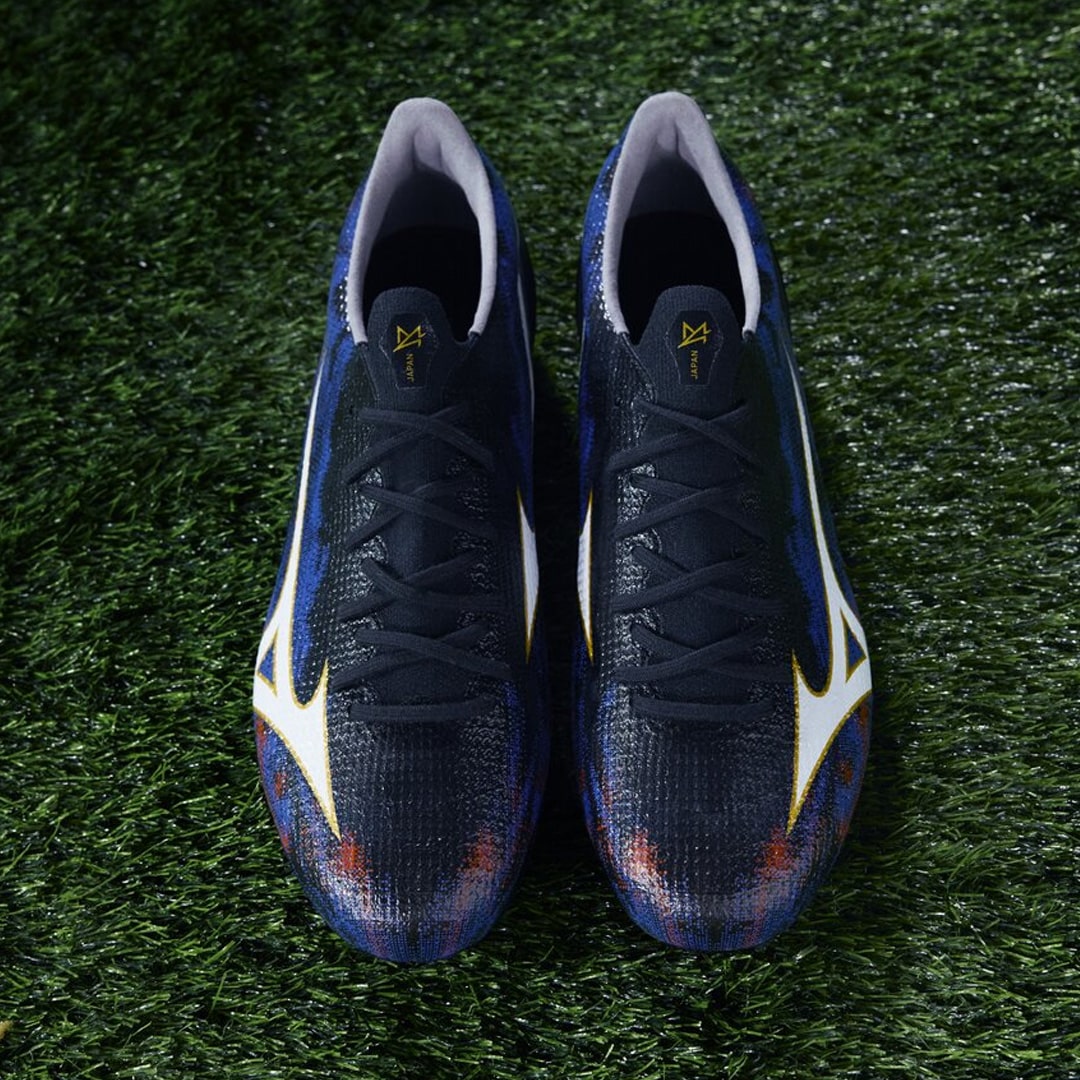
For me, the Alpha has the best lockdown for a variety of reasons that work hand-in-hand, actually. The pliability of the upper and its ZEROGLIDE α Mesh internal liner will help to have that knit material stick to your feet, not to mention that the skin overlay also aids the boot in having a decent amount of structure. Then there’s the anatomical heel shape with a suede liner that really locks that part of your feet in place. All of these are held together by the integrated knitted tongue.
KaRVO RS™ Tooling
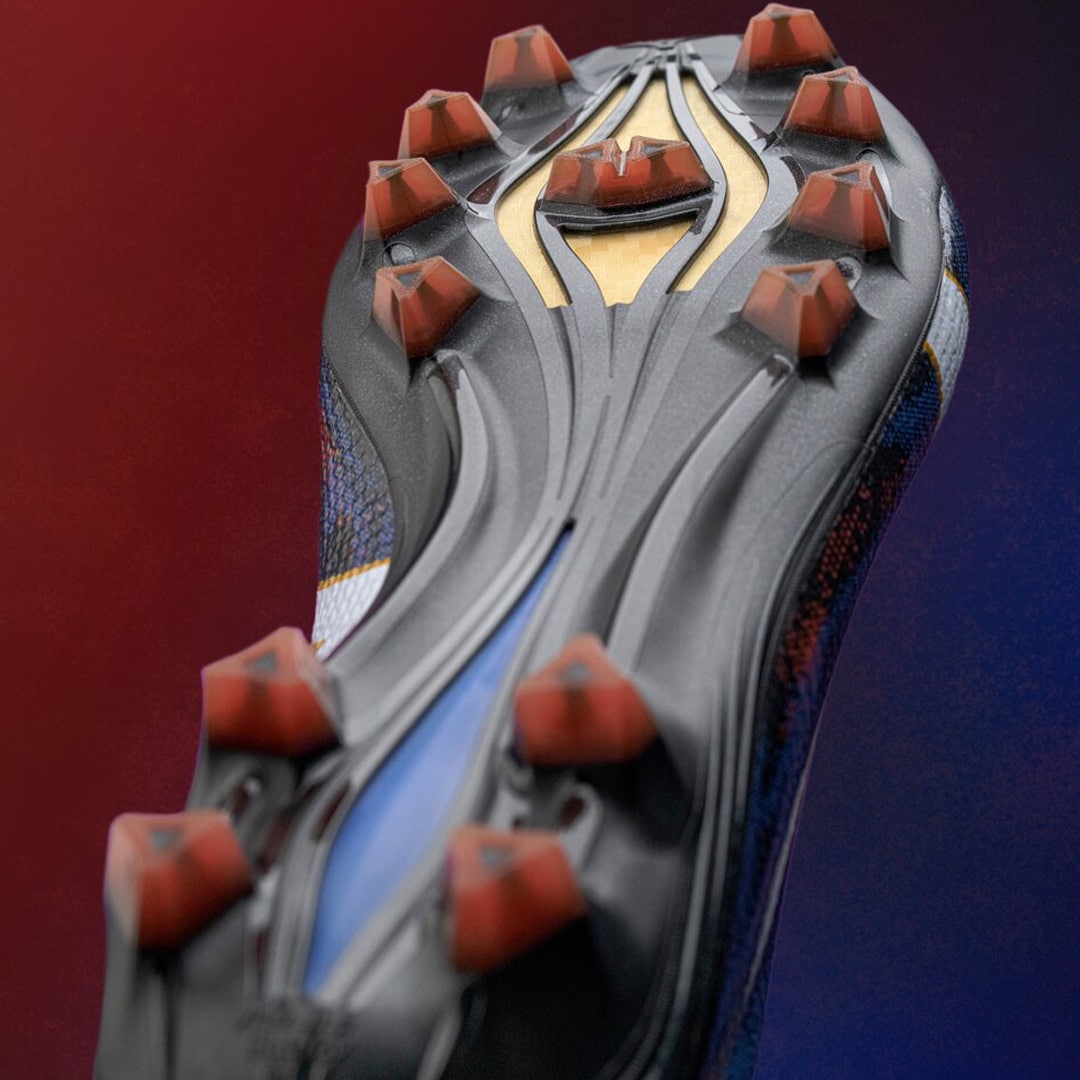

Alpha 3 has a responsive soleplate because of its KaRVO RS™ carbon fibre insert that gives its otherwise flexible plate a great amount of snap back. It’s not the super aggressive snap back that you’ll find in a pair of speed boots, but it’s enough to make it noticeable. The triangular studs are aggressive and are perfect for pushing off in different directions. Because of that aggressive bite on the ground, the Alpha 3 helps me a lot in transferring all my power and weight to the ground before exploding and cutting in or out diagonally. It’s relatively not the worst you can do to play them on synthetic pitches, but I would say that the stud configuration is certainly safer to play on natural grounds. If you’re coming from the previous Alpha generations, you might also notice that the Enerzy foam insole has been made a bit thicker this time around.
Fit and Feel


Size-wise, it depends on how you feel about the extra toe height. Most would probably go for true-to-size and take advantage of that comfort for having some wiggle space for the toes, while some might go down to get a one-to-one fit most especially for narrow feet players. Because of the Engineered Fit Last NEO, the boot has enough space to accommodate wide feet players. Weighing around 195g at a size 9.5 U.S., the Alpha 3 is on-par with other mainstream speed boots when it comes to being lightweight.
✔️ Pros
- One of the best in lockdown thanks to the grippy Zeroglide mesh internal liner on the upper and the heel profile
- Sacrifices little in structure and responsiveness but gives more in comfort points
- Decent snap back and energy return from the outsole
- One of the wide-fitting speed boot options in the current market
- On-par lightweight feel
❌ Cons
- Very expensive, especially when considering the simpler knit construction and the not-so-different Elite takedown tier
- Toe box shape can make sizing a bit tricky
- Those who are happy with the more structured and responsive feel of the previous Alphas might stick around with the older generations
Key Facts About Mizuno Alpha 3
Boot type: Speed
Generation: 3rd
Upper: Coated knit upper that softens after 45-60 minutes of play
Grip: Natural knit texture
Stability: Karvo RS insert
Fit: Average to Wide
Best surface: Firm ground and dry conditions
Mizuno Alpha 3 Tiers
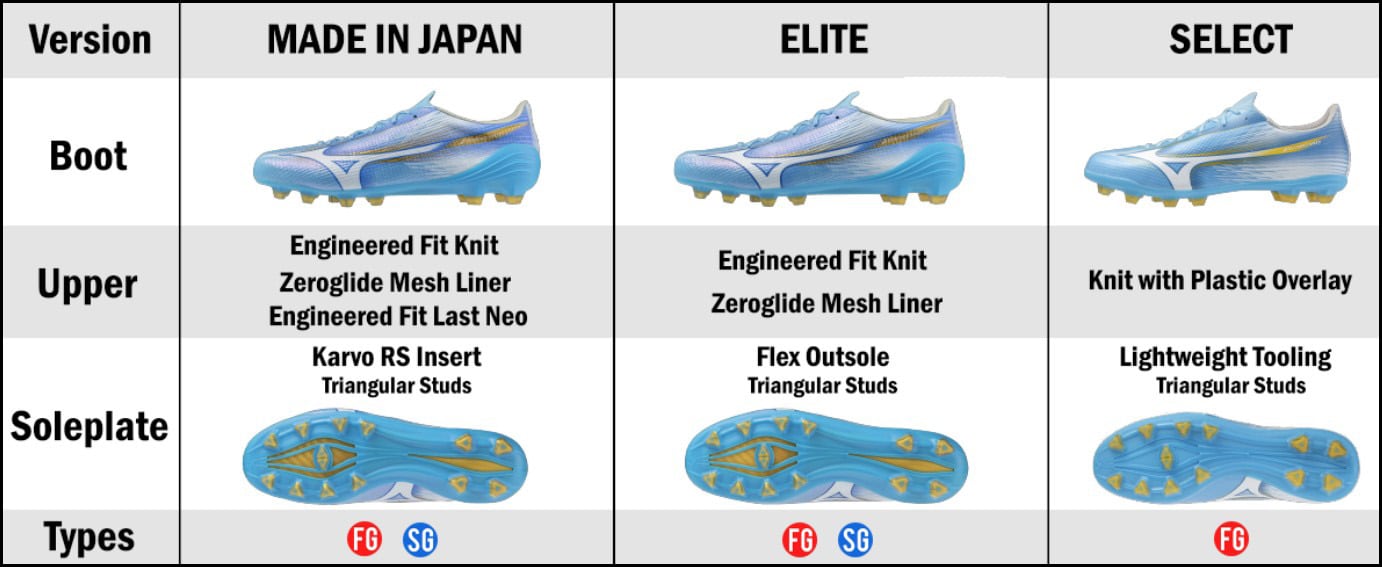
Which Alpha Tier should you choose?
Choose the Made in Japan if you have the money to leave no stone unturned and experience the most premium execution of the Alpha speed boot.
Choose the Elite if you don’t mind missing out on the Karvo RS for a lot less in terms of price.
Choose the Select if you’re looking for a budget entry for the Mizuno Alpha speed boot concept.
Just like any other brand, Mizuno provides top-tier and budget executions for their silos. Here is how it looks like for the Alpha speed boots:

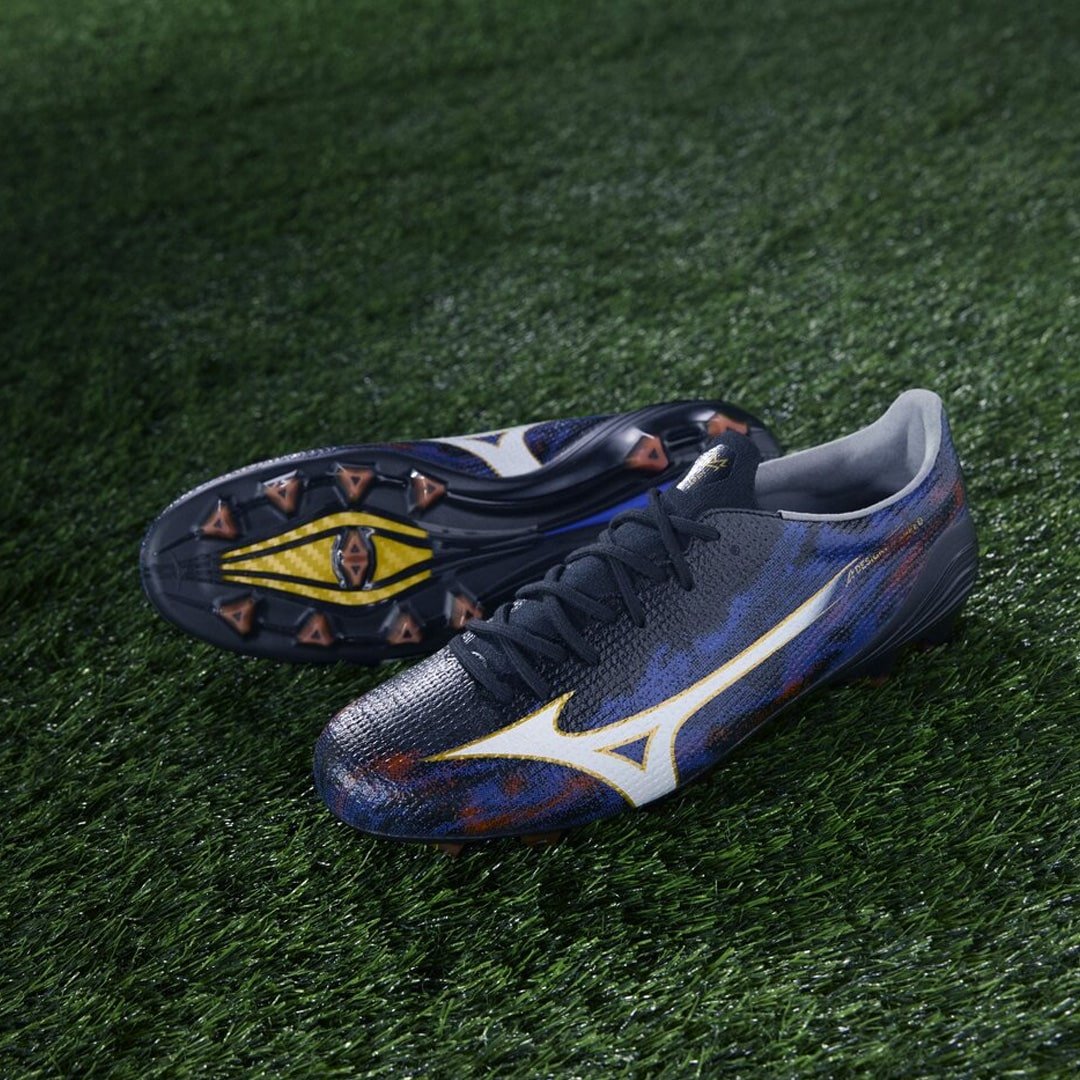
Emphasising the uniqueness of Japanese quality, Mizuno labels it’s most premium tier Made in Japan and their second takedown model Elite (implying that the top-level boots of other brands are simply second best to what Mizuno provides). But, at least for the Alpha silo, the only difference between the MIJ and Elite is that the microfibre lining has more volume in the latter. It also does away with the Karvo RS insert, making it less responsive tooling-wise. The Elite also sits on the last for only 20-min. (way short of the 24-hour lasting period for the MIJ), and this might have caused the relatively less volume and more pointy toe box on the takedown level. Select is where you can see a significant change in Mizuno’s attempt to cut corners.
From K-Leather to Knit: How the Mizuno Alpha Came to Be
Being that Mizuno is a brand specialising in K-leather football boots, the surprise is not so much that the Alpha succeeded a K-leather silo, but what specific K-leather silo it replaces. It might be easy to think that the Alpha could have supplanted the Morelia Neo, but the synthetic Mizuno boot actually succeeded a model that was built on control.
Rebula V1 (2017)
The story began in 2017 when the Mizuno thought of creating an advanced form of K-leather boot. With that, they decided to move on from the Wave Ignitus (see the 2022 remake here). As you can see, the frame is fused in the Alpha has its roots with the very first Rebula, which incorporated a CT Frame that enhanced ball touch and spin on the forefoot, stability around the midfoot and heel lockdown on the rear. CT Frame enabled the Rebula to avoid the need for the stitching and perforations, which were the traditional source of K-leather upper structure and stability but susceptible to water intake.
Rebula 2 (2018)
A year later, Mizuno updated the Rebula to double down on the touch and stability component of the CT Frame by reengineering its design and shape. The most obvious difference between the 2 and the V1 was the difference on the heel makeup, where the former used a different material instead of extending the main upper and CT Frame to that part of the boot like the V1 did.
Rebula 3 (2019)
While the core DNA was still there, the Rebula 3 did introduce some major changes that made it standout versus the previous Rebulas. The K-leather had been limited from the midfoot to the forefoot, and a synthetic mesh comprised the quarter that was also covered with non-stretch strips/webbing. The lacing was more central, and the leather became relatively thinner. Whereas the V1 and 2 were more narrow-fitting, the Rebula 3 became more forgiving and allowed flat-footed/wide-footed players to somehow fit in.
Rebula Cup (2020)
At this point the only thing that remained constant with the Rebula was the D-Flex groove soleplate, where much of the flex was coming from the medial side with the torsion stiffener bar flowing through the lateral side. This resulted to a flex point that felt more anatomical than those from other mainstream boots. The upper told a different story though as the CT Frame was totally dropped in favour of memory foam pods as the new touch and control elements. Those fused elements made the Wave Cup influence on the Rebula Cup quite clear. The boot wrapped it up with the FT Grip Coating to give the upper some sticky ball grip attribute.
Alpha (2020) and Alpha 2 (2025)
The biggest change between the Alpha 1 and the Alpha 2 was the addition of a PU sheet in the latter, between the frame and suede liner. The aim was that once the sheet is broken down and heated up, it will help expand the upper a bit more, thus making it more adaptable to wider foot shapes. Karvo RS was made thinner on the Alpha 2 as well to cater those who find the outsole very stiff on the first generation.
