

Quick Verdict
The Superfly 11 is the most distinct Mercurial Superfly in years. Nike has finally made it feel like a genuinely different boot from the Vapor again.
The collar is gone. The Gripknit is gone. In their place: a woven Flyweave Ultra upper, full-length Air Zoom system, and a boot designed around one specific kind of player.
Not the fastest player on the pitch. The one who keeps attacking long after everyone else has started conserving energy.
What You’ll Find On This Page:
- Mercurial Superfly 11 Elite Review
- Nike Mercurial Superfly Pro
- Cheaper Mercurial Superfly Academy Review
- Previous Generations of Mercurial Superfly
- Key Facts about Mercurial Superfly 11

My Relationship With This Silo
I have tested the Mercurial Superfly across multiple generations, from the early Flyknit era through to the Zoom Air iterations of recent years.
The best Superfly generations always made me want to run again. Not because I was fresh. Not because I had energy. Because the boot somehow convinced me there was still another attack available.
The honest assessment: the silo lost some of its identity for a period. When the primary distinction between Vapor and Superfly came down to whether you wanted a collar, both boots were trying to answer the same question in near-identical ways.
The Superfly 11 changes that. It has a clearer identity than any Superfly I can remember in the past few years. Whether everything in that identity lands perfectly is a separate question. But the intention is clear, and that clarity is welcome.
My honest take on the 11 versus the 10: the Superfly 11 is the more interesting boot. The Superfly 10 is probably the safer boot. I do not think that is a criticism of either.
The 10 had Gripknit, which players understood and trusted immediately. The 11 has Flyweave Ultra, which is newer and will take players longer to calibrate their expectations around. The 10 felt familiar. The 11 feels like a statement.
Football Identity
The Mercurial Superfly is built for players who sustain separation repeatedly.
Within the Mercurial family, both the Vapor and the Superfly are built around the same core idea: attack before defenders can react. But they express that idea through entirely different mindsets.
The Vapor wins the moment. The Superfly wins the match.
The Superfly player does not make one run and wait for the result. They make the run, recover, and make it again. And again. The first sprint might not create the opening. The third or fourth often does. The defender who held firm in the 30th minute starts to hesitate in the 65th. That is where the Superfly player becomes dangerous.
If the Vapor is a sprint spike, the Superfly is built for players who keep attacking after everyone else slows down.
The boot rewards players who think in terms of repetition rather than single explosive actions. Players who create pressure through relentlessness rather than one decisive moment.
Technology Translation
Flyweave Ultra upper: Nike describes this as a woven yarn and textile mesh composite. What it means on the pitch is a more structured, contained upper than either Gripknit or AtomKnit. The woven texture provides natural friction points for ball contact without additional grip technology. Touches are clean and direct. The upper holds its shape more assertively than a knit material.
One thing to calibrate: players used to Gripknit from the Superfly 10 will notice the difference in ball contact character. Flyweave is not better or worse. It is different. The touch is slightly more textured and less sticky. Some players will prefer it. Others will miss the Gripknit grip.
Air Zoom System (full-length): The Zoom Air bag now protrudes from the soleplate rather than sitting inside the strobel. Despite the repositioning, the soleplate does not feel bulky underfoot. The trampoline effect on each step is noticeable and creates the energy-return quality that sustains repeated sprinting. The combination of Zoom Air and ZoomX insole density creates a comforting effect particularly through the metatarsal area.
ZoomX insole: Denser and more cushioned than a standard Elite boot insole. Contributes to the energy return sensation and provides more comfort underfoot than the raw strobel approach of the Vapor.
Chevron stud configuration: Long chevrons with above-average bite. Stable in side-to-side movements and aggressive enough to provide clean push-off in accelerations. The combination of stud placement and Zoom bounce creates a planted-then-explosive quality that suits the Superfly’s repeated-sprint identity.
FAQs about the Nike Mercurial Superfly 11:
Is the Superfly 11 good for wide feet? No. The Elite and Pro both lean narrow. Players with wide feet will find the fit uncomfortable and should look at alternatives such as the Puma Future or New Balance Furon.
Is the collar gone for good? Yes. The Dynamic Fit collar that defined the Superfly silhouette has been removed in the 11. The boot now has a low-cut opening similar to the Vapor.
How does the Superfly 11 compare to the Superfly 10? The 11 is the more interesting boot. The 10 is the safer boot. The 10 had Gripknit, which players trusted immediately. The 11 has Flyweave Ultra, which takes longer to calibrate. The 11 has a clearer identity as a distinct speed boot from the Vapor. The 10 was more familiar. Neither is objectively better. They suit different expectations.
Is it true to size? Yes, for narrow to standard feet. Allow break-in time before drawing fit conclusions, particularly around the Nikeskin tongue overlay.
Who wears the Superfly 11? Cristiano Ronaldo, Kylian Mbappe and Marcus Rashford are among the current players wearing the Mercurial Superfly.
How is it different from the Vapor 17? The Superfly adds Zoom Air technology, a more structured woven upper, and a heavier but more energy-returning underfoot experience. The Vapor is more minimal, more barefoot, and designed for instant separation. The Superfly is designed for sustained repeated attacking.
Is the Nike Mercurial Superfly 11 worth it?
Yes — this is perfect for those looking for a high-octane speed boot.
This is a boot that works best when the game involves a lot of running or at least a playstyle that sets you up for an explosive attack on spaces. Some of the best scenarios for this boot are:
- High Press/Gegenpress
- Counterattacking football
- Player release on the opposing flank of a side overload
My Nike Mercurial Superfly 11 Review

- Release Year: 2026
- Generation Number: 11th
- Purpose: Speed Boot
- Competitor/s: adidas F50, Puma Ultra, New Balance Furon
- Notable Players: Cristiano Ronaldo, Kylian Mbappe
Being a Mercurial athlete, I’m always thinking about fast. I want to be faster than my opponent. What excited me most is that this technology is revolutionary. Air is what’s really going to put the Mercurial athletes in the best conditions to perform.
Kylian Mbappe, Forward
How I Tested the Superfly 11
- 2 competitive matches
- 3 training sessions
- Firm ground and synthetic grass
- Dry and wet conditions
- Narrow foot shape
- Playing as a winger
Its competitive advantage becomes evident in situations where you can reach your top speed.
Who The Superfly Is For
The Superfly 11 is for you if:
- You make repeated runs throughout a match and rely on sustained pace rather than a single burst
- You press aggressively and recover quickly to press again
- You attack space in transitions and counter-attacks
- You have narrow to standard feet
- You want a boot that feels like it is contributing to your movement, not just staying out of the way
- You want the Mercurial identity with more structure and technology than the Vapor
Do not buy the Superfly 11 if:
- You play at a slow tempo and rely on possession and build-up play
- You prefer a relaxed, wider fit
- You want barefoot ball contact. The Flyweave upper adds structure and the woven texture interrupts a fully raw touch.
- You have wide feet. The last is narrow and will not accommodate meaningfully.
- You want the Gripknit feel from the Superfly 10. The 11 has moved away from that technology and the ball contact character is different.
- You want a boot that disappears on your foot. The Superfly is engineered and you will feel it. That is part of the design.
The Superfly 11 suits players who define themselves through movement rather than possession.
Wide forwards and wingers who make repeated overlapping or underlapping runs and need pace that does not fade in the second half.
Pressing forwards who close down defenders repeatedly and need a boot that supports the fifth and sixth sprint as much as the first.
Counter-attacking forwards where every turnover becomes an invitation to run and the game is played at tempo from start to finish.
Attacking midfielders who combine pressing with late runs into the box and need a boot that rewards relentless energy.
The common thread is not pace. It is the belief that the next run might be the one that breaks the game open. The Superfly player is still looking for the next run when everyone else has stopped offering.
On-pitch Experience
The moment the Superfly 11 started making sense came around the 70-minute mark.
The first sprint felt good. The second felt good. But it was the fifth or sixth run in behind where the difference became clear. Most players are starting to conserve energy at that point. The boot encourages a different response. There is something in the combination of Zoom Air energy return and the structured upper that makes the next run feel available even when the legs are starting to question it.
That is the Superfly’s real identity, and the 11 expresses it better than any recent generation.
In transition-heavy matches, the Superfly feels relentless. Every turnover becomes an invitation to run. The boot suits players who are constantly scanning for the next opportunity to attack open grass rather than settling into a position and waiting.
During repeated pressing actions, the rhythm of close down, recover, close down again feels natural. The underfoot Zoom response reduces the physical cost of each contact, and the 360-degree containment keeps the foot secure regardless of direction. The Superfly suits players who create pressure through repetition rather than a single explosive action.


On repeated overlapping runs, the Superfly’s strengths compound. The boot feels designed for players who keep making runs even when teammates have stopped looking for them. The fifth overlap in a match is where the defender finally runs out of focus, and the Superfly is built for exactly that moment.
Against defenders carrying fatigue, the Superfly feels most dangerous. The first run might not create the opening. The third or fourth often does. That compounding advantage is the boot’s defining character.
The biggest difference versus the Vapor is not outright speed. It is how the boot feels when you push off repeatedly. The Vapor disappears beneath the foot. The Superfly feels like it wants to fire you into the next movement. Both are valid. They suit different players.
Fit Profile & On-feet Feel


The Superfly 11 runs narrow with some forefoot width. The toe is low and pointy, with significant tapering toward the midfoot and a slight roundness at the heel.
At around 180g, it sits in the lightweight tier without being the absolute minimum. That extra weight over the Vapor is the Zoom Air system earning its place.
The Flyweave Ultra upper is pliable for a synthetic-like material, particularly after break-in, but the focus is structural. The boot is designed to secure the foot, not wrap it loosely. Players coming from a Flyknit or AtomKnit boot will notice more rigidity. That rigidity is intentional.
The 3/4 Nikeskin tongue overlay secures the top of the foot and some players will feel an initial pressure point in this area before the boot has broken in. Allow proper break-in time before drawing conclusions about comfort.
Best suited to narrow to standard foot shapes. Can accommodate some forefoot width but is not suitable for wide feet.
One note on the collar: it is gone. The Dynamic Fit collar that defined the Superfly silhouette for years has been removed in the 11. For players who bought Superfly specifically for the collar fit and ankle sensation, the 11 will feel different. For most players, the low-cut opening works better in practice.
Lockdown & Responsiveness On The Move


Nike boasts the structure of the Superfly 11 for its 360-degrees containment. And in actual testing:
- Your foot stays locked-in not only in side-to-side movements but also during acceleration and deceleration.
- Heel lockdown is good, but could have been better if there is a bit more pinch towards the top
- The 3/4 Nikeskin tongue overlay does secure the wrap top of the foot (though some might feel some initial pressure point before break-in)
The upper lockdown combined with the underfoot responsiveness make up for a performance-oriented boot.
Real experience: Abrupt changes in direction and in the movement itself does not affect how secure the boots are on your feet.
Traction & Underfoot Experience


If it’s not yet clear at this point, the bite on the ground is above-average thanks to those long chevron studs. And besides the underfoot benefits mentioned above:
- The combination of the Zoom Air bag and ZoomX foam also has a comforting effect especially to the metatarsal area.
- Despite the repositioning of Zoom Air to protrude out of the sole, the soleplate does not actually feel bulky underneath.
Real experience: It feels like your playing on a flat pitch with that kind of traction involved. That helps make the effects of the Zoom Air even more pronounced.
Ball Touch & Control


Nike incorporated the Gripknit technology in the previous Superfly. This time around, the Superfly 11 relies heavily on the natural texturing of its woven yarns and textile mesh upper composite. As such:
- Touches stay clean and simple, with no additional stickiness
- No adjustment/learning time needed for utilising the friction points of the upper’s natural texturing.
- Ball comes off easily when striking and passing.
This is great for players who want a raw, connected touch rather than a softer, cushioned ball contact.
Real experience: Nothing beats having that raw ball feel as your main haptic feedback to monitor the position of the ball relative to your feet.
Weaknesses and Tradeoffs
The Superfly 11 brings with it a genuine philosophical question. The best Mercurials always had an element of danger, freedom, and chaos. The Superfly 11 is more contained, more efficient, and more engineered. That suits some players. Others may miss the raw Mercurial feeling.
Flyweave Ultra is an unknown quantity. Gripknit had become easy to trust. Players knew how it behaved, how it felt in the wet, and how it changed across different surfaces. Flyweave Ultra is newer and will take time to build that same level of player confidence.
The upper provides no grip assistance. Unlike the Superfly 10 with Gripknit, the 11 relies entirely on the natural woven texture for ball contact. In wet conditions, this is a meaningful difference.
The narrow last remains. The Superfly has never been a wide-foot boot and the 11 does not change that. Players with wide feet should look at the Puma Future, New Balance Furon, or consider the Pro version for a slightly more accommodating fit.
Heavier than the Vapor. At around 180g versus the Vapor’s 160g, the difference is real even if it is not dramatic. Players who prioritise absolute lightness should consider whether the Zoom technology justifies the weight premium.
The collar is gone permanently. Players who wore Superfly specifically for the Dynamic Fit collar sensation will need to adapt their expectations. The boot fits differently at the ankle than any Superfly for the past decade.
How It Compares To Other Boots
Superfly vs Vapor 17
Both are Mercurials. Both attack before defenders can react. The distinction is in how.
The Vapor creates separation instantly. The Superfly sustains separation repeatedly.
The Vapor disappears on the foot and removes everything between player and decision. The Superfly contributes to the movement, providing energy return and structure that accumulate advantage over 90 minutes.
Choose Vapor if you want to feel nothing and react immediately. Choose Superfly if you want the boot to support repeated attacking movement throughout a match.
Superfly vs adidas F50
The F50 prioritises a close-to-the-ground, planted sensation. The Superfly provides more lift and energy return from the Zoom system.
Choose Superfly for more springiness in repeated sprinting. Choose F50 for a more grounded feel and slightly more material in the upper.
vs Puma Ultra
The Ultra offers more energy return from the outsole and a more forgiving last. The Superfly is more snug, more anatomical, and more structured.
Choose Superfly for a tighter, more secure fit and the specific quality of Zoom-assisted acceleration. Choose Ultra for a wider fit or if you prefer outsole-led energy return.
vs New Balance Furon
The Furon is wider, more rounded, and sock-like in upper feel. The Superfly is narrow, structured, and synthetic-like.
Choose Superfly for a more engineered, performance-focused build. Choose Furon if you have a wider foot or want a more relaxed upper sensation.
Final Verdict
The moment that confirmed what the Superfly 11 was trying to do came late in a match. Dozens of runs already made, multiple defenders pressed, plenty of ground covered. Then a turnover happened, and the first instinct was still to attack the space behind. Not because the legs demanded it. Because the boot encouraged it.
That is the Superfly identity. Not the fastest boot for one run. The boot that makes you want to keep being dangerous.
The Superfly 11 expresses that identity more clearly than any recent generation. The collar removal was the right call. The Flyweave Ultra is still earning trust, and players who loved Gripknit will need time to calibrate. But the boot knows what it is.
Where the Vapor disappears beneath your foot, the Superfly reminds you it’s there. It feels engineered, structured, and present. Not everybody wants that. Players who do will find the Superfly 11 the most compelling version of this boot in years.
The Superfly is not for players who want the boot to disappear. It is for players who want the boot to keep asking for one more run.
Best for: Wingers, pressing forwards, counter-attacking forwards, attacking midfielders, players who define themselves through repeated movement.
Strengths: Sustained energy return across 90 minutes, 360-degree containment, relentless acceleration, distinct identity from the Vapor.
Weaknesses: Narrow fit, no Gripknit, Flyweave upper still building player trust, heavier than the Vapor, collar removed permanently.
Fit: Narrow to standard feet. True to size. Allow break-in time.
Tiers
Elite (reviewed): Flyweave Ultra upper, full-length Air Zoom system, ZoomX insole, ~180g. The version this review is based on.
Pro: Full Flyknit upper for a sock-like sensation. Air Zoom limited to the heel rather than the full-length bag. Slightly wider last and heel cutout than the Elite. A meaningful step down in Zoom technology but with a softer, more familiar upper feel. Worth considering if the Flyweave upper feels too engineered for your preference.
Academy: Nikeskin synthetic upper. More pliable than the previous generation. Chevron texturing for ball grip. Around £85. A solid option for amateur players who want the Mercurial silhouette without the Elite price. Competes with the adidas F50 League and Puma Ultra Match.
*Takedown sections to be updated soon
Nike Mercurial Superfly Pro
| Model | Quality | Pitches | |
|---|---|---|---|
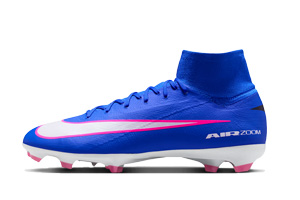 Attack |  Flyknit upper Flyknit upperLimited Zoom Air Tech |  | 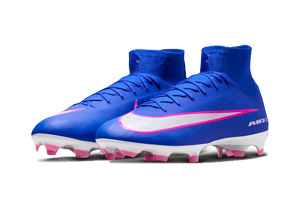 >> Get Mercurial Superfly 10 Pro at Nike >> Get Mercurial Superfly 10 Pro at Nike |
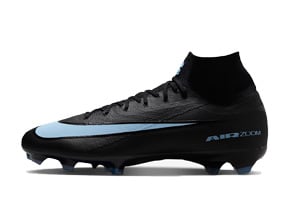 Shadow | 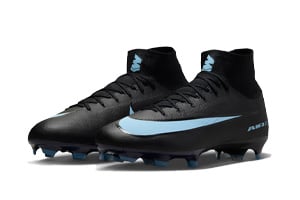 >> Get Mercurial Superfly 10 Pro at Nike >> Get Mercurial Superfly 10 Pro at Nike | ||

Mbappe Plum Eclipse | 
|
The thing about the Pro is that it is a full Flyknit upper, so on that note expect to have a sock-like sensation. Flyknit simply makes it premium and feel like the Elite of older generation knitted Mercurials. With that said, I do feel that those who are looking to get the Gripknit tech on a lower price point will be left disappointed. In fact, the thin PU coating even smoothens the upper somehow and might cause the ball from slicking away.


I could say that the mantra of the Pro is comfort above all else. The basis for that is the Flyknit upper does not have the high-tenacity yarns that provide the balancing structure for the Elite. And so while the upper feels nice on-feet, the lockdown and responsiveness are decreased a bit (especially when you factor in the wider cutout on the heel). There’s also that additional width relative to the Elite’s shape.
Regarding the Air Zoom technology, it is limited to the heel and is nowhere near the cushioned sensation that the 3/4-length Zoom Airbag delivers. The good thing is that the Pro soleplate in turn is a bit more responsive and retains the chevron and blade stud configuration.
Cheaper Mercurial Superfly Academy Review
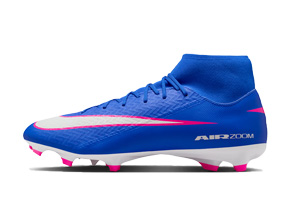
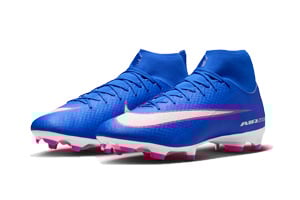
The Superfly Academy is a cheaper option for the Mercurial Superfly compared to the Elite version worn by pros like Ronaldo, Sancho and Mbappe, but it still has lots to offer the amateur player who wants to wear a cheaper boot that looks the same as their idols.
| Model | Quality | Pitches | |
|---|---|---|---|
 Attack |  Nikeskin upper and heel Air Zoom bag | 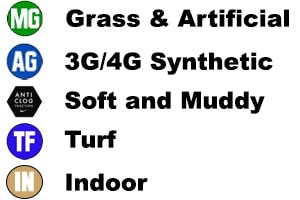
|  >> Get Superfly 10 Academy at Nike >> Get Superfly 10 Academy at Nike |
 Shadow | 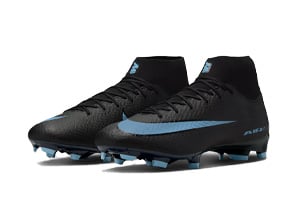 >> Get Superfly 10 Academy at Nike >> Get Superfly 10 Academy at Nike | ||

Mbappe Plum Eclipse | 
| ||

United 003 | 
| ||
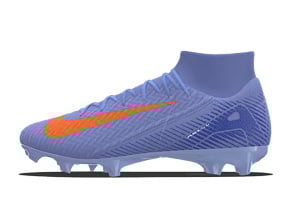 Nike By You | 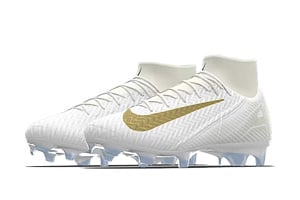 >> Get Superfly 10 Academy at Nike >> Get Superfly 10 Academy at Nike |
Things to Know
- Costs £85
- At the time of writing, being offered alongside the Academy Phantom and the Academy Tiempo Legend 10
- Competes with the likes of adidas F50 League and Puma Ultra Match
- Considered as the most popular takedown courtesy of the popularity of the Mercurial line
Upper and Fit Profile of the Superfly Academy
I must say first and foremost that the mesh-based synthetic Nikeskin is significantly more pliable and less structured than that of the previous Academy Superfly. It does not have that sticky sensation but the chevron texturing at least gives the upper multiple friction points for that ball grip element. The upper is thin and therefore you can expect a barefoot-like contact with the ball. I think Nike has switched the collar as well to be a more relaxed fabric, which I believe might be related to keeping the sock-like feel of current generation of the Superfly.
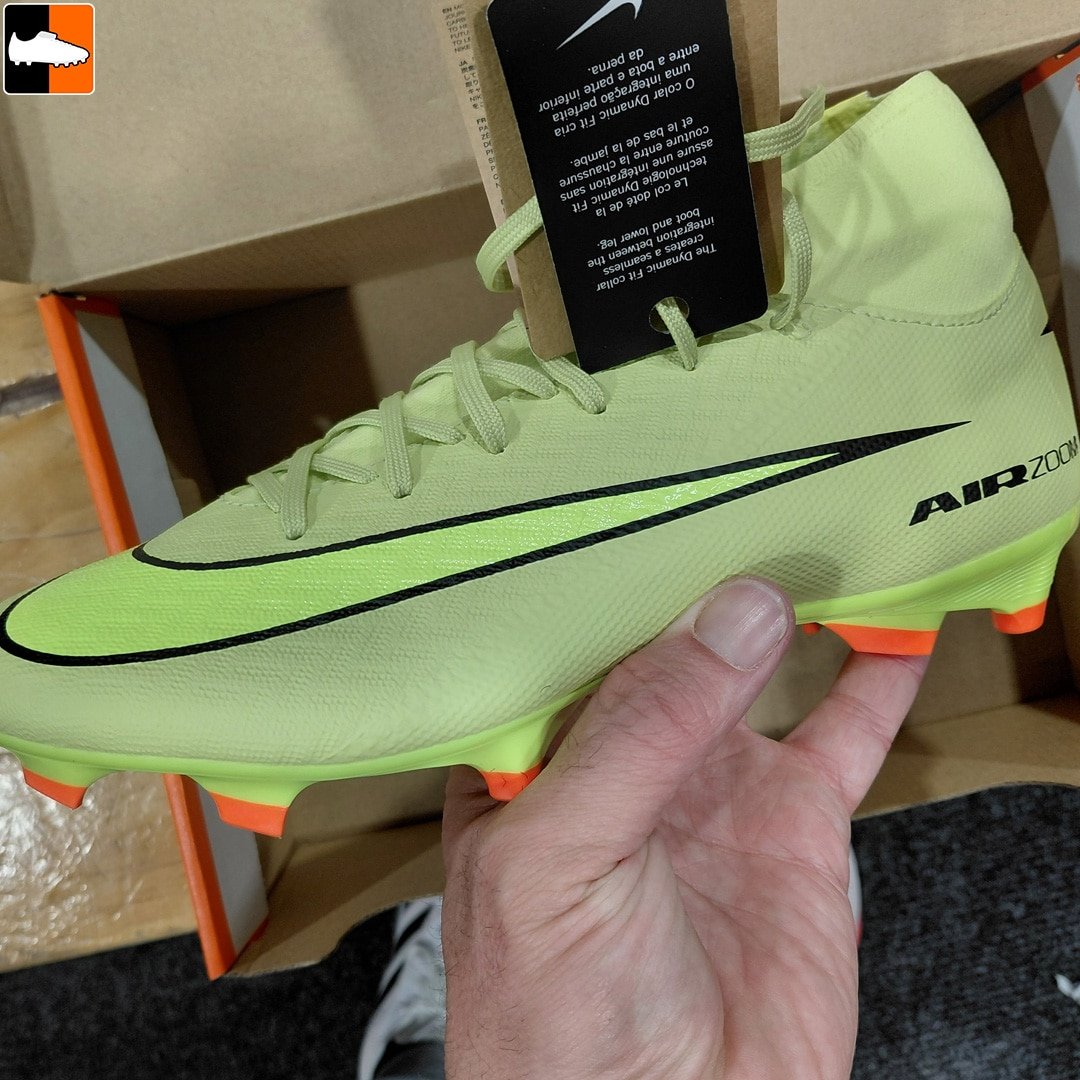
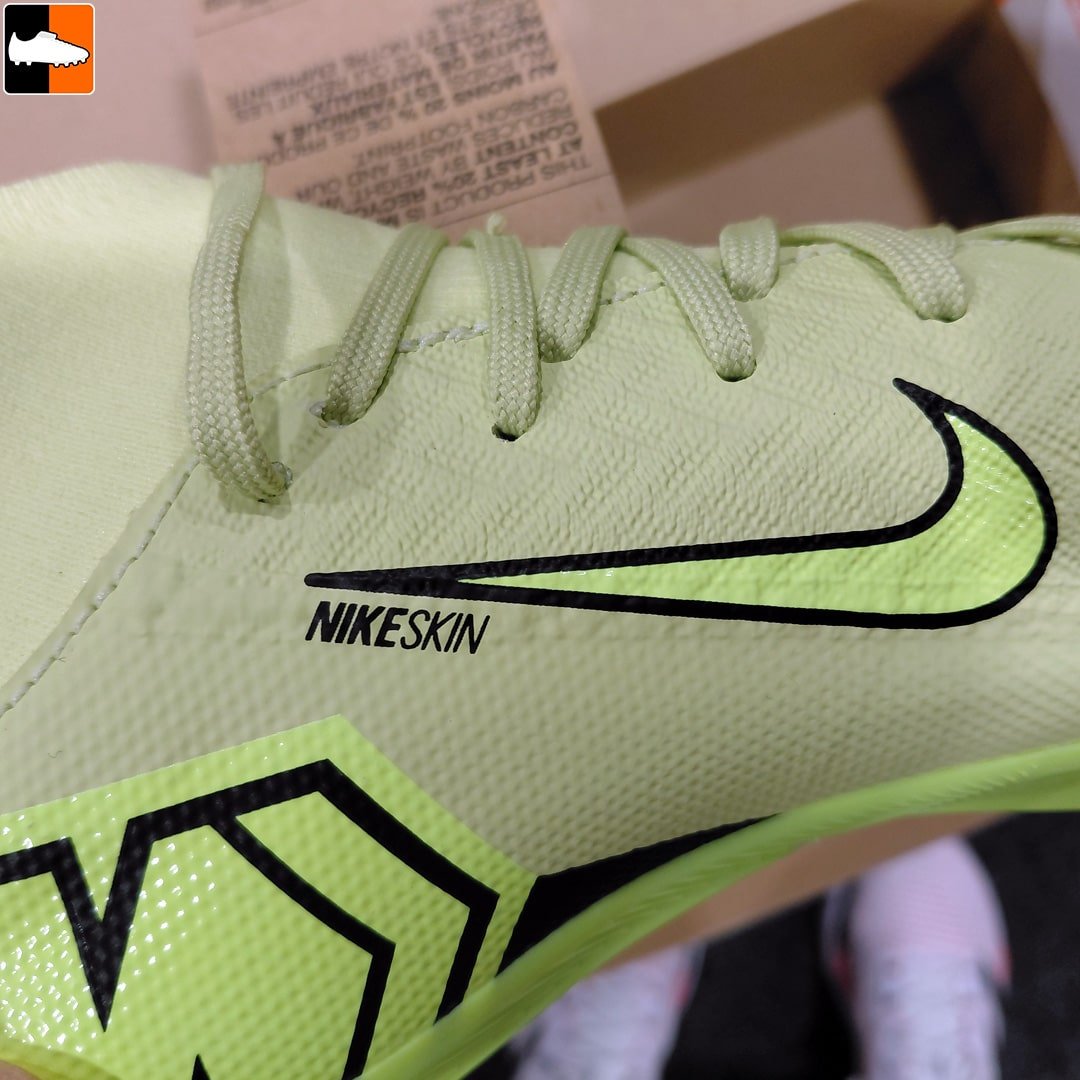
I feel that this generation of Superfly Academy is more comfortable and better fitting, and does a decent job of giving you a preview of what to expect from the Elite model should you decide to go for it. It maintains that narrow-fitting bias and might cause some challenge for extremely wide feet. But it must also be said that Superfly 10 Academy somehow does forgive a bit of width to appeal to more audience. Lockdown heel is also improved, as it has a shaping and padding that more or less is similar to the elite level. Sensation is also enhanced because of the smooth lining material as opposed to the synthetic leather material on the replaced Superfly Academy model.
The Elite is noticeably lighter, but that is not to say that Superfly Academy is not a lightweight boot. In fact, compared to its competitors, it is one of the lightest at its price point.
Academy Superfly Studs and Outsole
Like in the Superfly 9, Zoom Air is limited to heel in the Superfly 10. You can feel it if you really pressed on your heel. As most of the time you on your toes, I think the positioning is less than ideal. And because of it, I think the only time it can make its presence felt is when you are in a relaxed standing position and start running around.


When it comes to the soleplate itself, it still has surprising amount of responsiveness left despite being on a takedown level. But perhaps because of the softer upper, the outsole also falls on the flexible side. While Nike labels it as an MG tooling, I might opt for an actual AG option should I play more on artificial grounds just because the chevrons are just too clingy. The conicals do lessen the aggressiveness of the traction, but still aggressive nonetheless and just better suited to FG.
Final Words for the Superfly Takedown
The Superfly Academy is a perfect example of simply using cheaper materials to offer a budget option without sacrificing much of that boot experience that characterises its parent Elite variant. That alone is reason enough to consider it as the best boot of its price point. Be sure to get it at true-to-size and only size up if you think you need more space for your foot’s width.
Children’s Mercurial Superfly 10 Academy FG
Kids Academy this version in Nike Jr sizes applies to Younger and Older Kids, these boots lack the 3/4-length Zoom bag and limit the Air unit to the heel of the soleplate, but interestingly are laceless making them easy to get on and off and something unique with Nike boots.


Previous Generations of Mercurial Superfly
The original Superfly was released as the Mercurial Vapor Superfly in 2009. The silo has come a long way since then in establishing itself as one of the popular speed boots in football. Let’s see how we got to where we are by taking a brief walk down the memory lane and remembering each generational release of the Mercurial Superfly.
The philosophical shift from Superfly 10 to 11: where the 10 felt refined and safe, the 11 feels more aggressive and more purposeful. Some players will prefer the certainty of the 10. Others will find the 11’s clearer identity more compelling.
Mercurial Superfly 10 (2024)
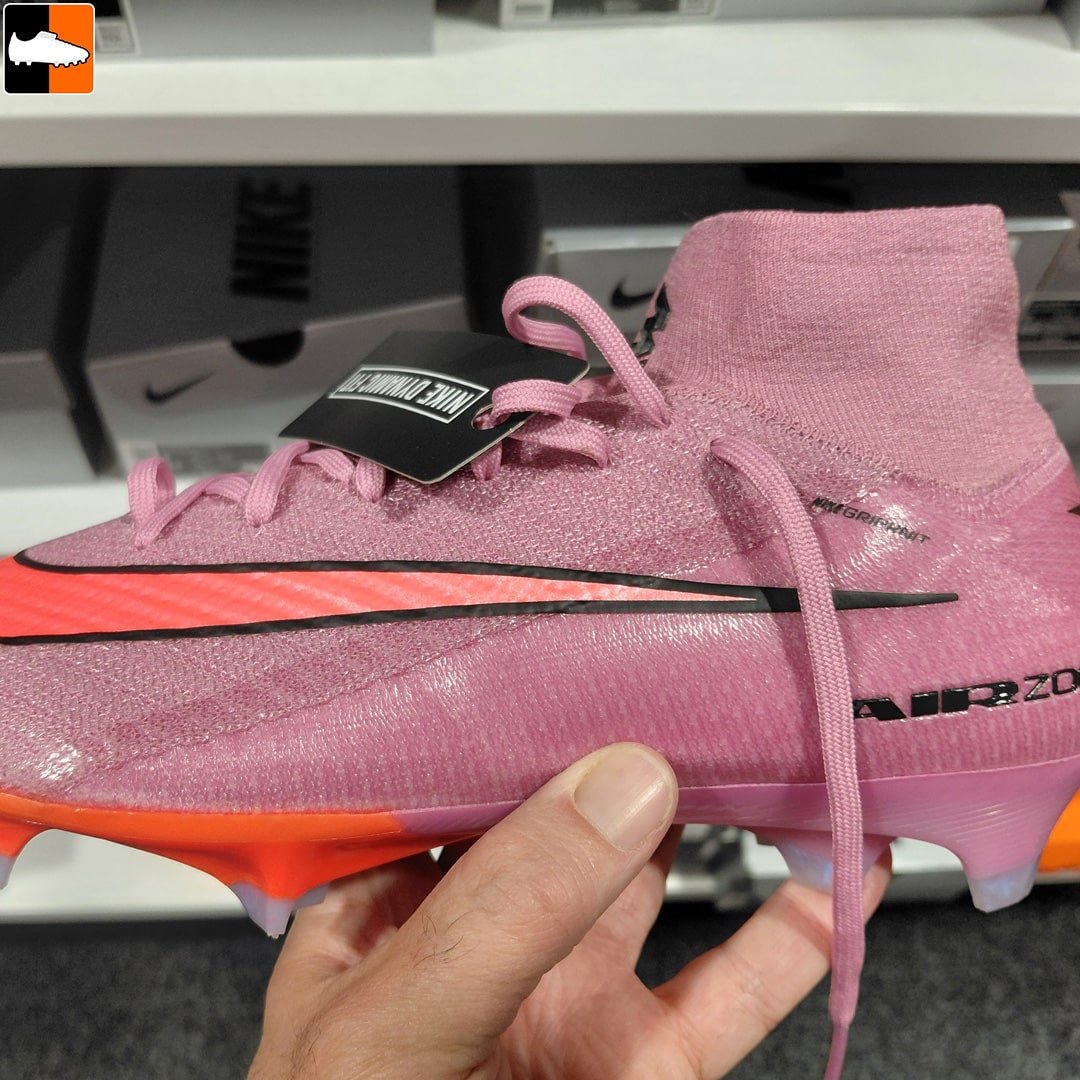

Gripknit introduced from the Phantom line. AtomKnit on the quarter for structure. 3/4 Zoom Air bag retained. The boot was highly capable, extremely familiar in feel, and widely trusted. The most capable and trusted Superfly in recent memory, though it most closely resembled the Phantom in character.
- Gripknit on the forefoot.
- AtomKnit on the quarter.
- 3/4-length Zoom Air bag.
Mercurial Superfly 9 (2022)


The first time Zoom Air genuinely worked in a Mercurial. Paired with Vaporposite+ upper. The Air bag changed the underfoot sensation and gave the silo a new physical identity beyond the collar.
- First truly successful implementation of Zoom Air in the Mercurial.
- Paired with Vaporposite+ upper inspired by Roman sandal construction.
Mercurial Superfly 8 (2021)


The Dragonfly generation. Launched with strong visual identity. Technically evolutionary rather than revolutionary.
- Strong visual identity with each component highlighted in a different colour.
Mercurial Superfly 7 (2019)


High-tenacity Flyknit with structural reinforcement. Aerotrak arrow spine on the soleplate. One of the last Superfly generations where the upper felt genuinely different from anything else in the market.
- High-tenacity Flyknit with structural reinforcement.
- Aerotrak arrow spine.
- Responsive and fast-feeling.
Mercurial Superfly VI (2018)


Nike introduced the Superfly 6 on February 7, 2018, it was the first Superfly to have a split-sole construction and to have the Flyknit yarns coated with ACC rather than having the ACC on top of the upper. The release of the Superfly 360 came with the Born Mercurial orange colourway pack, designers Virgil Abloh and Kim Jones had their respective takes of an orange Superfly 6, with the former designing his with eye-catching circles and the latter with a safari-skin graphic. Released in the year of a World Cup, Nike included them in the Just Do It pack dedicated for the 2018 tournament; the Just Do It dressed the boot in a pearlescent white accented by orange hues.
- First split-sole construction.
- First Flyknit yarns coated with ACC.
Mercurial Superfly V (2016)


The Superfly 5 debuted on May 17, 2016 under the Spark Brilliance football pack; the launch colourway had a red-purple split, black accents radiating from the collar, heel, and speed ribs adorns the boot. A Flyknit boot that had textured Speed Ribs wrapping around the upper. CR7’s Chapter 5: Cut to Brilliance, Chapter 4: Forged to Greatness, and Chapter 3: Discovery were all based on the five’s template.
Cut to Brilliance displayed a multi-coloured graphic of diamond cuts on a grey upper while the Forged to greatness had a fiery orange base a silver top with a metallic tone. Discovery’s colours reflected his days with Sporting Lisbon. Lock In, Let Loose combined yellow and black in a Superfly 5 and the Fire and Ice Pack had the boots in red and blue colours to be worn by players depending on their club’s kit.
- Flyknit with Speed Ribs texturing around the upper.
Mercurial Superfly IV (2014)


The Superfly 4 saw Nike Flyknit for the first time on the Mercurial range and brio cables on the sides of the boot connected the laces to the sole and acted like slingshots to propel the player forward. Once again, Ronaldo dominated with his first Chapters releases, named Savage Beauty and Natural Diamond. The IV launched on April 25, 2014, and the debut colourway became part of the pack for the World Cup that year.
Some of the distinct colourways included the Urban Lilac in the Liquid Chrome Pack, the Hyper Pink of the Lightning Storm Pack and the Bright Crimson of the Intense Heat Pack. Superfly 4 also brought the What The Mercurial which combined popular Mercurial colourways into one mashed up boot.
- First Nike Flyknit on the Mercurial range.
- Brio cables connecting laces to the sole.
Mercurial Superfly III (2011)


Superfly 3 were released in April 2011, they were more of a cosmetic update to the Superfly 2, the boot debuted with a violet upper with a white Swoosh and tonal heel. Alongside the launch colourway was a CR7 exclusive black-on-black safari print with yellow accents.
A more streamlined purple Superfly 3 was released later that year in the form of the Court Purple/Metallic Luster-Magenta. It was also in late 2011 that another CR7 signature colourway appeared; with a red pinstripes and black block stripes combination on a grey upper.
- Cosmetic update to the Superfly 2.
Mercurial Superfly II (2010)


Nike launched the Superfly 2 on February 24, 2010; introducing the Nike SENSE studs that expanded or retracted depending on pressure, weight, and surface condition. The first Superfly 2 had violet poppy/obsidian/orange colourway. This Mercurial generation gave CR7 his first signature boot and arguably one, if not the most iconic Ronaldo colourways; the Safari print, Nike would remake those in 2020 to celebrate ten years since the original boots.
A distinct feature of the Superfly 2 was the diamond cut-like graphic on the medial side. The Superfly 2 had a large orange or black Swoosh located on the toe box and moving towards the lateral side. The colours on each side would usually be different, like the cactus/white/anthracite and the Voltage Cherry/Obsidian/Silver.
- Introduced Nike SENSE studs.
- First CR7 signature boot with the iconic Safari print.
Mercurial Vapor Superfly (2009)


Nike unveiled the Superfly 1 in February 2009. It was the boot that made Cristiano Ronaldo the face of the Nike Mercurial. The first edition of the Vapor Superfly featured an ultra-thin Teijin synthetic reinforced by Nike Flywire cables for lockdown and structure. It also introduced a carbon fibre soleplate.
The original max orange/abyss/metallic platinum colourway was able to debut on the field but not on retail, prompting Nike to remake the colourway 11 years later with the Future DNA Mercurial Vapor 13, the boots ultimately debuted on retail in black with a volt yellow Swoosh.
- The original.
- Ultra-thin Teijin synthetic.
- Nike Flywire cables.
- Carbon fibre soleplate.
- Made Cristiano Ronaldo the face of the Mercurial.
Key Facts About Nike Mercurial Superfly 11
- Nike Mercurial Superfly 11 features a Flyweave Ultra upper, ZoomX insole and composite soleplate featuring the Air Zoom technology and chevron studs.
- Available models: Elite (~180 g), Pro (~210 g) and Academy (~230 g).
- SRP: Elite ~£275, Pro ~£155, Academy ~£85
- The Mercurial Superfly 11 is worn by the likes of Cristiano Ronaldo and Kylian Mbappe.
